


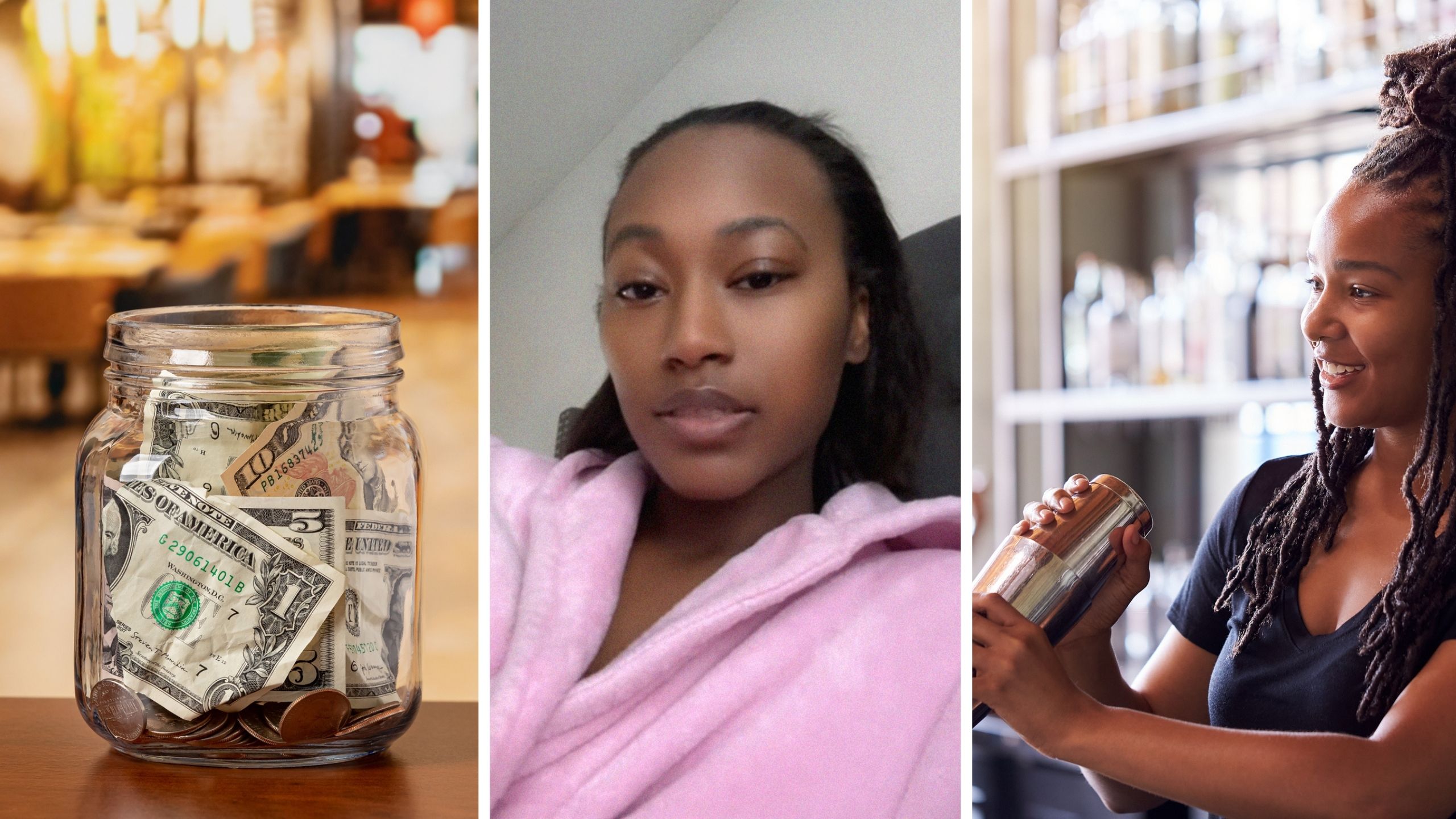
Tipping culture debates are nothing new, but what happens when a bartender decides she’s had enough?
One bartender’s approach to handling a repeat non-tipper has sparked a conversation about whether workers have the right to refuse service based on tips.
Bartender 2-Strike Policy
In a viral video with more than 39,200 views, bartender Rose (@roseinthecity) shared how she handled a customer who kept returning to her end of the bar without tipping.
Rose explained that she was working her shift at a club when a customer approached her section of the bar. She served him, cashed him out, and noticed he didn’t leave a tip. No problem, she thought, since tipping isn’t mandatory.
“In this industry, I understand that not everybody is gonna tip,” Rose says. “Unless there’s an automatic gratuity in place, it’s not mandatory. You tip by choice, not by force, and I understand that.”
But she made a mental note and continued serving other customers. When the same customer came back to her end of the bar for a second round, she served him again. Once again, no tip.
That’s when her personal policy kicked in.
“I have a policy in place,” Rose explains. “You have a good two times to come up to me and not tip before I’m just done serving you for tonight. I don’t even play those type of games.”
3 Strikes, You’re Out
Rose went on with her shift, serving other customers and making money. Then the customer approached her section for a third time, standing behind someone she was already serving, waiting specifically for her instead of going to another bartender who wasn’t doing anything.
When she finished with the other customer, he stepped up to order. That’s when Rose drew the line.
“I told him, ‘Hey, babe. Go ahead to another bartender. I’m not gonna keep serving you because you’re not tipping,'” she recounts.
“What? What? I don’t have to tip,” he said.
“I said, ‘Yeah. And you don’t have to keep coming up to me,'” Rose replied. “That point flew right over your head. You don’t have to tip. You also don’t have to keep coming up to me getting my good service, and you’re not tipping.”
Rose made her reasoning clear: If he kept choosing her section specifically—bypassing other available bartenders—it was because he appreciated something about her service. Whether it was how fast she moved, how she made drinks, or both, he clearly had a preference.
“If you’re not gonna tip, you need to get on out the way because I’m not gonna take up my time serving you, and I could be missing out on serving somebody who’s tipping,” she told him.
The Result?
Rose saw the same customer the next night. This time, his approach was different.
“Guess what, guys? He was tipping,” Rose says. “Sometimes you just gotta tell people about they self because that might help them grow up a little bit.”
In a follow-up video, Rose addressed critics who questioned whether she could refuse service. She clarified that she wasn’t the only bartender working. There were several others behind the bar.
She pointed out that many people commenting had clearly never worked in the service industry, because there are many reasons bartenders can refuse service, especially when they’re not the only one working.
For those who mentioned they prefer to tip at the end of the night, Rose noted that people who do that typically say so upfront or run a tab. This customer gave no such indication.
“At the end of the day, you’re just one customer, and I’ve been working in this industry long enough to know many different types of customers and to see a certain situation coming from a mile away,” Rose said. “I read the situation for what it was, and I was right, and you’re mad about it.”
Bar Tipping Etiquette
According to Toast, the standard tipping guideline for bartenders is $1-$2 per drink for beer, wine, and standard mixed drinks. For more expensive cocktails or when running a tab, customers should tip 15-20% of the total bill, similar to restaurant etiquette.
Complex cocktails that require more time and skill should warrant tips on the higher end. As Food & Wine explains, if your drink has more than three ingredients or requires extra effort like muddling, tip $2-3 per drink instead of the standard $1.
Tipping isn’t just a nice gesture. It’s essential to bartenders’ income. According to Toast, the average bartender salary in the United States is $23,620, with the range typically falling between $20,552 and $27,128. Many bartenders earn a minimum wage well below the standard, with the expectation that tips will make up the difference.
Making matters more complicated, most bartenders must “tip out” to other staff at the end of their shift, sharing portions of their tips with barbacks, servers, and sometimes kitchen staff. This makes every tip even more crucial to their actual take-home pay.
Toast notes that good tippers are often rewarded with better service, stronger pours, and sometimes even free drinks. Bartenders remember generous customers and may prioritize serving them during busy periods. On the flip side, poor tippers may find themselves waiting longer for service or receiving less attention.
@roseinthecity No tip no service! #roseinthecity #fyp #bartender
Commenters React
“You don’t have to tip, just like I don’t HAVE to serve you,” a top comment read.
“At my bar my manager hung up a sign that says ‘the customer is always right, but the bartender decides who’s a customer,’” a person shared.
“All the non tippers are appalled in the comments,” another wrote.
“People get so uptight about giving back. It’s weird. If you can’t afford a couple of extra dollars, stay home,” a commenter added.
BroBible reached out to Rose via Instagram and TikTok direct message.