


Shopping for frozen fish can feel overwhelming when you’re staring at rows of identical-looking packages.
But one former charter boat worker says he knows exactly what to look for (and what to avoid) when filling your freezer with seafood. Experts say it’s more nuanced than the advice he’s giving and recommend this instead.
Man Breaks Down Fish Labels
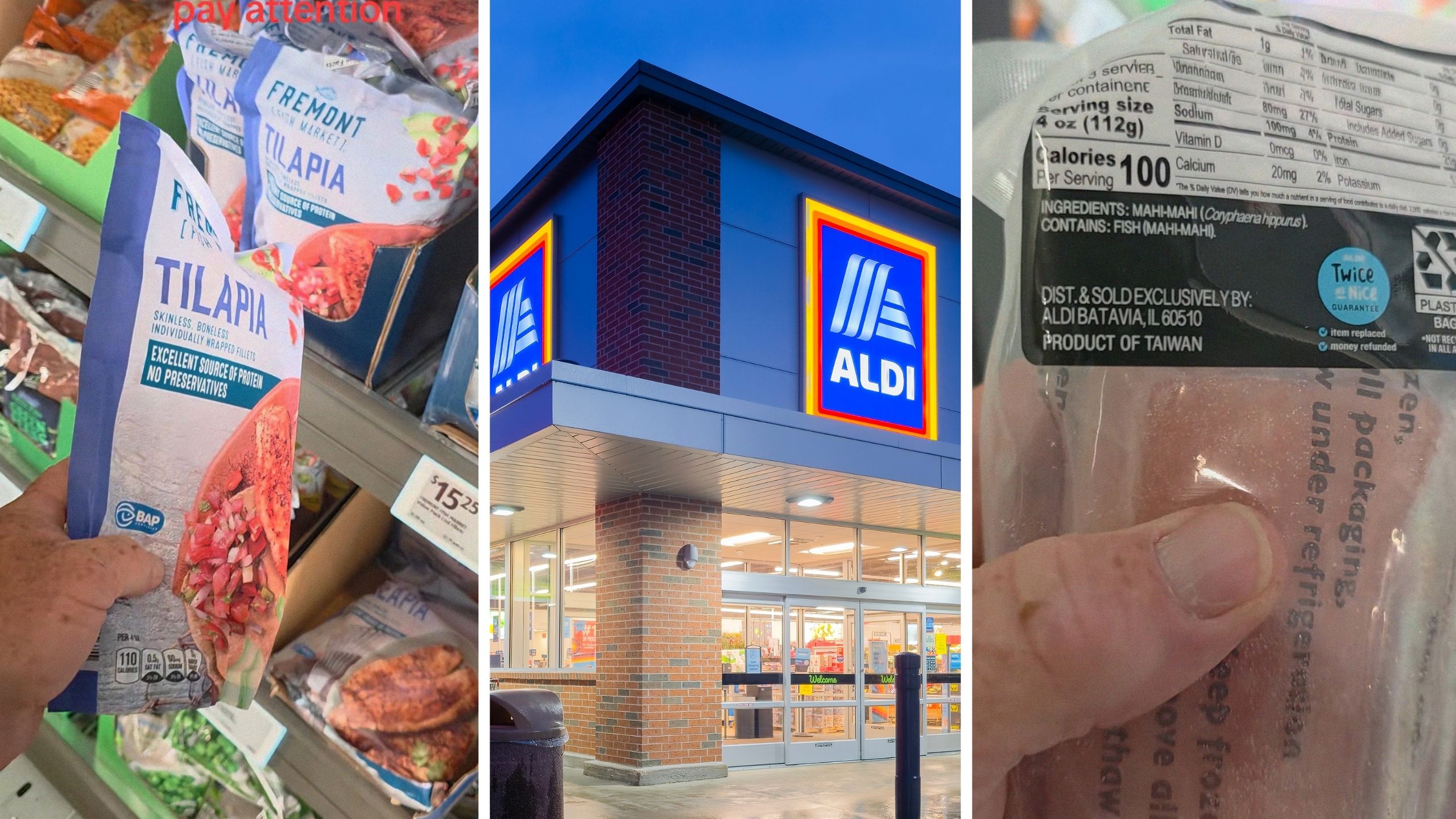
In a viral video with more than 5.6 million views, former charter boat worker @spikekiller86 walked through the frozen seafood aisle at Aldi, sharing advice based on his 15 years working on a charter boat.
His first warning? Skip the tilapia entirely.
“Let me give you some advice. When you’re buying fish or shrimp or whatever, do not ever buy tilapia. I don’t care what they tell you, what anybody tells you. It is a s—-eating fish. Do not eat this. It is not good for you,” he says in the clip.
Moving on to the main lesson, he picks up a bag of fish to demonstrate how to read the packaging.
“When you grab a thing of fish, you wanna look at where it’s from. If it says product of China, first of all, you wanna throw it back on the shelf. Don’t eat anything from China,” he claims.
This comment is problematic and unsubstantiated—seafood from China is subject to FDA inspection and safety standards just like seafood from other countries.
But his key point focuses on farming methods. “Most importantly, farm-raised. Do not eat anything that is farm-raised,” he emphasizes.
He demonstrates by grabbing different packages and checking the labels. One says it’s a product of Taiwan and clearly states “wild caught,” which he approves of.
“Wild caught. Okay. Boom. Right there. Wild caught. This one’s safe. That’s good. It does not say farm raised,” he explains.
He repeats the process with shrimp, rejecting a package that says “farm-raised product of India” and finding one from Argentina that specifies it’s wild-caught with detailed catch information.
He adds that the ones that are raised on a farm are “raised in a pen where they’re all in their own s—.”
Wild-Caught Vs. Farm-Raised Fish
The debate between wild-caught and farm-raised fish isn’t as black-and-white as the video suggests. According to Colorado State University, it’s a common misconception that wild seafood is automatically good and farm-raised is automatically bad.
Wild-caught fish eat a natural diet and tend to be slightly lower in saturated fat. However, farmed fish can actually be slightly higher in omega-3 fatty acids due to fortified feed. The main concerns with farm-raised fish relate to potential contaminants and higher disease rates due to farming conditions.
That said, Tufts Health & Nutrition Letter emphasizes that both wild-caught and responsibly farmed fish are nutritious food sources. The FDA testing generally finds levels of pesticides and industrial chemicals in commercial seafood that don’t raise human health concerns.
The key factor is regulation and sourcing. Seafood from other countries isn’t guaranteed to be regulated to U.S. standards, which is why checking Country of Origin Labeling (COOL) is important. But dismissing all farm-raised fish or all fish from certain countries oversimplifies a complex issue.
The Monterey Bay Aquarium’s Seafood Watch website is a good tool for determining whether specific species are healthier and more sustainable.
What About Tilapia?
Tilapia isn’t the villain it’s made out to be. According to WebMD, tilapia is a good source of protein, selenium, and other nutrients. A single fillet provides 88% of your daily selenium value and has about 200 calories or less per serving.
Henry Ford Health explains that while tilapia used to be raised in questionable conditions in some countries, farming practices have improved significantly in recent years.
Tilapia farmed using recirculating aquaculture—where plants help keep the water clean—has earned spots on watchdog groups’ safe-to-eat lists.
The concerns about tilapia being a “bottom feeder” or eating waste are largely exaggerated. While tilapia do eat algae and organic matter, responsibly farmed tilapia are fed controlled diets.
Commenters React
“I’m only eating air from now on,” a top comment read.
“First one, $6.99. The second one he showed $22.00 for half the amount. If people could afford to buy better they would,” a person pointed out.
“If yall eating burgers Macdonalds or hotdogs already may as well eat tilapia,” another wrote.
“Crab, lobster, shrimp, oysters, crawfish all eat the dead of the sea. Tilapia isn’t any better or worse,” a commenter added.
BroBible reached out to @spikekiller86 for comment via TikTok direct message and comment.