


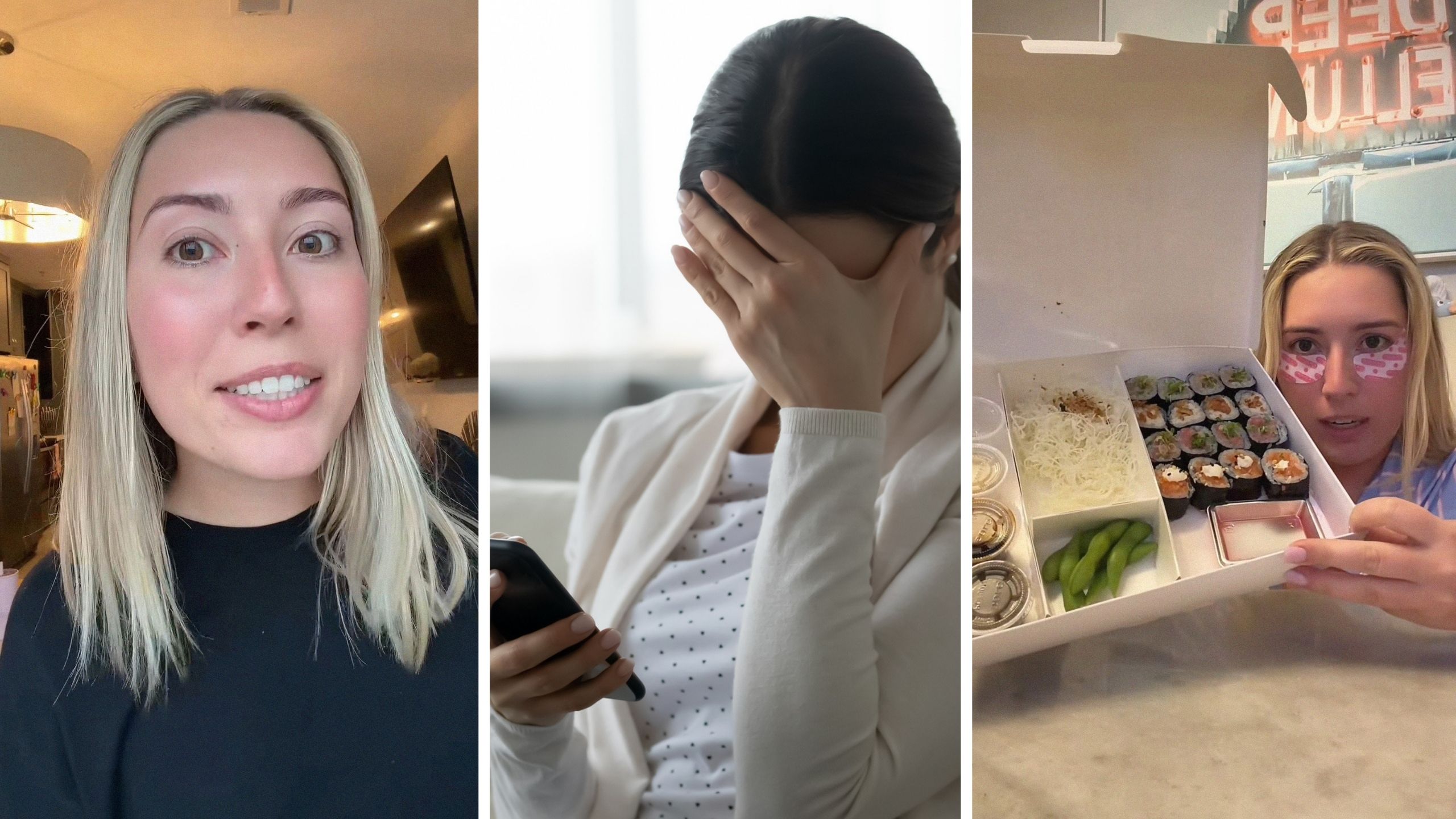
When you leave a negative review for a business, you probably don’t expect the threat of a lawsuit.
However, that’s exactly what one Dallas, Texas-based teacher and TikTok creator says is currently happening to her after a video showing a negative experience at a local restaurant started to gain traction on the platform.
According to Kori Goerlitz (@korigoerlitz), she placed an Uber Eats order for sushi from the restaurant Domodomo, which has a location in Dallas, Texas.
After she ate the sushi, which she called “delicious,” she alleged that, following the meal, she had “food poisoning all night.”
Once she posted the video, she received an email.
What Did This Restaurant Send Their Reviewer?
After Goerlitz’s allegation started to get thousands of views on the platform, she says she received a frightening email from the restaurant.
“We have observed that your video falsely alleging that Domodomo Dallas caused food poisoning continues to gain significant views and public engagement,” the email reads in part.
Later in the email, the sender claims that, as a result of her video, the “business is suffering ongoing reputational and financial harm, including loss of customer trust and revenue. You are now on clear notice that each additional view and share is compounding the damages caused by this false allegation.”
“Your continued publication of this content constitutes knowing and willful defamation,” the email concludes. “You will be held fully responsible for all resulting damages.”
Goerlitz did not respond. According to her, this was simply due to the fact that she is a teacher and thus “busy all day.”
Then, the restaurant allegedly followed up on the email via text message.
“We previously sent you a formal email and TikTok DM regarding your video alleging our restaurant caused food poisoning. We have not received a response, and the content remains live and continues to gain views, causing harm to our business,” the message reads in part. “Please review our prior messages immediately.”
What Happened Next?
After reading through all the messages, Goerlitz was taken aback.
“My problem with all this is that they never try to make anything better,” she says in her video. “Like, if they would have reached out to me in the beginning, like, ‘We’re so sorry. We would love for you to try us again and give us another shot,’ I would have been open to it.” In the overlay text, she clarifies that this could include deleting the video.
Instead, she says that the restaurant appears to be trying to “[silence] a small creator.”
“I have 400 followers. Not a big deal. I’m a nobody. OK? It has 13,000 views. It’s not viral,” she says of her original video.
“You could have just said sorry, and I would have deleted it,” she adds.
Since posting this video, Goerlitz’s story has spread quickly. Her original video has jumped from 13,000 to 812 thousand views. The follow-up, which features the email and text message, has over 1.3 million.
Can You Really Be Sued Over A Negative Review?
While the email does not make an explicit threat of legal action, it claims that Goerlitz’s video is “knowing and willful defamation.”
Generally speaking, negative reviews are protected under the First Amendment. You are allowed to review a restaurant and say that you didn’t care for their food, and you will usually be protected under the First Amendment.
If the business wants to claim that Goerlitz’s video is defamation, it must generally prove that a false statement was made that caused damage to the business’ reputation.
In cases like these, the business often must demonstrate that the defendant acted with actual malice. This means that the person leaving the review—in this case, Goerlitz—either knew her claim was false, had serious doubts about whether it was true, or published it with reckless disregard for whether it was true or false.
This is pretty hard to prove legally. Not only that, but anti-SLAPP statutes in many states allow reviewers to quickly dismiss lawsuits that are deemed potentially frivolous.
Given this, it’s not surprising that lawsuits against negative reviews are rare—and often unsuccessful.
Still, that doesn’t mean that a restaurant like Domodomo can’t try to file suit. They may claim that Goerlitz could not prove that she had food poisoning or that the restaurant definitely caused it. Whether this reasoning holds legal water would need to be tested in court.
@korigoerlitz A restaurant in Dallas is threatening legal action against me! #dallas #dallastx #dallasrestaurants
Commenters Are Shocked
While Goerlitz notes in the comments that she’s not worried as her sister is a lawyer, other commenters were appalled by the email and text message the TikToker received.
“‘unverified’ did they attempt to verify it? how would they? how would you?” asked a user.
“Craaaazy decision on management’s part,” stated another.
“They made it SO much worse!!! Sometimes, things happen and people do get sick. It doesn’t mean the restaurants bad,” reads a further comment, in part. “But to threaten you this way and come after you because you shared your experience makes them look like they are covering something up and that they are definitely horrible people.”
BroBible reached out to Domodomo Dallas and Goerlitz via email.