


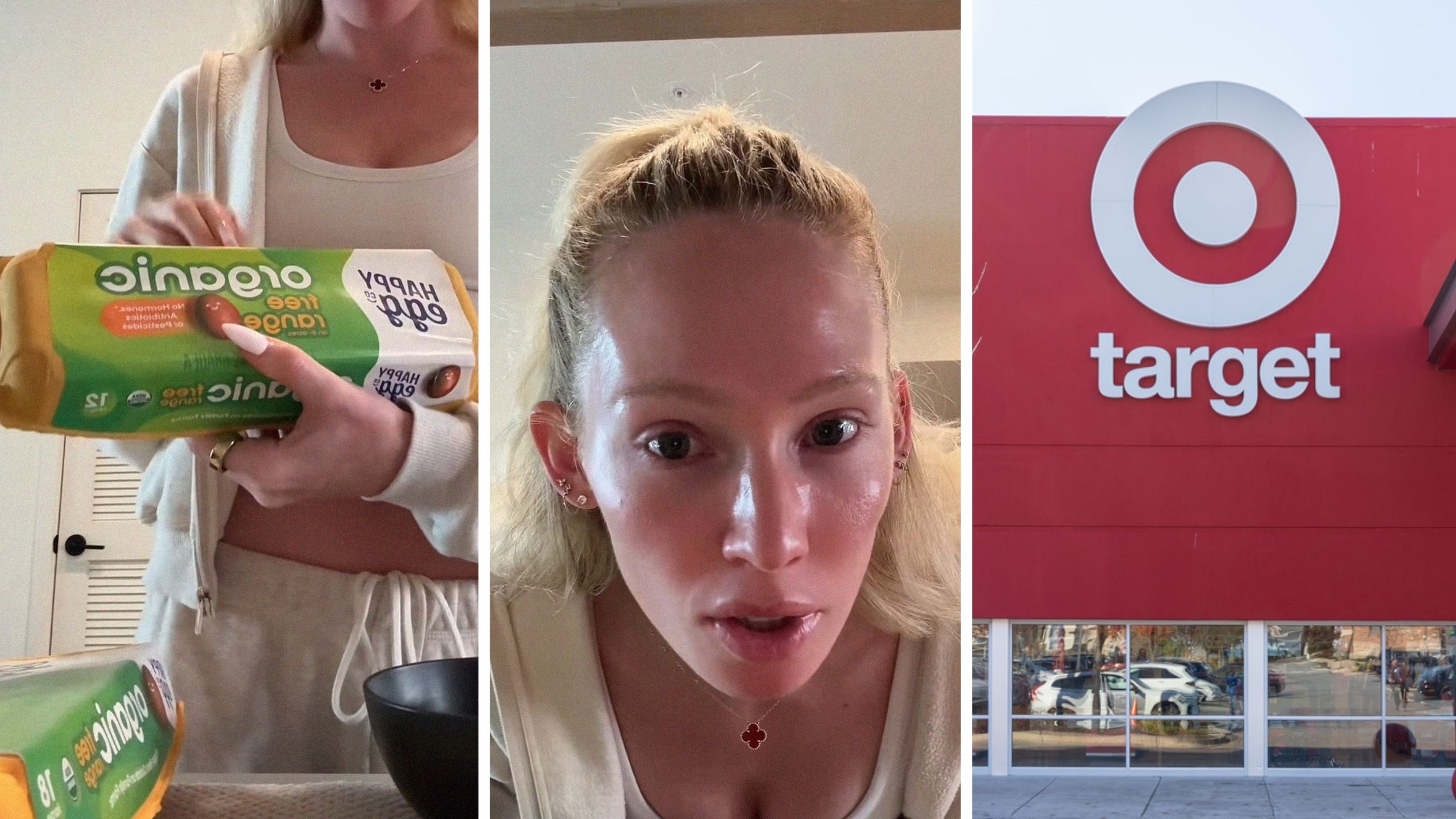
Even as eggs climb in price, many claim that it’s worth it to shell out for the more expensive varieties.
According to some, free-range, pasture-raised, and organic eggs all have a better flavor than their cheaper alternatives—with the added bonus of being better for the chickens involved. Because of this, many say it’s better to spend the extra money to buy a higher-tier egg.
Naturally, there are some problems with this thinking. First, many of these terms are marketing terms, not legal designations. As a result, they aren’t protected or don’t mean what consumers think they do. Consequently, buyers end up paying more for eggs that could be of the same quality as their cheaper counterparts.
Second, eggs can vary considerably from egg to egg and hen to hen. But how much variance is normal? One TikTok user is asking after buying a package of eggs from Target.
What’s Wrong With These Eggs?
In her video, TikTok user Ken (@prettyglowclub) says that she’s “LIVID” after a recent egg purchase.
According to Ken, she typically buys Happy Egg Free Range Organic eggs. Usually, she gets them from Sprouts Farmers Market. However, she recently picked up another dozen from Target.
When she cracked open this new dozen, she noticed something strange.
“I had two left in my other container that I got from sprouts. So, I just cracked one of the eggs out of the new container from Target. They’re exactly the same thing on the cartons,” she says. She then shows the eggs. The new eggs have yolks that are several shades lighter than the old ones.
“Why is it yellow? Why is it bright yellow?” she asks.
While she confesses that she doesn’t know what the color change means, she says that the fact that it is a different color indicates that something is wrong—possibly, that “they’re fake.”
“I just wanted eggs. Why are they yellow? I don’t understand,” she says. “Why can I get this exact thing from sprouts, and they’re perfectly fine?”
“They’re gorgeous orange—how they’re supposed to look,” she continues. “Why the f— do I buy the same exact thing from Target and they’re bright yellow?”
What Does Egg Yolk Color Mean?
Some internet users claim that a darker yolk means a better egg. As noted by Food & Wine, this isn’t always the case.
In short, egg yolk color can vary for a variety of reasons. Usually, these reasons are related to a chicken’s diet; chickens eating corn or alfalfa meal typically produce brighter yolks, while chickens that spend more time foraging outside often produce deeper, more orange yolks.
However, one cannot determine the quality of an egg solely by looking at a yolk’s color. Chicken feed can be supplemented with marigold petals or red pepper, which darken yolk color. Additionally, yolk color can change based on seasonal access to the outdoors, regular changes in feed, and even simply the hen that laid it.
This means that one can crack open several eggs from the same package and experience a spectrum of different yolk colors. This does not mean that something is wrong with any individual egg, nor does it mean that any of the eggs are fake.
Do Dark Yolks Mean Better Eggs?
Still, this misconception that a darker egg color inherently means a better egg is so pervasive that many eggs advertise their golden yolk color, even if that’s something that they cannot guarantee.
Happy Egg, the company that produces Ken’s eggs, advertises on its website that their eggs have “Organic, Tasty Orange Yolks.” The company claims to achieve this by using “the best organic ingredients for our hen’s feed” while allowing the birds to graze on “grass and bugs on 8+ acres.”
Under normal circumstances, these actions would seem to result in a darker yolk. That said, this is not always the case—and, given this advertising, Ken’s reaction to seeing a lighter yolk is a bit more understandable.
@prettyglowclub I’m actually LIVID!! @target @Happy Egg
BroBible reached out to The Happy Group via email and Ken via TikTok direct message and comment.