


iStockphoto / dndavis/Brian Sevald/arrarorro/Florian DENIS
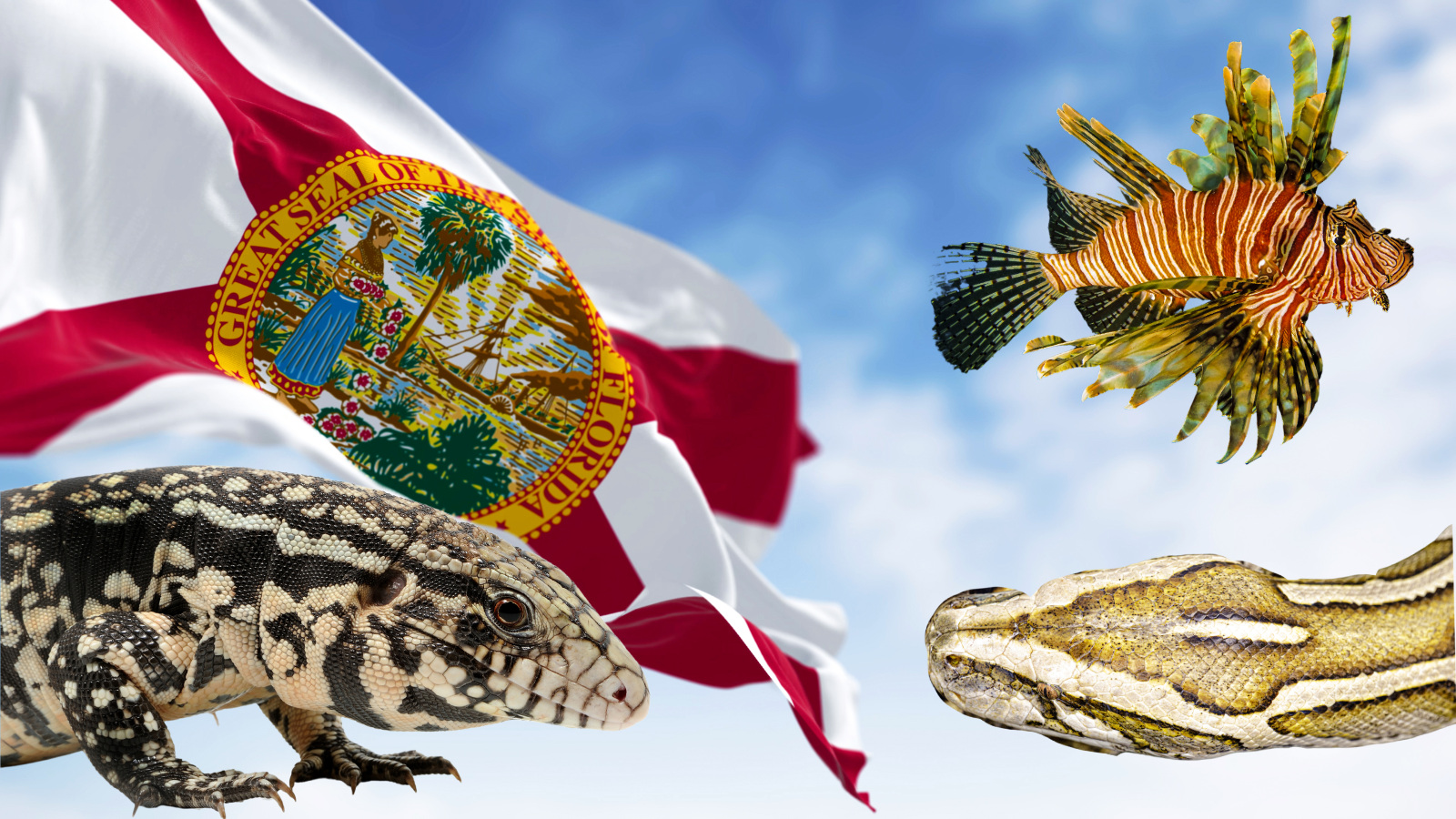
The state of Florida is home to over 500 nonnative species with nearly 150 of those having already gained a breeding foothold in the Sunshine State, establishing new populations in the wild. To keep track of the worst, the Everglades Dirty Dozen list was created.
The infamous Everglades Dirty Dozen list is now getting a shakeup here in Florida. There will be 3 invasive species removed from the existing list and 3 new species added.
What is the Everglades Dirty Dozen List?
For those unfamiliar, the Everglades Dirty Dozen list was created by the Everglades Cooperative Invasive Species Management Area, or CISMA for short. They are an organization that fights to protect Florida’s most precious native wetlands, and the Everglades National Park, from destructive nonnative species.
The current list includes 8 animals and 4 plants. I’m a born and raised, multi-generational native Floridian, and some of these nonnative species are so endemic to certain parts of Florida I had no idea they were invasive until I first came across the list.
Currently, the list includes the Burmese Python, Black and White Tegu, Chameleons, Nile Monitor, Cuban Treefrog, Giant African Land Snail, Bullseye Snakehead, Lionfish, Australian Pine, Old World Climbing Fern, Brazilian Pepper, and the Air Potato.
For some of those species it is blatantly obvious they are nonnative to Florida because they have their root origins in their names. Burmese pythons hail from Burma and Southeast Asia. Nile monitors come from Sub-Saharan Africa. The Cuban Treefrog is native to Cuba. So on and so forth.
I had no idea the Air Potato is nonnative though. I’ve seen those growing around SW Florida for my entire life and had always assumed they were just part of native Florida ecology. So you learn something new every day, I guess!
Which Species Are Coming And Leaving The List?
According to a recent report from Kimberly Miller with the Marco Eagle, changes to the Everglades Dirty Dozen list were discussed at the 2025 Everglades Cooperative Invasive Species Management Area annual meeting. That has since prompted the changes that will soon go into effect.
As for the changes, University of Florida wildlife ecologist Melissa Miller told the Marco Eagle “we really want to focus on animals we know are doing the most harm, or ones that have a high potential to do so, and that’s why we are fine tuning the list. It’s kind of subjective because we have so many heavy hitters as far as invasive reptiles and amphibians go.”
Being added to the new Everglades Dirty Dozen list are the (1) Green and Spiny-Tailed Iguanas, (2) colorful Peter’s Rock Agama, and (3) poisonous Cane Toad.
The three species being removed from the Everglades Dirty Dozen list are the Cuban Tree Frog and two species of chameleons (Furcifer oustaleti and Chameleo calyptratus).
According to the report, the reason chameleons and the Cuban tree frog are being removed and others are added, despite these nonnative species predating on native species, is because they are considered to have less of an impact on native species than the three new invasive species that are being added. That is to say they eat less frogs, snakes, and other small critters than the ones being added and cause less measurable harm.
To learn more about Florida’s nonnative fish and wildlie, you can visit the FWC’s resource page.