


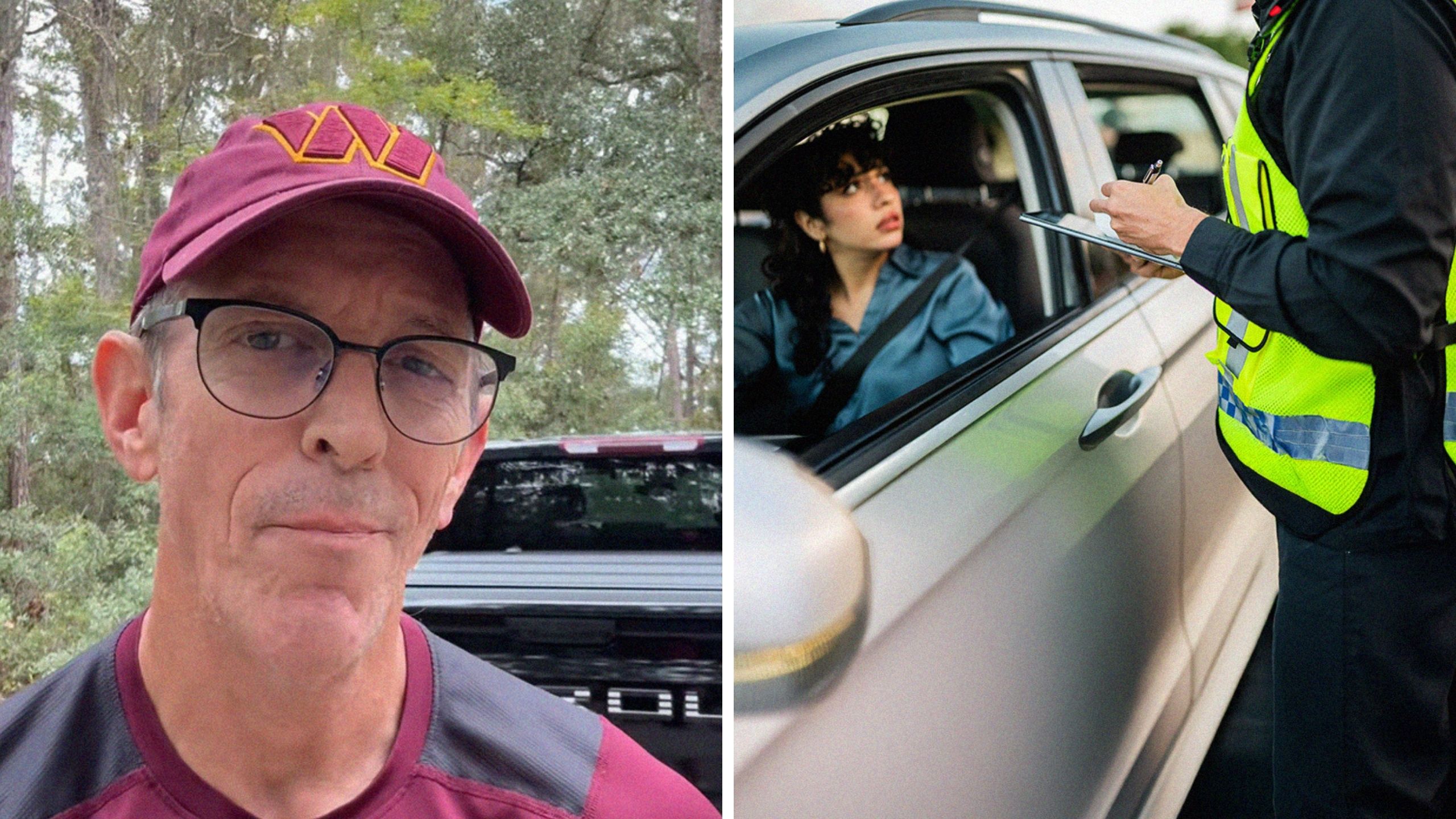
Lots of Americans fear being stopped by the cops, even if they’re done nothing wrong.
For some people, this is a fear rooted in previous, violent interactions with the police. For others it’s simply paranoia. After all, there are lots of traffic laws. What if you broke one, and you didn’t even realize it?
When one gets pulled over by a cop, there’s always a chance that the officer is looking for more than just a simple speeding charge. That’s why many legal experts advise that one be careful with their answers to whatever questions a police officer asks you.
Now, a former FBI agent has sparked discussion after sharing three common questions a cop might ask during a traffic stop that you should avoid answering.
What Police Questions Shouldn’t You Answer?
In his video, TikTok user Steve Lazarus, who describes himself as an “author, retired FBI Special Agent, and United States Air Force veteran,” says there are three common questions that a police officer might ask you that could cause problems.
The first question is simply “Where are you headed today?” or “Where are you coming from?”
“This one’s iffy,” Lazarus states. “He’s hoping you’ll say, ‘I’m coming from a Super Bowl party’ or something similar so he can develop enough reasonable suspicion to hook you up for a DUI.”
“The safe bet is ‘I’d rather not answer that,’” he continues. “But, if you’re leaving church or your shift is a volunteer at the children’s hospital, and you think that may work in your favor, that’s your call.”
The Next Traffic Stop Question To Avoid
The second question is, “Do you know why I stopped you?”
“He knows why he stopped you, but he’s hoping you’ll provide more bait for his little fishing trip,” Lazarus explains.
Instead of answering, even if you have a suspicion as to why, Lazarus suggests simply saying “no.”
Finally, another question one might encounter during a traffic stop is, “Would you mind if I just took a quick look around inside your car?”
“Same fishing trip, but now he just wants to see how stupid you are. You’re not,” he shares. “So, the answer is, ‘I do not give you permission to search my person or my vehicle.’”
In summary, Lazarus states that one should be “polite but firm.”
“Never forget this was an adversarial situation the moment you saw those lights in your rearview,” he says.
Are These Police Tips Accurate?
While there may be disagreements about how much one should comply with police questions or requests, all of Lazarus’ advice is legally protected.
As noted by the ACLU, someone who is pulled over by the police has the right to remain silent. That said, you must show identifying documents, such as a driver’s license, registration, and proof of insurance, if requested by a police officer.
Beyond that, one is largely not required to answer any additional police questions.
Furthermore, you do not need to consent to a police search. That said, if a police officer decides that they have probable cause to search the car, they can do so. If the officer then finds incriminating evidence, a lawyer could argue that the officer did not have suitable probable cause to perform the search.
@steve.lazarus.books Silence is often misunderstood, but never misquoted. When in doubt, say nothing. lawyerup trafficstop knowyourrights legaladvice miranda pleadthefifth fifthamendment dontfallforit policemisconduct fourthamendment getawarrant searchwarrant staysilent stayquiet fbi
♬ original sound – Steve Lazarus Books – Steve Lazarus Books
Commenters Share Their Stories
In the comments section, users offered their own stories and methods for dealing with these situations.
“The safe bet is ‘where are you heading?’ ‘North.’ ‘Where are you coming from?’ ‘South,’” wrote a commenter.
“When I say no they can’t search my car, they literally always ask me why not. I was taught to say ‘because my mama told me to tell you no.’ They always look befuddled. It’s hilarious,” added another.
“I can’t stress how important it is to be respectful and follow the officer’s instructions,” noted a third.
UPDATE: In an email, Lazarus told BroBible that by being compliant, polite, and respectful, one can generally “move things along” without divulging too much information.
However, he noted that this advice may not be wholly applicable, as many commenters expressed concern about how this advice would apply to people of other races.
“There’s no question that people of color have different experiences dealing with law enforcement,” he wrote. “That said, I still maintain that a polite, respectful demeanor can still keep everything safe and civil, even when declining to answer an officer’s questions.”
“I’d like people to know I’m not trying to be ‘anti-cop,’ or make their lives more difficult or dangerous. I just think everything works better when we all know our rights, and assert them calmly and politely when necessary,” he added. “As I said in the reel comments, no professional, experienced police officer is going to be offended by any of this.”