


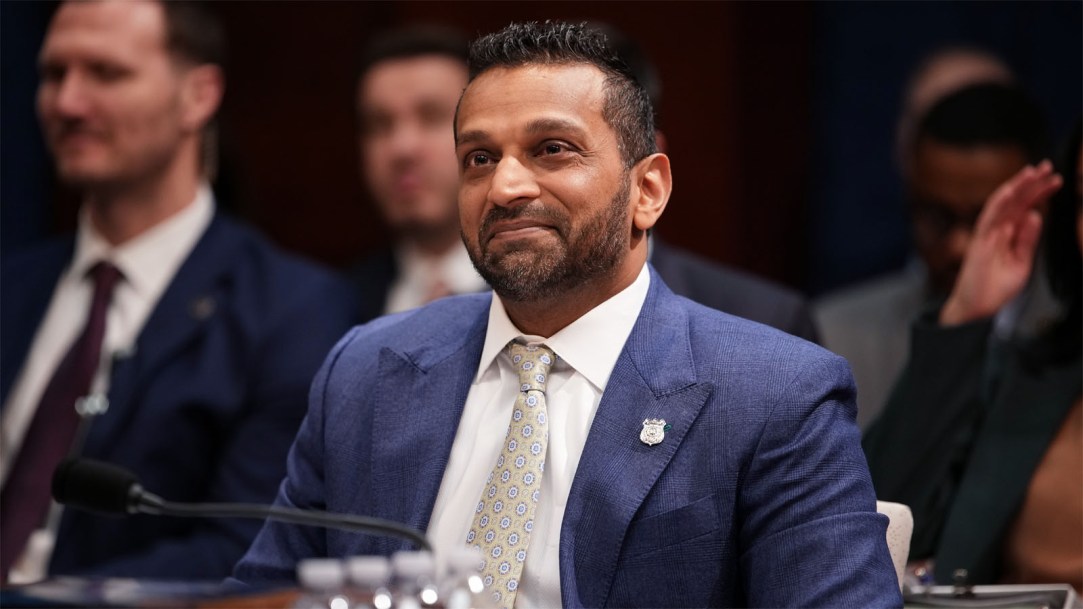
FBI Director Kash Patel admitted in a Senate hearing on Wednesday that the agency buys location data to track Americans’ movements and location history. Patel made this disclosure in response to a query from Oregon Senator Ron Wyden, a longstanding opponent of unwarranted surveillance of Americans.
“We do purchase commercially available information that’s consistent with the Constitution and the laws under the Electronic Communications Privacy Act, and it has led to some valuable intelligence for us to be utilized with our private and partner sectors,” Patel said during the Senate Intelligence Committee’s annual Worldwide Threats hearing.
“So you’re saying that the agency will buy Americans’ location data?” Wyden responded. “I believe that’s what you’ve said in some kind of intelligence lingo.
“Doing that without a warrant is an outrageous end run around the Fourth Amendment, it’s particularly dangerous given the use of artificial intelligence to comb through massive amounts of private information.
“This is Exhibit A for why Congress needs to pass our bipartisan, bicameral bill, the Government Surveillance Reform Act.”
The Government Surveillance Reform Act, a bipartisan, bicameral measure filed last week by Wyden and several other legislators, would, among other things, prohibit government agencies from purchasing Americans’ personal data from data brokers without a court-authorized warrant.
It may be legal, but is it ethical? And what do the courts say about it?
By citing the FBI’s adherence to the Electronic Communications Privacy Act, Patel justified the practice as legal and beneficial for national security operations.
In 2018, the Supreme Court held that law enforcement must obtain a warrant to access location data from cellphone companies. The FBI, however, may legally obtain information on anyone without a warrant by purchasing this data from private data brokers.
Senator Wyden, on the other hand, using artificial intelligence as one example, emphasized the risks of operating without a warrant and acquiring Americans’ location data. He cautioned that if someone gave AI unrestricted access to millions of people’s personal data, the wrong people could potentially obtain it.
However, Committee Chair Arkansas Senator Tom Cotton argued that the problem is one of market access rather than illegal surveillance. “The key words are commercially available,” Cotton said. No one has tested this legal theory in court thus far. That day may come soon, though.