


via Fred Minnick
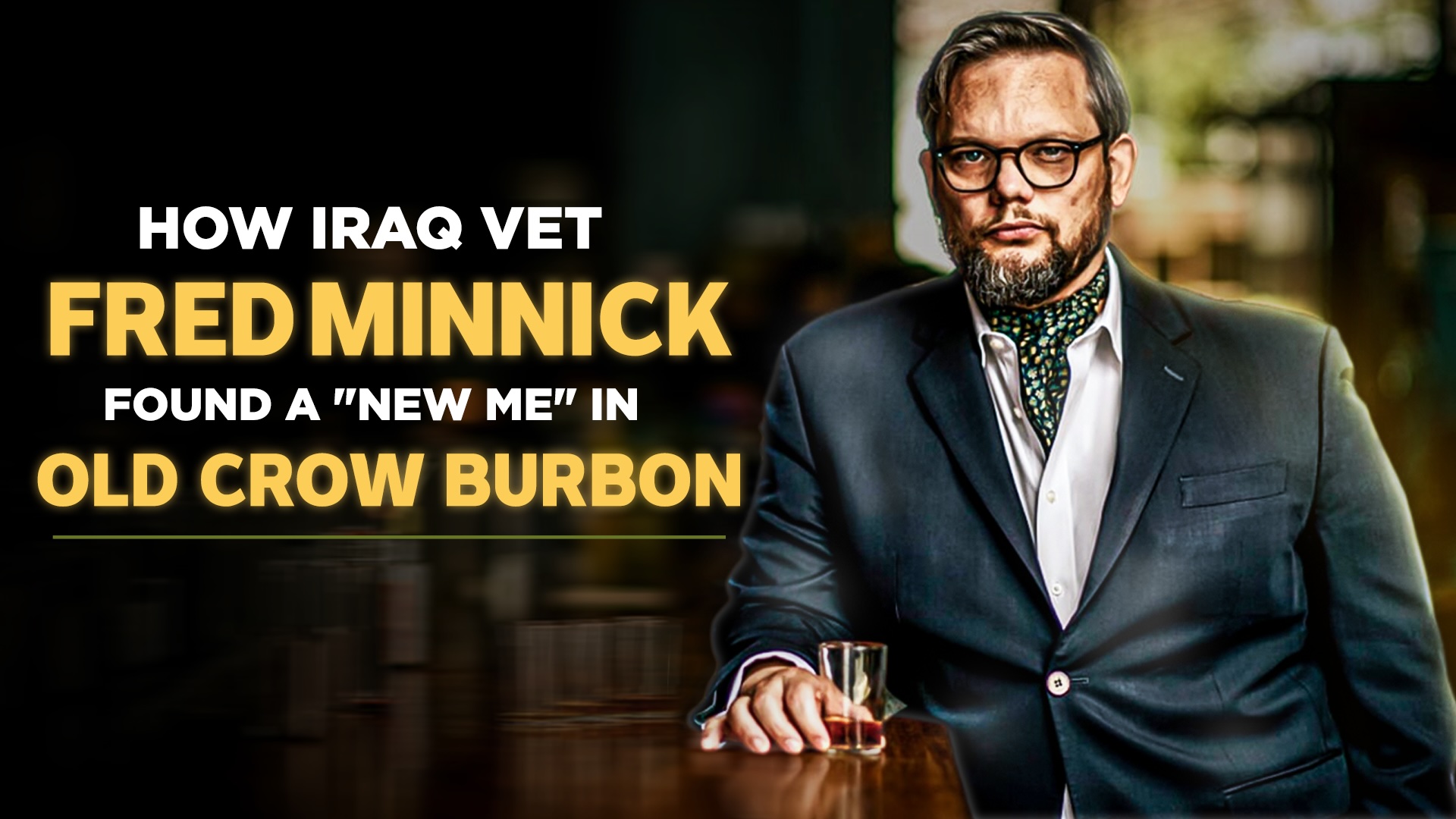
Fred Minnick is floating on the kind of high you can’t buy, even on the bourbon secondary market.
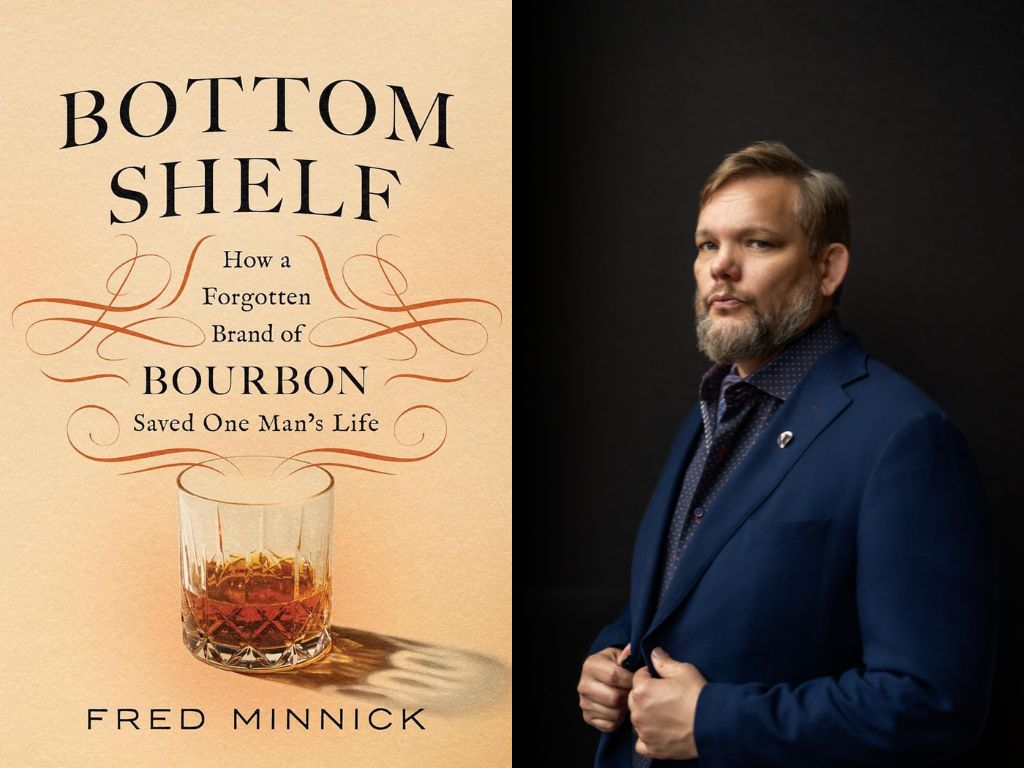
It’s launch week for his new book, Bottom Shelf: How a Forgotten Brand of Bourbon Saved One Man’s Life, and the ascot-clad oracle of American whiskey is fielding the kind of feedback that changes a writer’s life. “It’s been like a dream, you know?” Minnick tells me over Zoom from New York. “This book has been a work in progress for 20 years, essentially. And it’s like it’s my life.”
For a guy whose palate has dictated the fortunes of distilleries, the reception to Bottom Shelf has nothing to do with tasting notes. It’s about trauma. “I had one vet who came up to me and said he got help because of my story,” Minnick says, his voice carrying the weight of the interactions. “I’ve had people who’ve lost kids and miscarriages reach out to me and say, like, we went through the same thing. I had no idea the impact it would have… I’ve not experienced anything like this in my professional life. The only thing that I have experienced that feels this incredible has been marrying my wife and the birth of my kids.”
Bottom Shelf is a remarkable, vulnerable tightrope walk. It intertwines the deeply personal, harrowing reality of Minnick’s own PTSD with the historical biography of James Crow, the namesake behind Old Crow bourbon. On paper, mixing severe psychological trauma with a spirit that is 40% alcohol by volume feels like a dangerous cocktail. Minnick knows this. He enlisted in the Army in 1996 and went to boot camp in 1997, long before the post-9/11 reality of the military set in. By 2004, he was serving as an Army photojournalist in Iraq. In the early chapters of Bottom Shelf, he doesn’t flinch from the darkest depths of his battle with PTSD following that deployment, including a suicide attempt one month after getting married.
For years, he kept the mechanics of his recovery close to the vest, burying the sheer weight of surviving car bombs, snipers, and a terrifying patrol in June 2004 where his unit was ambushed and a rocket-propelled grenade landed right at his feet. “I thank God that that RPG was a dud,” Minnick has previously noted of the incident. “If it had gone off, I wouldn’t be here.”
TAP TO WATCH: Fred Minnick + BroBible publisher Brandon Wenerd conversation on the BroBible YouTube.
“I was really hesitant to ever talk about how I became a taster, because I was nervous about people taking it the wrong way,” he explains. “I didn’t want people coming off of like, thinking that I’m telling people to go start drinking and become an alcoholic, and that will help you get over your problems. That was never my intent.”
But when his story began to slip out during tastings, eventually landing him a feature on the Today show, the response wasn’t criticism; it was gratitude. Therapists approached him, telling him his openness was giving people the courage to seek help. Still, Bottom Shelf didn’t start as a memoir. Minnick just wanted to write about Old Crow. It wasn’t until someone pointed out that his discovery of Crow’s liquid genius perfectly intersected with his own use of a coping mechanism to manage his anxiety that the true narrative clicked. “I was like, oh, yeah… I guess that is my book,” he laughs. Because the research had been simmering for two decades, writing it became “one of the easiest things I’ve ever written.”
Those battlefield close calls followed him home, leading Minnick to seek therapy through the Department of Veterans Affairs and an eventual PTSD diagnosis. The reality of Minnick’s salvation wasn’t found in the bottom of a glass, a tragically common trap for veterans battling their own minds; it was found in the hyper-focused dissection of the liquid inside it. When the darkness of PTSD stripped him of his passions, including music, sports, and the basic desire to leave the house, bourbon offered an intellectual life raft, anchored by a sensory-based therapy technique he calls “taste mindfulness.” What started as a coping mechanism evolved into his signature four-point tasting method, in which he uses mindfulness techniques to systematically analyze a whiskey’s color, body, aroma, and flavors.
It started one day after a therapy session. Minnick poured two fingers of his daily bourbon, Henry McKenna, into a snifter and began actively mapping the sensations on his tongue. He noted sweetness on the tip, savory notes in the middle, spice in the back. Suddenly, a specific memory clicked: Grandpa’s cornbread with butter and honey. He literally jumped up and down in his office. By forcing his brain to forward-think about his taste buds, he was reprogramming his consciousness, actively pushing the horrors of Iraq further into the rearview mirror. As he writes in the book, “This is the moment a new me was born.”
He realized bourbon lacked the rigorous, evocative analysis that critics like Karen MacNeil and Robert Parker had brought to the wine world. Minnick set out to be a pioneer of bourbon tasting notes. But his obsession with the spirit didn’t stop at the palate.
“It wasn’t about consuming bourbon,” he clarifies. “It was the information of it. I was fascinated about every aspect. Like, how was the corn grown? Was the corn GMO? Tell me about these stills… Let’s take white oak for the most part. Where are these trees growing? How are they growing? Who owns these trees?”
via Fred Minnick
By throwing his restless mind into the history and the personalities of the men making it, such as Jim Beam’s Fred Noe, whom Minnick affectionately notes wields an impressive 72 cuss words every five minutes “like it’s an art,” Minnick found his way back to himself. Finding purpose as a researcher and an independent ambassador for the spirit saved him.
He also found a historical mirror in James Crow.
The whiskey industry is famously built on what Minnick wryly calls “half-truths.” Walk into a liquor store today, and you’ll find shelves lined with bottles named after long-dead men, bearing romanticized tales cooked up in boardrooms. Even the geographical origins printed on labels are often cleverly disguised fiction. “A lot of the stuff that was said about distillers in the past were lies,” Minnick says point-blank. “They just made them up.”
Take James Crow. For over a century, the man has been billed as a brilliant Scottish doctor who brought scientific rigor to Kentucky distilling. “I emphatically prove in this book, he is not a doctor,” Minnick laughs. “He was never a doctor. There’s no evidence of him ever going to medical school.”
But the truth Minnick uncovered about Crow was far more compelling than the marketing spin. Crow was a complex, flawed, but inherently decent man. Minnick found a photograph of Crow sitting alongside formerly enslaved people, including one man Crow had personally taught to distill. “This has never been talked about,” Minnick says. “That gave me this sense of, like, James Crow was a really good dude and an amazing distiller, and he seems like somebody I would love to have had a drink with.”
Yet, as Minnick dug into Crow’s life, the parallels to his own became unavoidable. “He died at a distillery, and, you know, to me, there’s a lot of similarities between his life and mine,” Minnick reflects. “He was a hardworking dude who had a family, and then, at one point, he probably found himself putting himself too much into work and not spending time with his little girl. And I went through that. Finding that stuff kind of helped me put myself in check… the most important thing that I can be in my life is a husband and a father.”
Of course, Bottom Shelf wouldn’t be a Minnick joint if it didn’t occasionally veer into the wildly entertaining, slightly shady underbelly of the whiskey business. While researching Old Crow, Minnick stumbled into a bizarre, forgotten chapter of American history involving a former CIA operative leading a massive black-market Jim Beam smuggling ring during the Vietnam War. “I can go down a rabbit hole,” he admits. “I was like, oh man, this could be its own book.”
That penchant for historical rabbit holes makes Minnick a walking encyclopedia of booze lore, constantly uncovering the wild truths buried beneath the industry’s polished marketing. Take, for instance, the forgotten history of Pennsylvania rye whiskey. When I ask him about the spirit that once rivaled Kentucky bourbon in the 1800s, Minnick casually drops a mind-bending theory about why the state’s industry collapsed. Prior to Prohibition, Pennsylvania distillers struck deals to hide their stocks in the Bahamas, planning to bootleg them back into the States. Kentucky distillers tried to do the same in Cuba, but the Cubans demanded too much money. Stuck with their whiskey in the U.S., the Kentuckians aggressively pushed for “medicinal” whiskey sales during the height of the Spanish Flu. Kentucky survived on legal prescriptions; Pennsylvania got robbed blind by dirty feds and bootleggers. “There would be shootouts… massive fights outside of warehouses,” Minnick grins.
He approaches the modern bourbon boom with the same historical perspective and a healthy dose of skepticism. Minnick loves the liquid, but he mourns what the culture has become as the industry has chased the almighty dollar. He points to a moment at the Bourbon & Beyond festival when it was casually revealed that the Pappy Van Winkle family had worked with Facebook to shut down secondary market trading groups. “That was a moment where bourbon started faltering a little bit,” he says. “They stopped understanding that this is a fun hobby for a lot of people… they got so focused on compliance… I think that hurt bourbon.”
The casual, neighborhood-bar camaraderie has been replaced by an obsession with prestige and the mythos of “dusties”: vintage bottles that collectors pay thousands for, despite the grim reality of their origins. “I have found things that were stored in garages next to gasoline cans, and the vapors would get into the whiskey bottles,” Minnick says, shaking his head at the dusty-hunter craze. “Same thing in an old, damp, nasty basement. You just, there’s that stink, that smell, it all kind of collects on the bottle, and it’s pretty disgusting.” (Though he notes that if you are hunting, the new “dusties” are bottles from the early 2000s, like the Buffalo Trace Antique Collection, early Jefferson’s 15-year, or Evan Williams single barrels before the conglomerates fully took over).
He’s equally amused, and slightly concerned, by the younger generation of whiskey enthusiasts who want the prestige without the prologue. “They don’t want to pay the dues, like we did on Jim Beam white label,” he jokes. “Here I was a 21-year-old kid kicking back Jim Beam, partying it up. They’re like, no, no, no. Give me Pappy. I’m like, you’re 22! Drink Jim Beam!”
Furthermore, he notes, their social setting isn’t the local pub anymore; they’re “on a group text with their friends, popping a gummy on the couch,” a trend that is currently demolishing the beer industry. Minnick sees a larger, somewhat hypocritical societal shift at play. “You’ve got every significant health organization talking about how even one drink is bad for you,” he argues. “But we have food dyes and synthetic sweeteners in every little thing… and we have maybe ten years of data on them. We have thousands of years of data on alcohol. I just feel like there’s a massive agenda from some folks to curb alcohol consumption.”
To Minnick, this isn’t just about beverage choice; it’s a war on socialization. He misses the days when a local watering hole was an absolute community pillar. “Back in the 60s to the 90s, somebody could go into a pub and they would cash their check,” he explains. He loves the lore of how deep that loyalty ran: “I’ve heard stories of people… if something happened to them in a car wreck, they didn’t choose a family member [to go to the hospital]. They chose their bartender at a pub in Chicago.”
“Bars mean something to people,” he says, shouting out Travel Bar in Brooklyn, his “favorite bar in the country,” for keeping that old-school ethos alive with knowledgeable bartenders and honest prices. “Bourbon has gotten so popular that it’s gotten more fancy-town. And there’s nothing wrong with that, but those neighborhood bars, that is a big thing that built bourbon, and it is sad that we’ve kind of lost some of that in the culture. Everything is about how good is a bottle and how much is it. That’s one of the sad things that has happened in bourbon.”
It’s a far cry from the grassroots, down-home world Minnick built his life around as a bourbon expert. Over the past two decades, he willed himself into becoming the premier voice in American whiskey long before there was any real money in it. He credits writer Chuck Cowdery for laying the foundation of American whiskey journalism, but Minnick carved his own lane by taking “taste mindfulness” to the masses. He paid his dues through a gauntlet of bizarre, soul-crushing side hustles, funding his Kentucky distillery road trips by churning out freelance copy for a B2B magazine covering quick-serve restaurants and point-of-sale equipment for pizza parlors. He even remembers enduring a wildly hostile fluff interview with a Chipotle C-suite executive just to ask about the chain’s hot sauce options—smiling through the sheer absurdity of it all just to keep the lights on so he could get back to writing about bourbon.
Enduring that kind of soul-sucking freelance grind just put all the right ingredients in the pot to conquer the whiskey world on his own terms and distill his own destiny juice about America’s most enduring spirit.
With Bottom Shelf, Minnick bypasses the boardroom spin to deliver a raw human reality: the best stories aren’t engineered with an advertising agenda. They aren’t sanitized press releases, and they definitely aren’t marketing copy bled dry by corporate speak and a legal department’s red pen. You have to dig through the trauma and the half-truths to find the undeniable proof at the bottom of the glass.
“If you love something, you’ve got to get it,” Minnick says. “I’ve never listened to people who told me I can’t. And if anything, someone tells me I can’t do something, that just motivates me to do it more.”