


Getty Image / Matthew Baker/Frazer Harrison
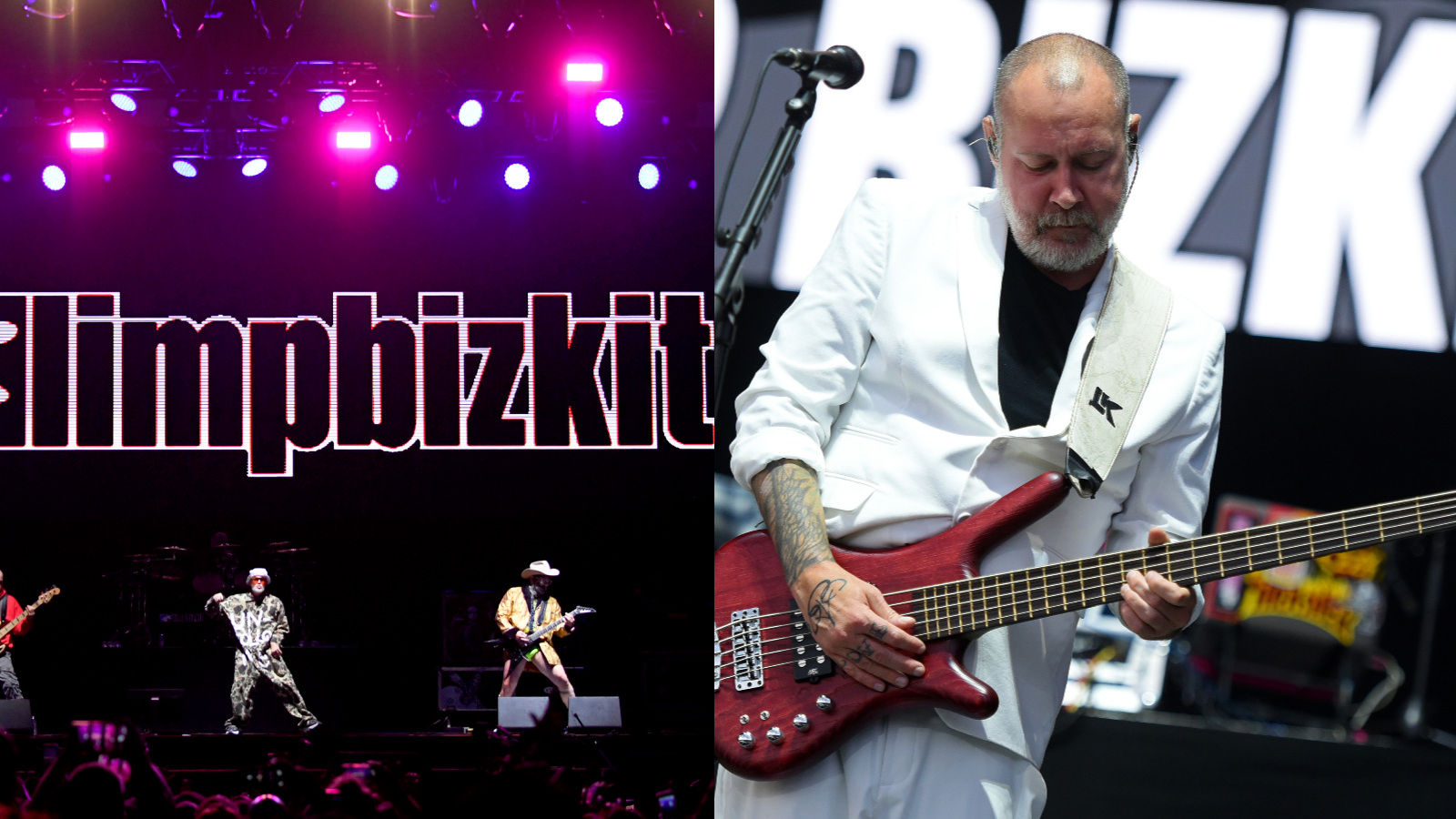
If there isn’t a mosh pit, are you even at a concert? That’s the lesson imparted onto millennials by Limp Bizkit, which remains massive in Eastern Europe and just lost founding bass player Sam Rivers to illness. He was 48.
A major study found that your favorite band is the band that you liked at age 14. If you’ve ever read Rolling Stone magazine, that tracks.
Mine then is Limp Bizkit.
At 14, my dad took my little brother and me to the ‘99 Family Values tour in San Antonio. It featured Staind, Filter, Method Man, Redman, Primus, and a headlining performance by the greatest band to ever roar out of Jacksonville, Florida. It was a foundational education.
In September, I karaoked “Counterfeit” by Limp Bizkit. Unlike many of my peers who outgrew Fred Durst’s misunderstood high school bully sendups, Rivers’ tasty bass grooves never left my soul.
The Only Acceptable Rock Band
For rap fans growing up in South Austin, Texas, and attending a majority Hispanic high school, Limp Bizkit was the only rock band that wasn’t—and I apologize for the immature and hateful vernacular—“gay.”
We liked Puffy and 2Pac and DJ Screw.
Rock music was for “kickers” (the guys with Confederate flags on their Nokia brick phones) and “bangers” (the alienated teens in black Marilyn Manson tees).
My childhood best friend Eddie did not consider the rock music genre until The Offspring’s “Pretty Fly For a White Guy.” To him, Nirvana and Oasis were like Hollywood. Distant elitists that served affluent masters.
And then, one day, Limp Bizkit offered more fury than a DMX CD.
Limp Bizkit’s transgressive cover of George Michael’s “Faith” was loud as a bomb. The subsequent record Three Dollar Bill, Y’all was a reckoning. The singer was rapping. And screaming. You wanted to wild out and get violent, as the Eminem lyric goes.
Thing is, every pretentious college radio name-drop that I can summon, every cool record in my collection from Big Thief to Todd Rundgren, traces back to the Limp Bizkit timeline.
It’s not just me.
The Millennial Gateway Drug
The most influential artists in the eyes of millennials are Britney Spears, Backstreet Boys, Usher, Puff Daddy, Eminem, Kid Rock, Blink-182, and Limp Bizkit.
Due to their commercial success and irreverent, genre-bending sonic core, Limp Bizkit served as the crossroads. They were a room of funhouse mirrors—you enter and come out the other side, transfixed. Utterly remixed at a tender age by Wes Borland’s four-string guitar licks and John Otto’s beatbox drumming and DJ Lethal using vinyl as a weapon, dropping one zany scratch solo after another.
In other words, you would listen to “Nookie,” and it would massage your neural pathways and make you more empathetic, the way great art does.
From there you attend a giant, corporatized concert. You snatch the CD. Now the kids who bought All Eyez On Me at Target in 1996 are reconsidering Pearl Jam, digging up Run-DMC, finding meaning in Christina Aguilera, and setting up for a life full of joy and fulfillment in the car because we forever skip Joe Rogan podcasts.
Limp Bizkit bred a willingness in its fans to be challenged by art—and to defend the technique against posers like Scott Stapp and Trent Reznor.
Suddenly, my guitar teacher is insisting I play the bass because I suck at guitar. Then he shows me how to play “Brain Stew” and, of course, “Rearranged.” That’s Rivers’ most iconic bass line, one so elegantly simple a depressed teenager can decode it in seconds.
And when you realize that anybody can do it, and that you learn best by doing, angry kids who got put on Zoloft because of their behavioral issues in school have something to do. And we go out into the underground and learn about punk rock and smoke weed out of a Coke can—the way God intended.
The End Of Limp Bizkit
These developmental good times could have been thanks to literally any band that existed in 1999, yes. Especially if you were born in 1985. Had you been born in, say, 1982, you would have perhaps found the Bizkit rodeo sophomoric.
What the ‘82 babies missed is that Bizkit saved millennials from themselves. Durst and the boys spoke directly to lost youths who needed an outlet for their anger before it boiled into real-world violence.
It’s no different than Judas Priest being accused of encouraging Satanism in its fans back in the ‘80s. Or Little Richard being such a possessed madman onstage that he felt guilty and became religious in 1957—when he was already saving souls.
Secular, counterculture Western pop builds community and understanding, and breeds tolerant and conscientious adults.
In 1999, with the horrors of the Columbine school shooting fresh in American culture, a nation watched in shock as Limp Bizkit’s abrasive, MTV-televised set at Woodstock led to violence and assault. The band reached the Beastie Boys zone: Where winking singles rooted in pastiche, such as “Fight For Your Right,” made by the outsiders, got popular enough to land in the fraternity house.
Despite the blockbuster success of 2000’s Chocolate Starfish And the Hot Dog-Flavored Water, Limp Bizkit was never as cool as they were before the ill-fated Woodstock appearance.
By 2001, I was listening to Radiohead. Just like every dork who performed well in English class and judged himself out of the room so he could take the Cavalier station wagon to Best Buy and cop Amnesiac.
Korn. Deftones. Linkin Park. Crazy Town. Papa Roach. System of a Down. Blink. P.O.D. Slipknot. Mudvayne. I think these bands are all better than Radiohead.
Making Love To Morgan Wallen
A fun Limp Bizkit footnote is that Lil Wayne signed the band to his Cash Money label in 2012. The rapper, who from 2005 to 2007 was the greatest in the industry and remains a force of nature, was also a Bizkit kid. They were the crossover rock band that made rap fans walk into Guitar Center and say, “Where the f— is my guitar?”
To be a Bizkit fan is to go to bat on behalf of the band, abrasively.
During Hozier’s genuinely terrible soft-rock performance at the Austin City Limits Festival this month, I felt the spirit of Fred, Sam, John, Wes, and DJ Lethal. Where was the passion, and why was this canned bologna allowed to permeate, unchecked?
And so I decided to loudly boo Hozier. For a solid minute, between songs.
Limp Bizkit made it a point to give direct answers to questions about what they didn’t like. They just released a single called “Making Love to Morgan Wallen” that is undoubtedly a jab at the N-word-using country icon.
Wallen makes me, a 40-year-old dude, worry. He’s the face of a new wave of right-wing-friendly radio country that has become pervasive among youth culture. It’s Turning Points USA rock, and every record label is snatching up white singer-songwriters like Texas’ Dylan Gossett in an effort to unearth the next Zach Bryan.
What the world needs, now more than ever, is a Sublime-loving agent of chaos who used to have dreadlocks, rhyming “serious” with “delirious.” It sure beats Adin Ross.