


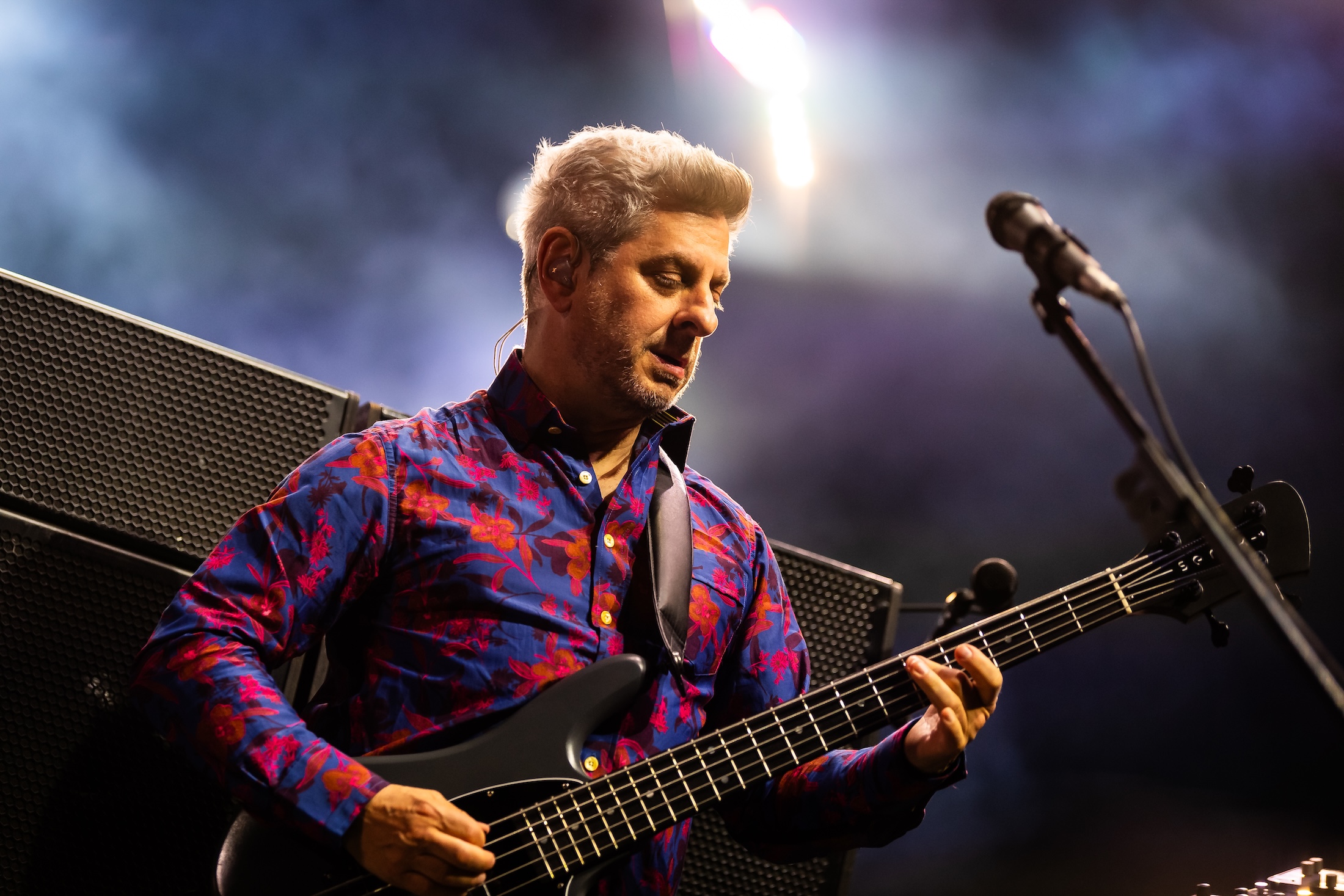
Photo by Keith Griner/Getty Images for ABA
It is one of the deepest, most persistent bits of Phish fan lore, a piece of fan-generated mythology on par with the Secret Language, or the great “Tarp Wars.” This three-word phrase has been emblazoned on t-shirts, held aloft on signs, and debated endlessly for a quarter-century:
“Mike Says No.”
For decades, the story was repeated so often that it became fact: Mike was the dismissive naysayer in Phish, especially when the band ripped a high-energy jam on stage to go into something… ahem…. a little more nuanced.
Now, in a quick digression on Rick Rubin’s Tetragrammaton podcast, he’s finally set the record straight on what he feels like is the actual origin of the phrase.
The common legend, as codified by Phish.net and Phantasy Tour, began during the “cow funk” era of 97-99. Trey, wading in the waters of a deep groove, is trying to lead the band into deep, spacey, Type II territory. But Mike, the immovable object, stubbornly holds down the one. He refuses to leave the pocket. He says “no,” musically.
The mythology only gets more convoluted from there. Dive into any fan discussion, and you’ll find a buffet of conflicting origin stories, all passionately argued:
Theory 1: The IT Festival (2003).
This is the ‘Zapruder film’ moment for most. The crowd chants for “Fluffhead.” Trey says, “Mike says no.” The band plays “Mike’s Song.” Case closed, right? Not even close. “Eyewitness” accounts can’t even agree on what happened:
- Did Mike really say no?
- Was it Trey joking and throwing Mike under the bus? (A common claim).
- Was it Page who actually gave the “no f******” way” look, and Trey just pinned it on Mike?
- Was Mike being the sober one, saving a “drugged out Trey” from butchering ‘Fluffhead’?
You can see Trey say the infamous line in this history from Wook+:
Theory 2: The ’98 Signs.
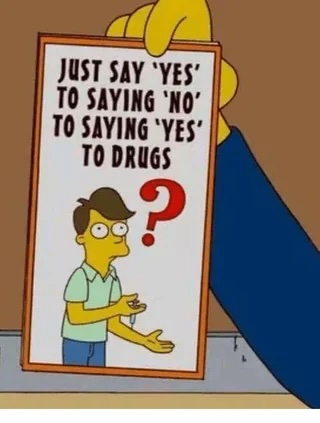
The other most-cited origin goes back even further in the band’s history. Fans at Worcester ’98 allegedly held up “Just Say Yes!” signs, pleading for Mike to “say yes” to the funk. It was almost certainly a multi-layered joke: a play on the “Just Say No” campaign, and a deep-cut nod to the classic Simpsons joke: “Just Say ‘Yes’ to Saying ‘No’ to Saying ‘Yes’ to Drugs.” These “Yes” signs then morphed into the iconic “Mike Says No.”
Theory 3: The Joke Theories.
The meme spiraled so far out of control that joke answers became indistinguishable from real ones. Was it about Camp Bisco? A Phil and Friends show? Mike refusing to share a sandwich with Page? Mike saying no became a punchline for every time the band went a different direction.
Theory 4: The Buried Truth.
And then, lost in the noise of a 14-year-old Phantasy Tour thread, a user named everythingnice, backed up by others, floated a simple theory: “Thought it had to do with mike saying no to the breakup in 04.”
We all just accepted one of the first three, including what Trey had to say onstage at IT for face value.
Brandon Wenerd is the publisher of BroBible.com. Read and subscribe to his weekly Substack newsletter, The Wenerd Weekly, where he shares thoughts on men’s fashion, footwear, Grateful Dead, and the intersection of music, media, and culture.
READ + SUBSCRIBE TO THE WEEKLY WENERD HERE
The ‘Fluffhead’ Debunk (That Was Only Half the Story)
This “Fluffhead @ IT” story became so dominant that Mike himself has been patiently correcting it for years. After all, Trey said it, so it had to be true, right?
In a 2008 Gothamist interview, Cactus explained it was all a gag by Trey:
“That was wrong. He [Trey] actually said ‘Mike doesn’t want to do it’ to take the blame off himself… I probably said, ‘I don’t know. I could go either way.’ And then he probably went to the microphone and said, ‘Mike doesn’t want to play it.’ [Laughs] So it was a little twisted.”
He gave an even punchier version in his 2012 Reddit AMA. When asked if he was “thrown under the bus,” Mike’s official account replied:
“Trey made that up – he didn’t want to play it”
So, for at least 16 years, the official story has been consistent: The IT “Fluffhead” moment was a prank by his bandmate. But in all those years of debunking the details of the IT myth, he never mentioned the breakup. It would take until 2024, sitting across from Rick Rubin, for the full origin to come out in his own words.
The Rick Rubin Interview…
In a sprawling, two-hour Tetragrammaton podcast released in November 2025, Mike just… casually… told what he feels like is the real story behind the meme. The legendary producer didn’t even ask a question about it. Mike just volunteered the answer.
At 54:12 in, while discussing Phish’s 2004 breakup, Mike drops the bomb:
“so he [Trey] called a meeting, and he said, We got to stop. And I was the one at the meeting who said, ‘Actually, I think we’re still playing well. I’m disappointed about this.’ And the fans made these shirts that said, ‘Mike said no,’ which later was attributed to another thing.”
So, in Gordon’s mind, the legend of “Mike Said No” was never about him refusing to follow a jam. It was about him being the lone holdout back in 2004, the one band member who said “no” to the Coventry-era breakup.
Phantasy Tour user everythingnice was right.
In true there are three sides to the truth fashion, Gordo clarified his take on 25 years of fan mythology. Trey’s 2003 “Fluffhead” story at IT may have been the origin of the phrase, but to Mike, saying no to the breakup was rooted in fact: he did actually say “no” — he wasn’t having it.
Why the Myth Stuck
In classic Phish fashion, the reason the myth stuck is because the “other thing” it was attributed to was also true. The musical tension was 100% real at certain points in the band’s history. Fans weren’t imagining it. Mike was the anchor, and it did create friction.
He told Rubin about the on-stage dynamic in the late 1990s:
“I would get glares sometimes in the first set… either, there wasn’t a bed of solid rhythm to sit on, or the opposite that I was so intent on laying down the solid groove that I wasn’t listening and flowing freely. So that was always a balancing act… Glares were not okay.”
That tension got so bad that it spilled over to setbreak, forcing them to create a solution—one that also speaks to the “Mike Says No” idea of judgment:
“We developed something called the ‘no analyze rule’… We were not allowed to get off stage and analyze other than saying, ‘Oh, that was really good.’… when we made the ‘no analyze rule,’ life got much, much better, because I would be in the middle of playing… I wouldn’t worry that I’m going to get shit for it later, or a glare.”
So, what’s the real story? As usual with mythology, it’s a little bit of everything.
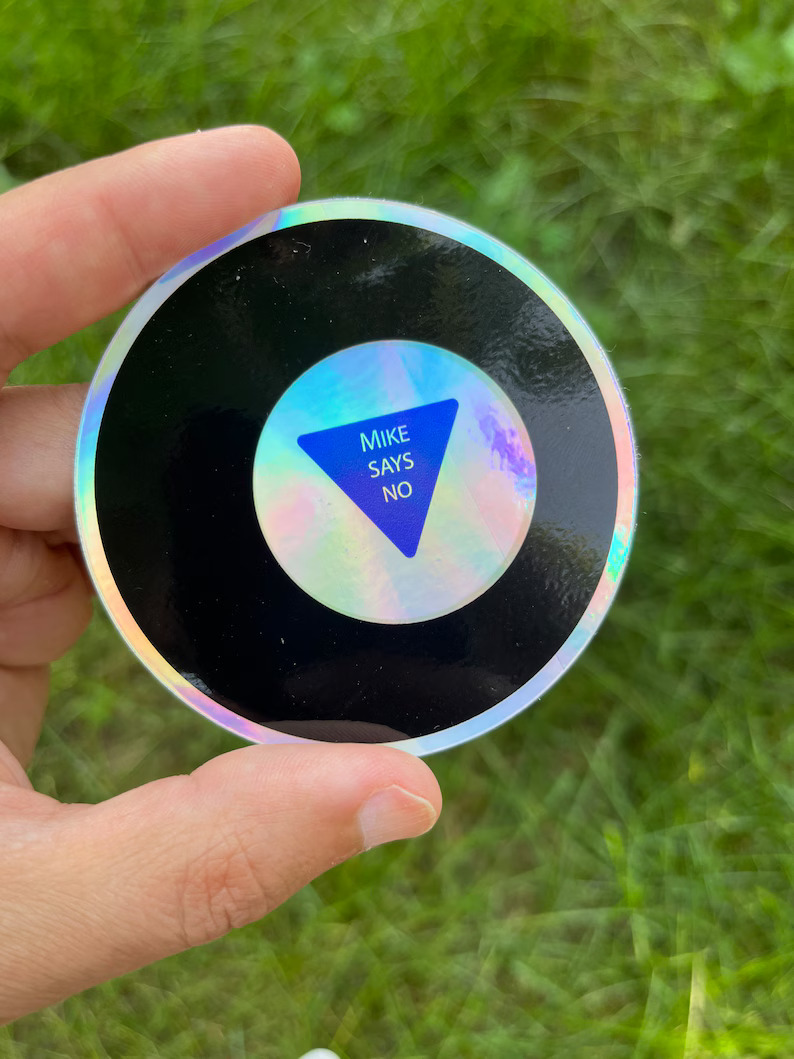
Trey may have been the one who publicly spoke the phrase “Mike Says No” into existence on stage in Maine, but, at least as Mike tells it to Rubin, the phrase was truly born from the band’s darkest moment.
But the reason it resonated — the entire reason fans built a legend around it — was that it also perfectly described the very real musical tension they were all witnessing (and the prank Trey pulled at IT). The fans just “attributed” the phrase to the wrong event, according to Gordon.
So there you have it. The origin of “Mike Says No” isn’t a funny story about a funk jam or a Simpsons reference about drugs. It’s really a somewhat heavy story about the 2004 breakup.
Which, in the most Phish way possible, makes it even more poignant.