

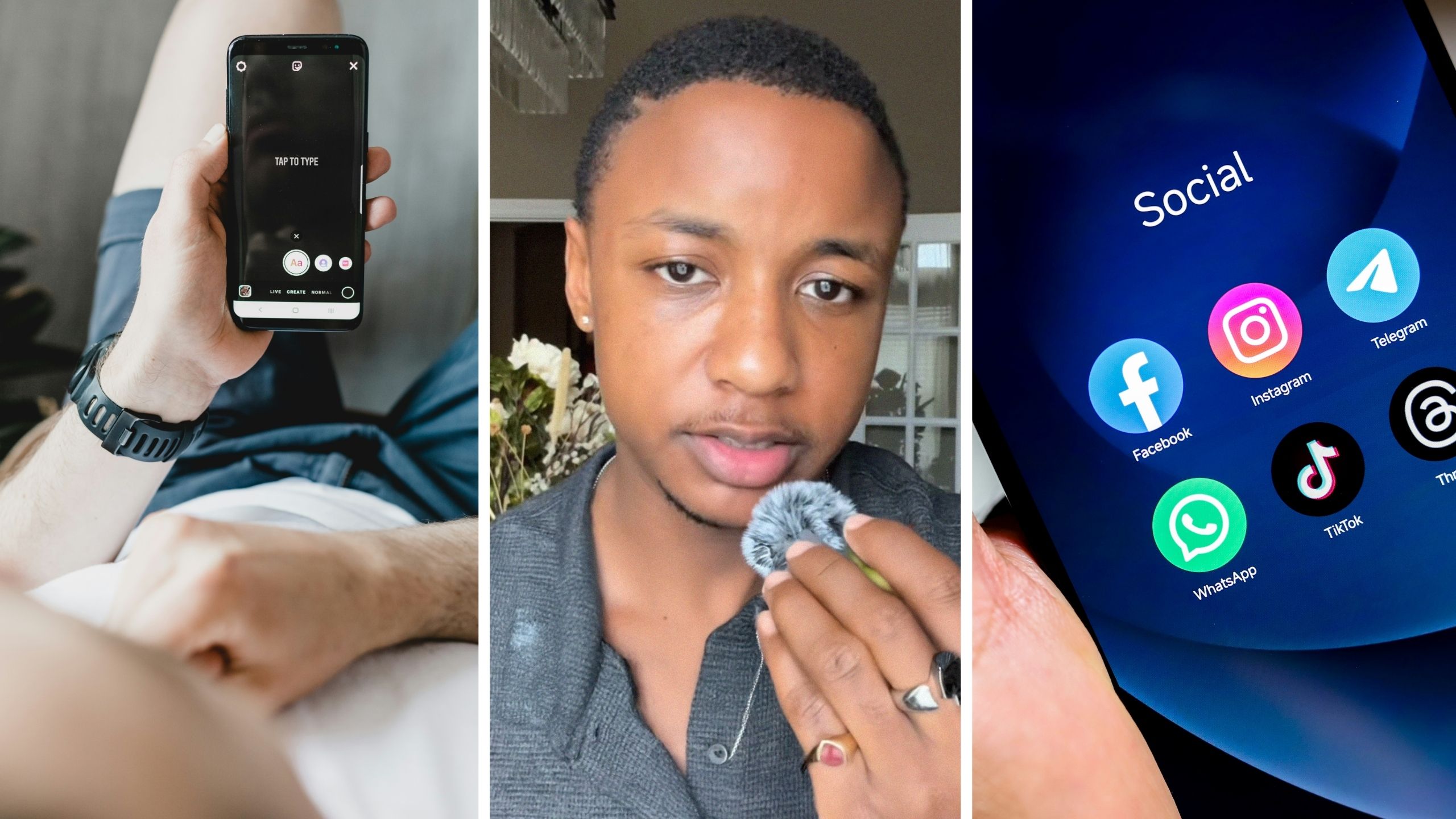
Who isn’t here for a wig-snatching, virtual read-for-filth about strangers on the internet? Honestly, we all are. But what one Texas man is doing is less like a public dragging and more like an anthropologically inflected review of social media habits. That he does it with laser-focused accuracy just makes it harder to look away.
Xavier (@xavier pretentious) is a writer and life coach who watches how people live and present themselves. He’s like a sherpa for the class-conscious who want to “level up.” And no matter if you think his methods are right or wrong (or even matter), his observations hilariously hit home.
In a recent TikTok (that’s garnered 1.5 million views), Xavier breaks down social media cues. Because the things that you think are cute and totally harmless are, according to him, things that scream “poor.”
It’s Not What You Say, It’s How You Say It
He captioned the TikTok, “How i [sic] can tell if you’re poor from your social media.” And then he gets into it.
There are some dead giveaways that reveal a person’s social standing/bank account, or so he says. “The first one is over using filters,” he says.
Here, Xavier uses himself as an example “because the type of people who do this like to fight.” The filters in rotation are the ones that extend lashes, give fuller-looking lips, and, according to him, give a very unnatural orange tint to skin tones.
Next up, he says social media bios that are too long give a person away. “They’re like the ‘Live, Laugh, Love’ equivalent of bios. They’re always super long, with all these random emojis,” he notices.
Then he gets specific, giving examples: They’re like, “mom of six, traveler, lover, and it goes on for like three paragraphs,” he says.
Finally, he says that people who capitalize all of their words, use punctuation incorrectly, and over-share are telling on themselves, often unintentionally.
The kicker? “A very simple word will probably be misspelled,” he says.
Punctuation: A Secret Weapon?
He’s quick to say there’s nothing inherently wrong in coming from environments where overly emoji-hyped grammar resistance is the norm. But, he says, “It just goes to show how your social class is ingrained in literally everything that you do.”
He’s right. Class distinctions aren’t inherently good or bad, but they are, as Xavier notes, something people in other classes can “pick up on.”
The top comment, with over 24,000 likes, is one that is subtle but lands a punch. Thenji (@thenjibopape) says, “I hate that I understand this [sobbing emoji].”
Others chimed in, calling out Xavier’s “digital classism.”
But most of the users are here for the observations.
“Im afraid he ate,” another said.
Does Social Class Matter To Anyone Anymore?
In an era when billionaires party with all of the elegance and restraint of college students on spring break (and beyond those aspirants to an old-money aesthetic) does class still matter?
Over 20 years ago (back in 2005), the New York Times wrote that though there is an increased appearance of parity, class lines have only “blurred.” They haven’t disappeared.
Research backs this up, too. Health is another major arena where social status (class) can have a huge impact. “A person’s social class has a significant impact on their physical health, their ability to receive adequate medical care and nutrition, and their life expectancy,” the report states. This is largely because of “social determinants.” These are: “Environmental, meaning that they are risk factors found in one’s living and working conditions including the distribution of income, wealth, influence, and power, rather than individual factors (such as behavioral risk factors or genetics).”
BroBible reached out to Xavier via email and TikTok direct message. We will update this article if he replies.
@xavier.clb how i can tell if you’re poor from your social media