


20th Century Studios
The idiom “not your father’s XYZ” has taken on entirely new meaning in the age of intellectual property, particularly after Disney relaunched the Star Wars franchise in 2015 with The Force Awakens, which many accused of simply being a modernized rehash of A New Hope.
The Disney era of Star Wars and the Marvel Cinematic Universe has been both successful in ways even the most bullish of fans could have imagined, but has also increasingly undermined the very fabric that previously made these stories so special.
On one hand, there’s Andor, undoubtedly the most “adult” and arguably one of the best Star Wars projects ever created. On the other, the franchise’s return to the big screen, for the first time since 2019’s disastrous The Rise of Skywalker, will be The Mandalorian & Grogu, which has largely been thoroughly rejected by fans as being a glorified batch of episodes from the preexisting series.
Over in the MCU, just over five years ago, the likes of Avengers: Infinity War and Avengers: Endgame redefined what was possible for the comic book genre, with the latter briefly unseating Avatar as the highest grossing movie of all time.
Today, however, the MCU’s splashy rollout of Marvel’s First Family, the Fantastic Four, struggled to crack $500 million, while the impending release of Avengers: Doomsday features a villain, Doctor Doom, that hasn’t even been introduced yet.
This is all to say that, Disney has proven capable of achieving both soaring highs and brutal lows with the blue chips in their IP roster, thus making it difficult to define what it means when a project has been “Disney-ified,” a recent criticism that’s been levied at Predator: Badlands.
Regarding the Predator Badlands discourse, you can like the film, obviously, but yes it 100% a Disney-fied Predator film. The jokes, the themes, the cute pet sidekicks, manic pixie dream girl, all tropes are hallmarks of Disney and don’t add up with the og franchise. pic.twitter.com/HFdyYqAxzg
— Jester_Bell 🎥 🍿 🥳 (@TheresaCampagna) November 8, 2025
Saw some are mad that Predator Badlands is just a kids Disney movie (it’s not just the usual chuds who hate women that are angry, some legit writers too). That description is accurate, but I wish all marvel movies and PG-13 blockbusters were as good as Badlands as a baseline
— VyceVictus (@VyceVictus) November 8, 2025
What do people mean when they say a project has been “Disney-ified?”
In general, to be “Disney-ified” is generally accepted as being softened around the edges, to be made as palatable for as many people as possible. And via Elle Fanning’s Thia character and the general positioning of the film’s lead, Dek the Yaujta, this is largely true — Thia was compared in a viral tweet to a cross of “Donkey from Shrek and C-3PO, while Dek certainly quips more than any Predator has before.
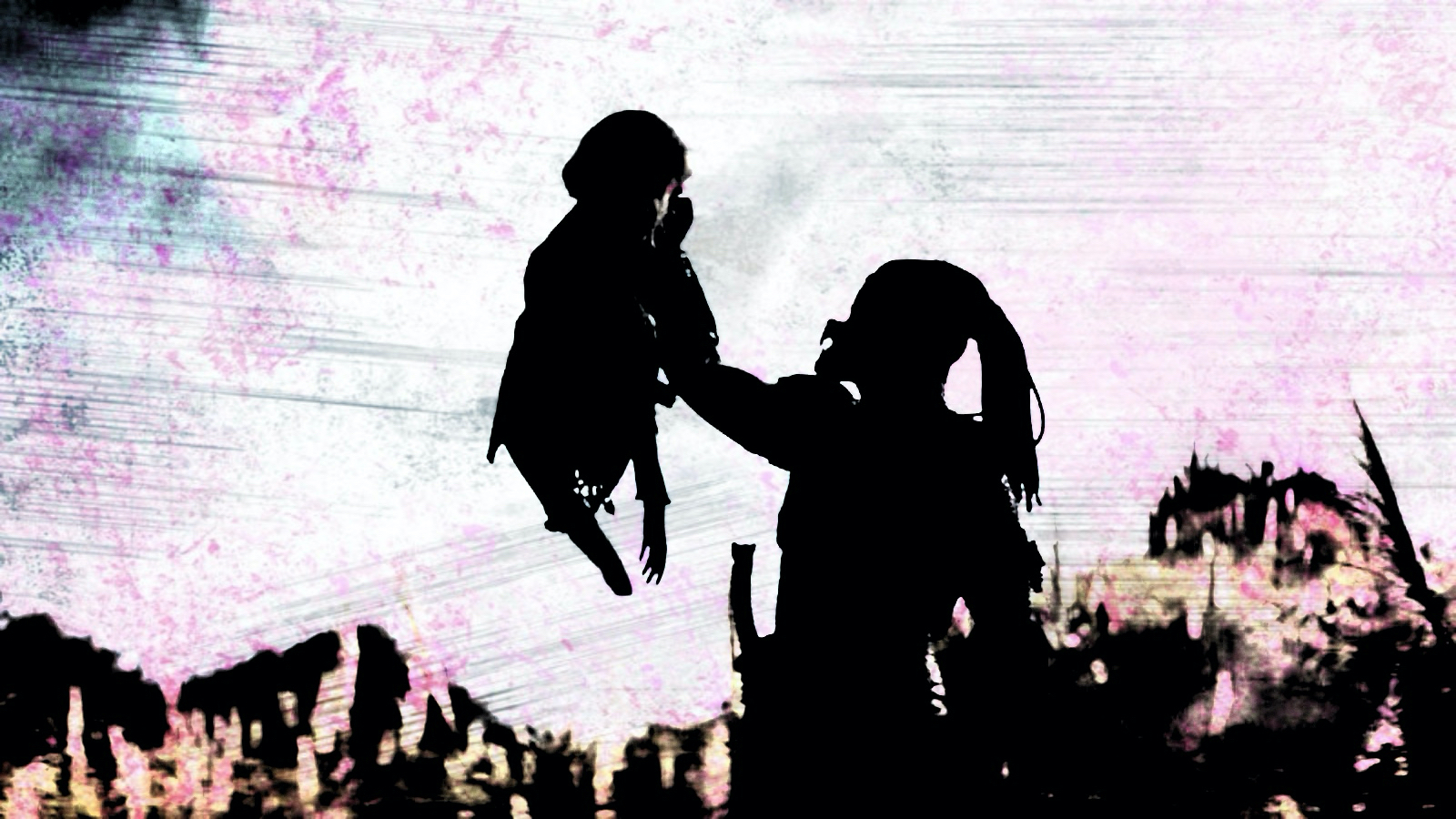
At that same time, however, this is a film packed to the brim with action, largely consists of a made-up and subtitled alien language, expands the lore of the Yaujta culture, features a severed-at-the-waist robot, and explores themes far more grizzly than any offered in The Mandalorian, which Badlands has been pejoratively compared to. The most egregious, and grating, example of this is the inclusion of an undeniable cute but equally useless alien character that’s received comps to Baby Yoda — a character archetype that the Predator franchise simply does not need.
Elle Fanning is basically playing a mixture of C-3PO and Donkey in Predator: Badlands and it’s the most heartwarming thing ever pic.twitter.com/A6KpRCx7oF
— Anthony (@AnAntLife) November 8, 2025
Is Predator: Badlands a fair example of something that has been “Disney-ified?” Not quite
Can two things be true at once? Of course they can. But that is the subjective nature of art — which Predator: Badlands, despite all of its blockbuster trappings, is. There are undoubtedly elements of Predator: Badlands that wade into “Disney-ification”, but it’s also a franchise that just released an overwhelming violent animated film, Predator: Killer of Killers, and the R-rated, 1700s-set, Commanche-featuring Prey, both of which entirely reinvigorated the previously lost franchise.
A similar story can be said for the equally beloved and iconic Alien franchise, which has seen back to back success with the releases of Alien: Romulus in 2024 and the FX series Alien: Earth from earlier this year, with both projects having follow-ups in the works.
Perhaps the cost of consistency is appealing to the casuals as much as the “die-hards,” which is ultimately what is means when something is “Disney-ified” — it’s not being made solely to appease old fans, but to invite new ones into the tent. And that’s a notion that all fans of all franchises must reckon with; for something to survive, it needs to grow. And that’s what Disney largely seems intent on doing, even at the cost of unyielding tonal and thematic adherence to the past.
This, of course, isn’t to let Disney for what they’ve done to Star Wars and how the MCU has gone off the rails in recent years, but rather to make a distinction between what the “Disney-ification” of something means. If it were to mean, “producing projects at a rate that sacrifices quality,” that would be a reasonable assumption and accusation of something being “Disney-ified.” But Predator: Badlands does not suffer from those ails and was clearly created with a significant level of craft and care.
The Mandalorian and Grogu, however, may prove to be the opposite and the terminal epitome of what it means to be “Disney-ified,” and that’s committing the sin of being not just mass-appeal oriented, but also created solely for the purpose of existing, and not anything else. Predator: Badlands exists because director Dan Trachtenberg had a vision, and he brought that vision to life. That’s not Disney-ifiying — that’s blockbuster filmmaking. Just ask James Cameron.