


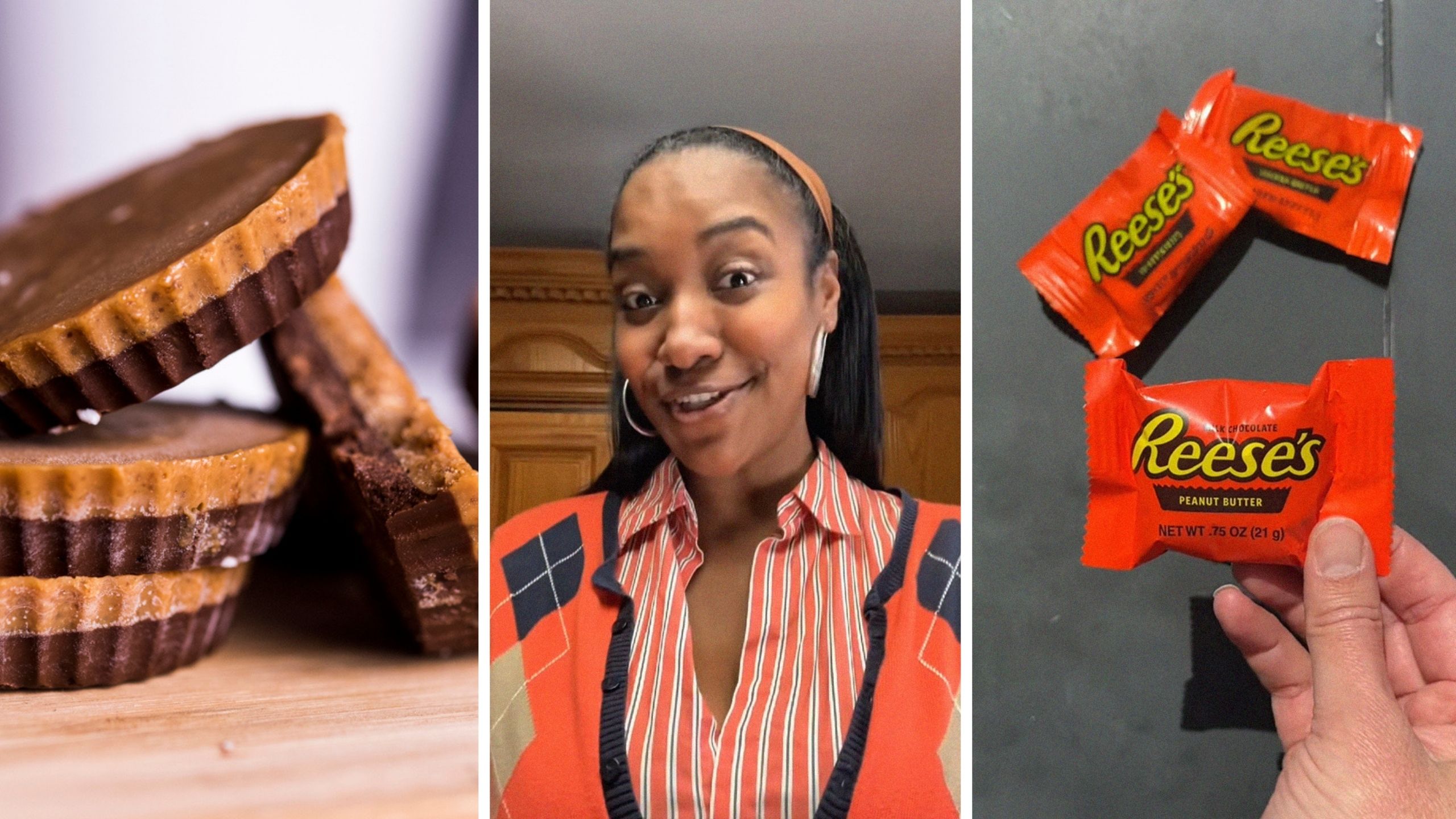
The feeling around food quality in the U.S. is tense. More shoppers say foods taste chemical or just worse than they remember, and there is data to back up some of that anxiety.
A 2025 “Food for Thought” report found that in 2024, hospitalizations and deaths from contaminated food more than doubled compared to the year before, as recalls tied to Salmonella, Listeria, and E. coli climbed.
At the same time, the Trump administration is proposing that the FDA roll back parts of the food safety and labeling framework, including proposals to revoke long-standing “standards of identity” for dozens of foods. These changes, experts warn, could weaken quality and transparency for consumers.
One product that has been in the spotlight recently is Reese’s chocolate and peanut butter cups. A private chef on TikTok walked viewers through why she thinks some Reese’s products now taste different—and why “chocolate candy” on the label should make people pause.
Private Chef Breaks Down Why Reese’s Taste Different
TikTok creator Lee (@o_g_deez), who works as a private chef, posted a two-part PSA about Reese’s Peanut Butter Cups. Her videos collectively garnered more than 900,000 views.
In the first video, she stitches another creator who asks, “Anybody else noticed that Reese’s peanut butter cups taste nasty?”
Then she digs into what she thinks changed.
“A lot of you have tagged me in this video,” she says. “Now a lot of people are saying all the ingredients changed. No, they didn’t.”
She notes that people keep describing the chocolate as waxy or chemical. “People are saying that the chocolate tastes waxy; now some people are saying that it tastes like chemicals,” she says.
Instead of focusing on the ingredient list, she looks at the nutrition facts panel over time. She explains that in the early 2000s, a package of Reese’s had around 250 calories and 14 grams of fat.
About 10 years ago, she says, those numbers dropped to roughly 230 calories and 13 grams of fat. Now, she points out, the current label shows 210 calories and only 12 grams of fat.
‘So What’s Going on With That?’
Her first theory centers on emulsifiers. “I believe that they’re replacing a higher amount of cocoa butter with PRPG,” she says, referring to an additive she describes as basically a sweetener made from castor oil.
She claims this kind of ingredient can give chocolate a waxy feel and allow manufacturers to use less cocoa butter.
“People are saying it tastes like chemicals, more like vomit. This is the reason why,” she says, arguing that a higher level of this additive could stretch cocoa butter and change the mouthfeel.
Her second theory focuses on the peanuts. “When you look at the nutrition facts, the peanuts are gonna be responsible for both the protein and the level of fiber,” she says. For the first time, she claims, the fiber has doubled while the protein stayed flat.
“Not all varieties of peanuts contain the same amount of fiber,” she says, which leads her to believe they may now be using a cheaper peanut because “everything is about the bottom dollar.”
“Guess this means more money, more problems for you,” she adds.
Her final point involves dairy. She says the Nutrition Facts suggest less milk fat and more skim milk than before. “Less milk fat is gonna give you a less creamy final product, kind of like what we saw on Kit Kat,” she explains.
Taken together, she says these three shifts—the speculated cocoa butter swap, the peanut change, and the lower milk fat—are “the main contributors to why your Reese’s Peanut Butter Cups don’t taste the same.”
She Says Some Reese’s Minis Aren’t Legally ‘Chocolate’
In the second video, Lee moves from the regular cups to Reese’s Unwrapped Minis and king-size formats. That is where the label change catches her attention.
“Part 2, when it says chocolate candy, it’s not chocolate anymore,” she says. “And that’s exactly what they did to the unwrapped minis. It no longer says milk chocolate; it says chocolate candy.”
She compares labels and says the coating on the minis now reads more like “chocolate, vanilla-flavored oil” than traditional milk chocolate.
“First ingredient is sugar, then you have palm oil, shea oil, sunflower oil, palm kernel oil and/or sunflower oil,” she says. “What is this? A hair care product?”
She also addresses a common theory that the taste shift comes down to size. She shows screenshots from three different packages from the early 2000s, 2014, and now, pointing out that the net weight moved from 1.6 ounces (45 grams) to 1.5 ounces (42 grams) and then stayed there.
“Such an insignificant change,” she says, which is why she does not blame shrinking alone.
She then moves to the king-size packs. “The king size consists of 4 cups,” she says. “You would think that that would just be two of the normal twin-size packs doubled.”
Instead of weighing 3 ounces, she notes, the king size comes in at 2.8 ounces. “So [you’re] getting a different product,” she says.
Viewers also weigh in on foil-wrapped cups tasting better or worse than regular packs. Lee says she ran the numbers and found that the fat content on the foil-wrapped cups has also decreased over time.
“From the time where they actually put the whole entire name on the wrapper until now where it’s just an R,” she jokes. “It’s just an R because they’re cutting corners.”
Are Holiday Reese’s Products Better?
Lee then explains why she thinks holiday Reese’s may be different.
“Holiday Reese’s actually contain more milk in the form of whey, three milk ingredients instead of two,” she says. “You’ve also got the addition of vanilla, which is gonna make it taste so nostalgic and so delicious. More milk, actual vanilla flavor that you don’t find in the other varieties.”
She advises viewers to “stock up” on the holiday versions for better taste and quality.
In the caption, she warns people to watch labels closely: “Keep your eyes out for ‘chocolate candy.’ The king size and twin pack also contain different amounts of calories and fat, further confirming a smaller, if not different product.”
Is ‘Chocolate Candy’ Actually Chocolate?
Under U.S. law, “milk chocolate” is a defined term. The FDA’s standard of identity for milk chocolate requires at least 10% chocolate liquor, not less than 3.39% milkfat, and at least 12% total milk solids, along with specific cacao and dairy ingredients.
There is no equivalent federal standard for the phrase “chocolate candy.” That wording shows up on products like Reese’s Unwrapped Minis, Reese’s Peanut Butter Eggs, and more, and it generally falls under broader candy and chocolate confection guidance rather than a strict chocolate definition.
Without making any assumptions about specific formulations, the difference in labeling raises fair questions for consumers who expect the term “chocolate” to mean a certain minimum level of cacao and dairy.
BroBible has reached out to Hershey’s via email to ask about the distinction between “milk chocolate” and “chocolate candy” on Reese’s products and what that means for ingredients.
Commenters Say Many Sweets Taste Different Now
In the comments under Lee’s videos, many viewers say they share the same feeling about big-brand candy changing.
“Nothing tastes good anymore,” one person wrote.
“go get the Trader Joe’s dark chocolate peanut butter cups. they’re the best thing out there…for now…” another said.
@o_g_deez Keep your eyes out for “chocolate candy” 🥴 The king size and twin pack also contain different amounts of calories and fat, further confirming a smaller, if not different product. #chocolate #reeses #peanutbutter #candy #reesespeanutbuttercups
“Everything tastes like Maximized Shareholder Value now and it’s gross,” one commenter wrote.
“The KitKats and the Twix don’t taste the same either!” another added.
BroBible has also reached out to Lee (@o_g_deez) via TikTok direct messages for comment.