


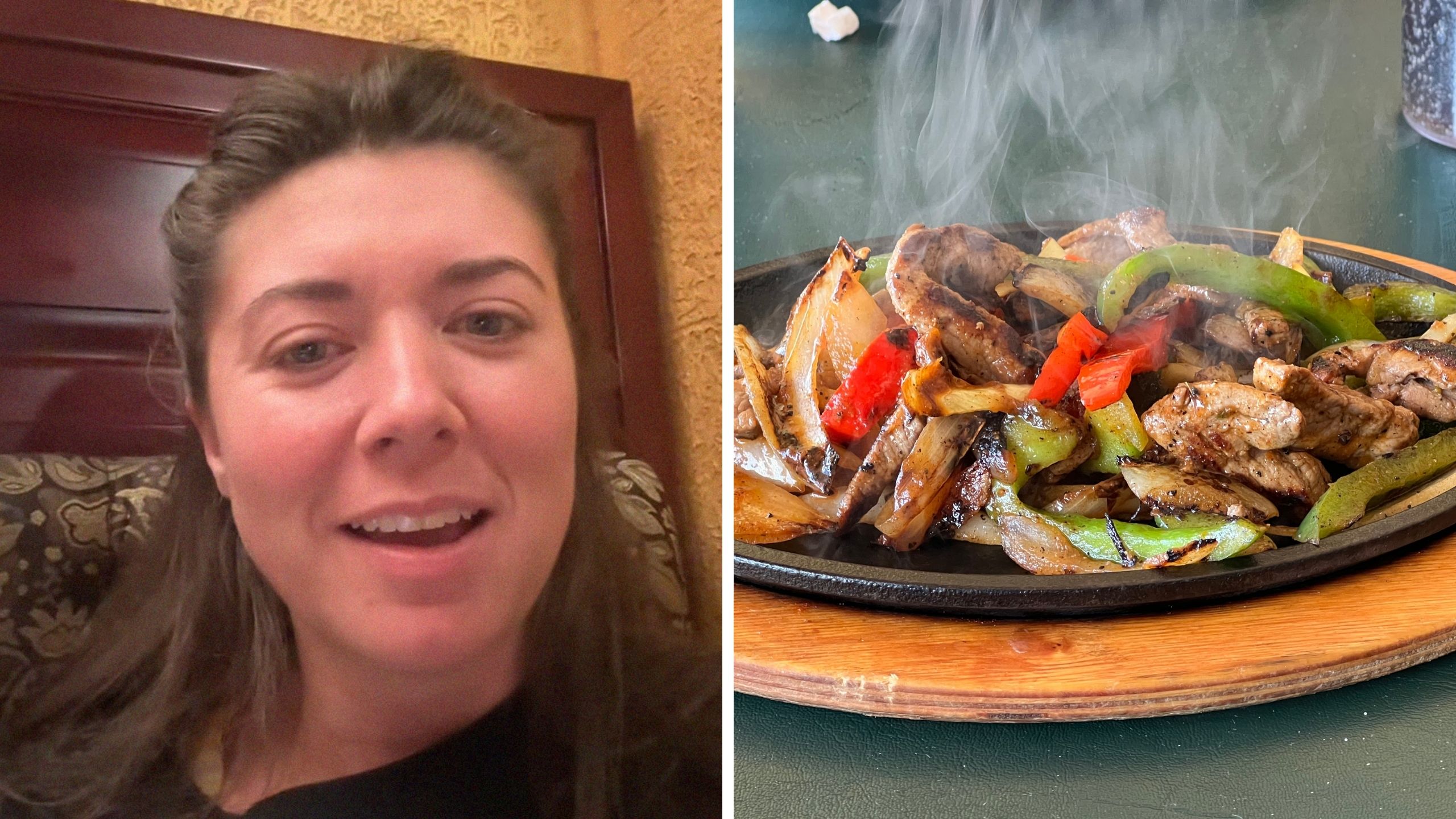
A North Carolina woman’s Sunday ritual of ordering chicken fajitas at her local Mexican restaurant took an unexpected turn when someone revealed the truth behind that dramatic sizzle.
The discovery left her feeling like she’d just learned Santa Claus wasn’t real.
Do Fajitas Actually Cook On The Plate?
In a viral video with more than 213,000 views, fajita lover Maggie (@robbinsmaggie420) discovered the truth behind the dramatic chicken dish.
“Are fajitas cooking on the plate or is it a scam?” she asks in the text overlay.
Maggie explains that she orders chicken fajitas every Sunday at her local Mexican restaurant, a tradition she clearly loves. But about two years ago, she says her boyfriend Tristan dropped a bombshell that shook her to her core.
“Tristan tells me that the fajitas are not actually cooking on the plate, that it’s fake,” she says in the TikTok. “That they put water or something on the hot plate and make it steam.”
The revelation hit hard.
She compares the moment to finding out Santa Claus isn’t real. She says it was “really, really crazy” and hurt her feelings. Despite the explanation, Maggie remains in denial about the deception.
“So do y’all think this is real? I do. I think my food is still cooking,” she says.
The History Of Fajitas And Their Signature Presentation
The history of fajitas traces back to cattle ranches of West Texas and Northern Mexico, where ranchers used tougher cuts of meat like skirt steak.
The dish gained popularity in South Texas during the 1930s, particularly in the Rio Grande Valley, where it was served at outdoor festivals.
The name “fajita” comes from the Spanish word “faja,” meaning “belt” or “sash,” referring to the long, thin cut of the beef’s diaphragm muscle used in the dish.
The dramatic sizzling presentation that defines modern fajitas has its own origin story.
Otilia Garza, owner of Round-Up Restaurant in the Rio Grande Valley of Texas in 1969, is often credited as the first restaurateur to add the “sizzle” element to the fajita platter, The Takeout reported.
The goal was to create a multisensory experience. The smoke draws the eyes. The sound makes heads turn as the platter passes by. And the aroma makes nearby diners instantly regret their menu choices. This theatrical presentation transformed fajitas from a simple dish into one of the most attention-grabbing items on any menu.
The Science Behind The Sizzle
Here’s the truth behind that captivating sizzle: Restaurants add liquid to the hot cast iron skillet right before serving to create the dramatic effect.
According to restaurant workers on Reddit and TikTok, many establishments use a “sizzle sauce”—typically a soy sauce base mixed with ingredients like lime juice and fat.
The liquid hits the hot skillet and creates an immediate reaction that generates smoke and sound. Some restaurants use alternatives like orange juice or even a bed of onions, whose water content produces a similar effect.
The practice exists because of restaurant logistics. Meals often sit on hot plates or under heat lamps while servers wait for the rest of a table’s order to be ready, meaning any natural sizzle from cooking has long disappeared by the time food reaches diners. The added liquid revives the presentation.
@robbinsmaggie420 Are fajitas actually cooking on the plate???? I think about this all the time
Commenters React
“I never thought fajitas were cooking on the plate,” a top comment read.
“I assumed the sizzle was because it was so hot and fresh, not because it was cooking,” a person said.
“I worked at Chilis years ago, can confirm it’s not actually cooking. It’s literally all for show,” another wrote.
“Yes… as someone who used to work at a Mexican restaurant they plate it on the hot plate they have in the ovens, then poor water from a squeeze bottle on top before serving it.. I still eat it though! Haha,” a commenter shared.
BroBible reached out to Maggie for comment via TikTok direct message and comment. We’ll be sure to update this if she responds.