


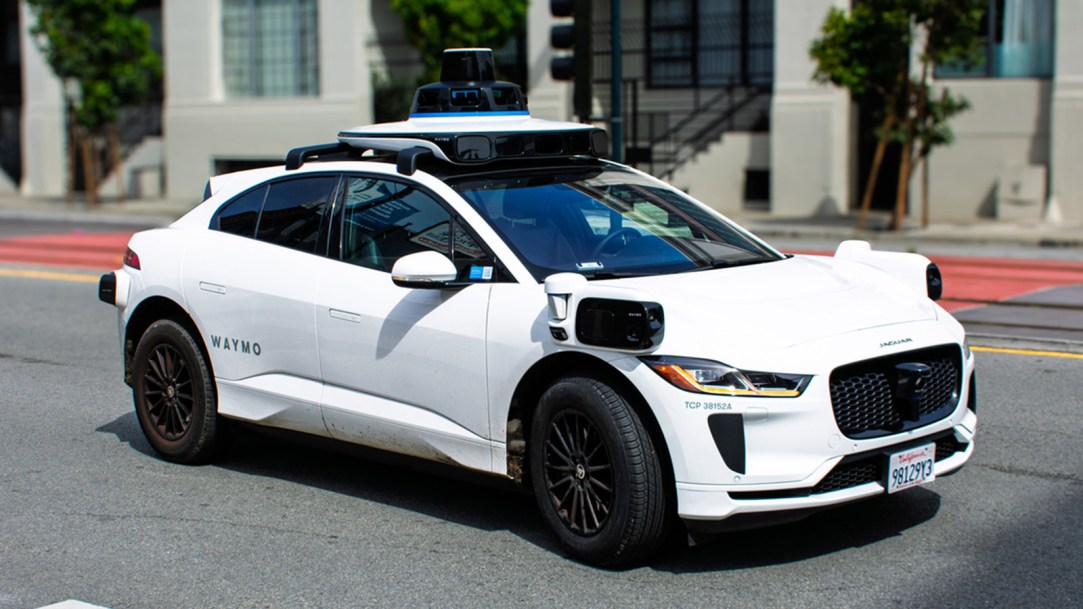
Have you ever wondered what happens to the Waymo fleet when they are no longer needed for the day? A photographer in San Francisco kept an eye on the self-driving cars as they waited for their next ride.
The reality is equally as dystopian as innovative and encouraging.
There are a lot of things to like about Waymo. There are a lot of things that are still hard to understand.
What is a Waymo?
Assuming you have not been living under a rock, Waymo serves as a self-driving Uber. You call the car on your phone. The car arrives without a driver. It takes you from point-a to point-b.
The Waymo fleet operates more than 450,000 rides per week in major hubs like Phoenix, Los Angeles, Atlanta, Austin and San Francisco. Other big cities, like Nashville, are on the way.
I took one ride in a Waymo. Perhaps the best part of the experience is the lack of small talk with a driver who wants to discuss politics and the ability to pick your own music and temperature. It’s fairly quick and easy. There isn’t much thought to it — which I guess can also be a bad thing?
As cool as it is, there are still some kinks to be worked out. To watch a car drive itself in real time is a very strange experience. And the computer system doesn’t have an awareness of its reality. For example:
Like it or not, this is the future. Driverless cars will soon become the norm. (Soon being relative.) We just need to figure out how the rise of Waymos is going to integrate into society.
Who watches the self-driving cars?
The answer to that question, on a much larger scale, is Alphabet Inc. Alphabet Inc. is the multinational technology conglomerate that also owns Google. It is the third-largest technology company in the world by revenue, behind only Amazon and Apple. It is the largest technology company by profit.
The more direct answer to that question is Vincent Woo. Woo is a videographer and photographer based out of San Francisco. San Francisco is the primary hub for Waymo, which is based out of Silicon Valley.
Woo secretly surveilled some of Waymo lots at night over the last year, “at some personal risk of injury.” He filmed a behind-the-scenes look at where the self-driving cars go once they are no longer needed for the day and how they interact. Here is the result:
Take this three-minute video and multiply to the fullest scale, where this small microcosm of San Francisco reflects the entire world. That’s where we are headed!