


Millions of people across the United States go to church on Sundays, and many of them comprise a smaller group of equally fervent devotees who flock to a different type of cathedral in the form of the NFL stadiums that host their team’s games.
Kirby Lee-Imagn Images
There’s a huge disparity between the largest and the smallest football stadiums at the college level, and while there’s a bit more parity on that front when it comes to the NFL, there are still plenty of teams with a fairly decisive edge on the capacity front.
12 venues can hold at least 70,000 fans on gameday, and we’ll kick off this list with the biggest one the league has to offer.
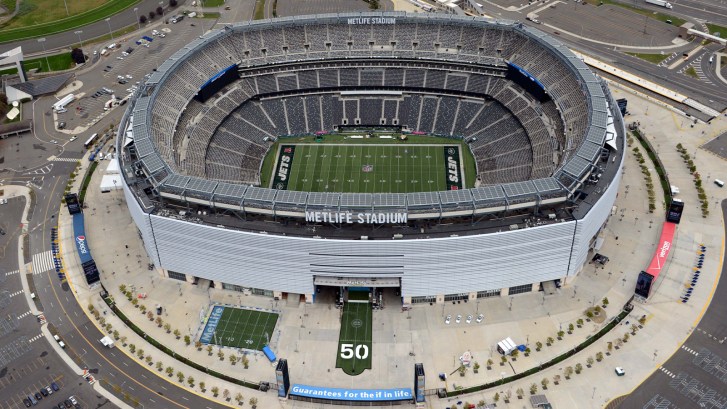
MetLife Stadium: 82,500
Kirby Lee-Imagn Images
In 1976, Giants Stadium welcomed the team it took its name from eight years before the Jets bid farewell to Shea Stadium in Queens and became the second team with “New York” in its name to set up shop in East Rutherford, New Jersey.
That building was already one of the largest in the NFL with a capacity of 80,242, but in 2010, MetLife Stadium took sole possession of first place (at least as far as seats are concerned) when it opened up its gates to the 82,500 fans it can officially accommodate for a game.
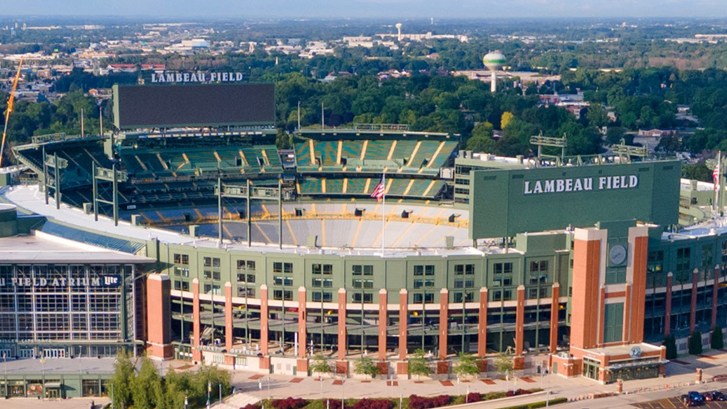
Lambeau Field: 81.411
Mike De Sisti / The Milwaukee Journal Sentinel / USA TODAY NETWORK
In 1957, the Packers moved into the recently constructed New City Stadium, which could hold 32,500 fans when it opened up (around half of the population of the City of Green Bay at the time).
The venue (which was rechristened “Lambeau Field” in 1965 to pay tribute to the franchise’s legendary co-founder and longtime player, coach, and GM) has undergone a number of renovations over the years to gradually expand capacity and attempt to greet the rabid demand of a fanbase responsible for a decades-long waiting list for season tickets.
In 2017, the capacity grew to 81,441, which currently makes it the second-largest stadium in the NFL.
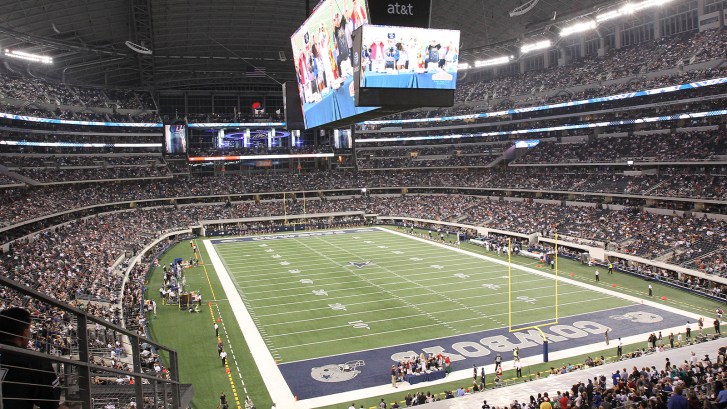
AT&T Stadium: 80,000*
Matthew Emmons-Imagn Images
The home of the Cowboys comes with a bit of an asterisk, as The House That Jerry Built has had an official capacity of 80,000 since it hosted its first game in 2009.
However, AT&T Stadium can accommodate significantly more that—up to around 105,000 people—if fans are willing to settle for standing-room tickets, which is how the Cowboys have averaged at least 90,000 people per game since the 2014 season (making their games far and away the most attended in the NFL).
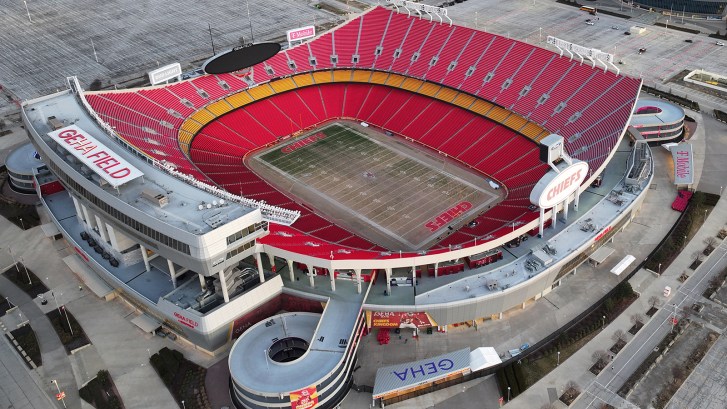
Arrowhead Stadium: 76,416
Kirby Lee-Imagn Images
Arrowhead Stadium is the third-oldest venue in the NFL (Lambeau Field and Soldier Field in Chicago take home the gold and silver) and has actually gotten smaller since it opened in 1972 with a listed capacity of 78,097 (a grand total of 82,094 fans set a record that still stands for Chiefs games during its inaugural season).
That number peaked at 79,451 before renovations brought it down to the current total of 76,416 as of 2010.
The franchise attempted to secure public funds to aid with an expansion due to the interest generated by the dynasty coinciding with the Patrick Mahomes Era, but it’s currently in a bit of a standoff as the powers that be threaten a potential move across the river from Missouri to Kansas as the stalemate continues to unfold.
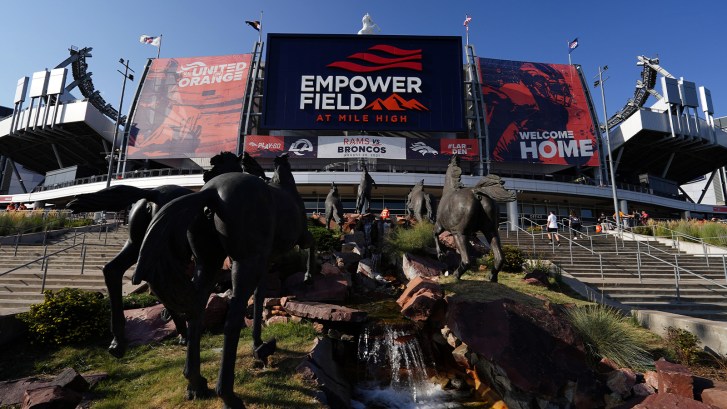
Empower Field at Mile High: 76,125
Ron Chenoy-Imagn Images
The venue that’s currently known as Empower Field at Mile High opened in 2001 to replace the Mile High Stadium in Denver, which the Broncos called home for 40 years after playing their first game there in 1960.
The capacity hasn’t changed since it was set at 76,125 at the start of the millennium, although it can hold close to 85,000 people when a concert is the main attraction as opposed to a Broncos game.
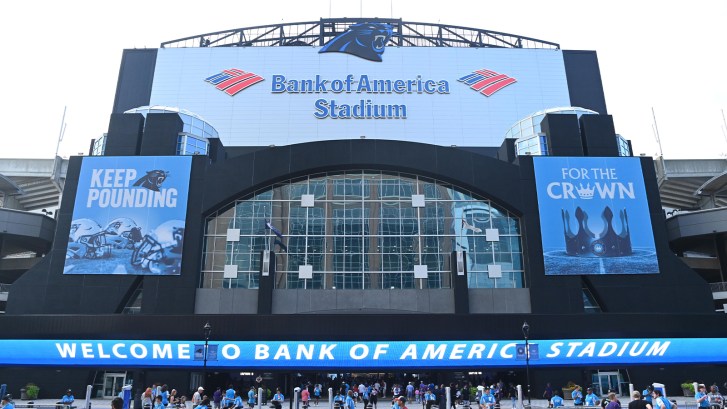
Bank of America Stadium: 73,867
Griffin Zetterberg-Imagn Images
What is now Bank of America Stadium opened in Charlotte as Ericsson Stadium in 1996 a year after the Panthers spent their inaugural season sharing a field with Clemson at Death Valley.
It could initially accommodate 72,685 fans and saw that number slowly but surely rise due to various reconfigurations in the ensuing decades before peaking at 75,523. However, the most recent round of tweaks brought it back down to 73,867.
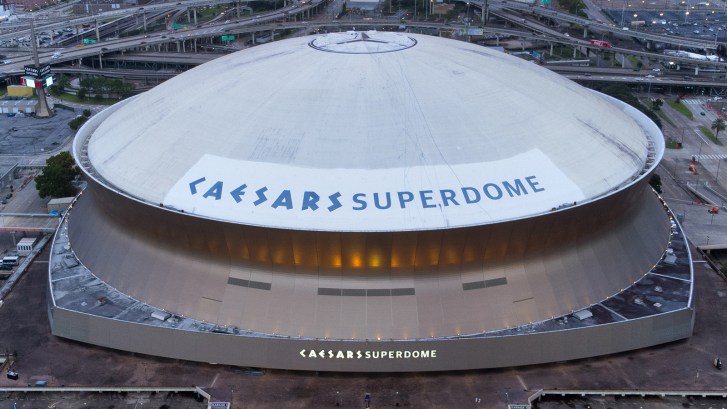
Caesars Superdome: 73,208*
Stephen Lew-Imagn Images
We’ve got yet another asterisk courtesy of The Superdome, which originally opened in 1975 and could fit 74,452 people when the Saints played there for the first time.
That number steadily trickled downward in the ensuing decades before hitting a nadir of 64,900 in 2000.
It’s been gradually rising since then and can currently host 73,208 people for an NFL game based on its default configuration—a number that rises to 76,468 for the extra seats that can be added for bigger showdowns where it’s expanded.
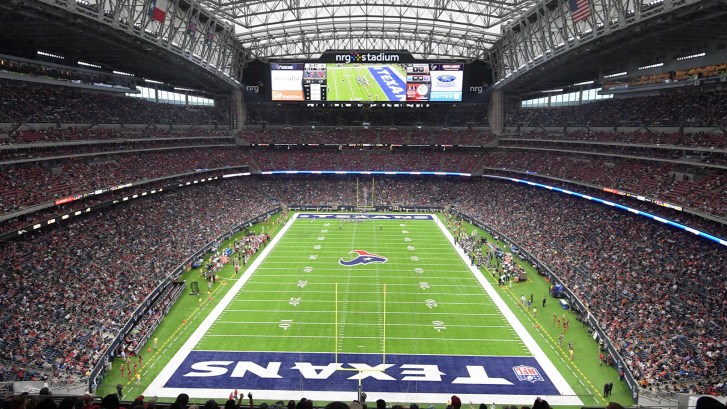
NRG Stadium: 72,220
Kirby Lee-Imagn Images
NRG Stadium opened in 2002 to coincide with the grand arrival of the Houston Texans, who became the first NFL team to set up shop in a building with a retractable roof (there are now five that fit that particular bill).
The venue held 69,500 fans and got a couple of tiny upgrades before that number grew to 72,200 in 2018 to hit the total that still stands.
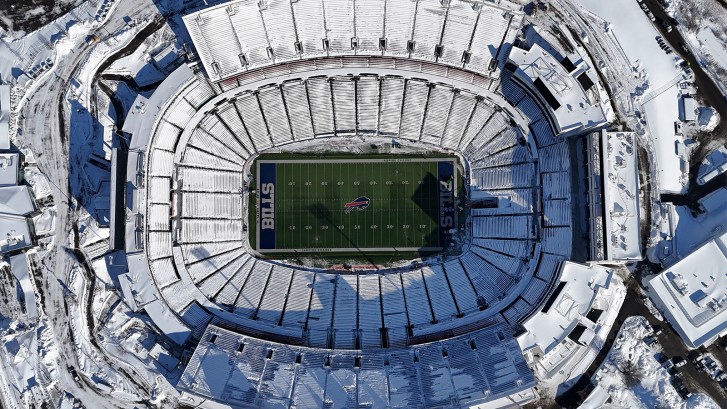
Highmark Stadium: 71,608
Kirby Lee-Imagn Images
The Bills got a new home in 1973 and relocated from the city of Buffalo to the suburb of Orchard Park to a stadium that could hold 80,020 people when it hosted its first game.
That number was cut to close to 75,000 due to renovations that were finalized at the turn of the millennium, and there have been several projects since then that have reduced it even more to 71,608.
Interestingly enough, the new stadium that’s currently being constructed across the street will be even tinier, as it will only fit around 62,000 fans when it tentatively opens in time for the 2026 season.
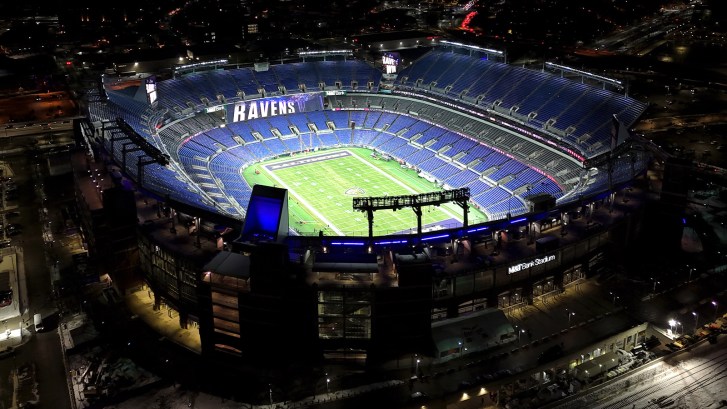
M&T Bank Stadium: 71,008
Getty Image
The Ravens spent the first two years of their existence at Memorial Stadium, which was the primary home of the Colts prior to the team’s defection to Indianapolis.
What is now M&T Bank Stadium opened in 1997 with a capacity of 68,400. That number had grown to 71,008 by 2007 and has remained steady for close to 20 years.
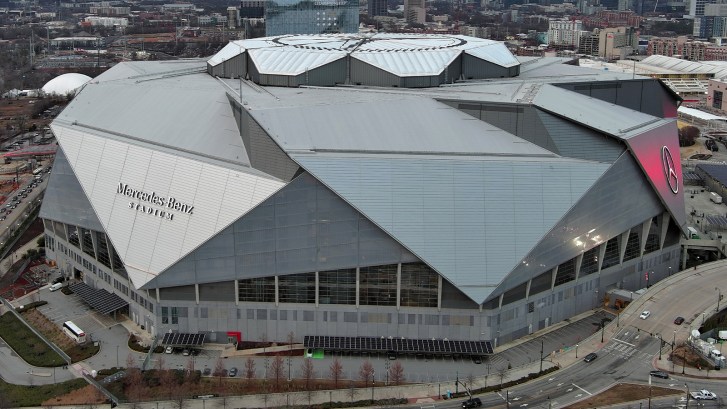
Mercedes-Benz Stadium: 71,000*
Kirby Lee-Imagn Images
We’ve got our third (but not final) asterisk courtesy of Mercedes-Benz Stadium, which the Falcons have called home since the $1.6 billion building in Atlanta welcomed the team in 2017.
It was technically a downgrade when you consider the Georgia Dome fit 71,228 fans for football games, but the official capacity of 71,000 can be expanded to 75,000 if needed.
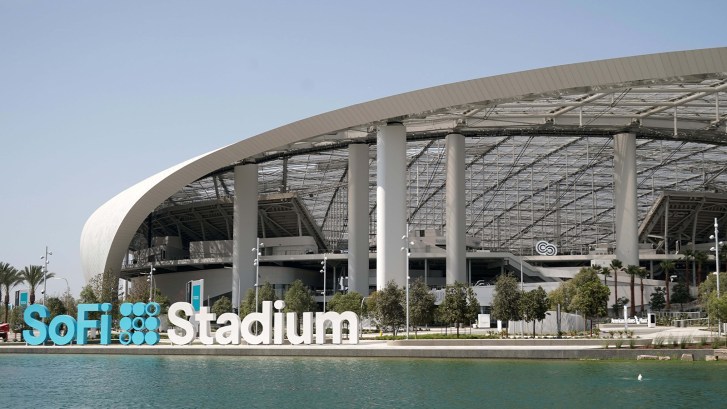
SoFi Stadium: 70,240*
Kirby Lee-Imagn Images
I said there was going to be at least one more asterisk, and it just so happens to be the last venue on this list.
SoFi Stadium opened in 2020 to house the Rams and the Chargers (it and MetLife are the only ones in the NFL home to more than one team). While it normally fits 70,240 people, it can be expanded to a comparatively massive 100,240 seats for events like the Super Bowl it hosted in 2022 and the Summer Olympics set to arrive in Los Angeles in 2028.