


It’s hard to think of any sport in existence that’s still governed by the set of rules that were established upon its inception, as the powers that be are constantly reevaluating the standards that govern them.
iStockphoto
Sports leagues are routinely updating their rulebooks to address previously unforeseen issues and crack down on trends and behaviors that end up having a negative effect.
There’s always room for improvement, but it’s hard to top these rules that probably never needed to exist in the first place that were eventually wiped from the books.
The NFL's Crowd Noise Penalty
Getty Image
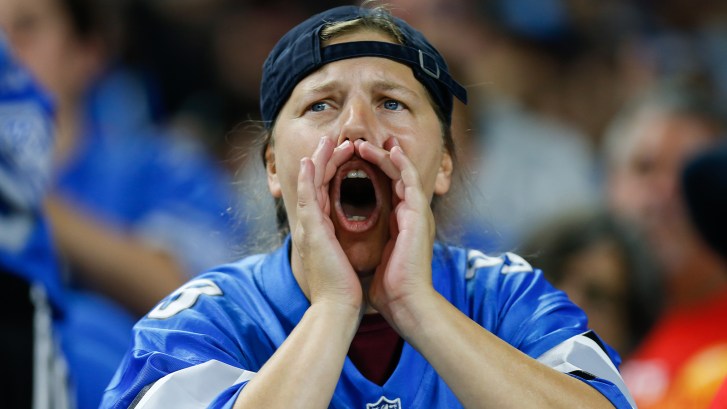
A rowdy crowd can play a pivotal role in the outcome of a football game, and it’s hard to imagine there was ever a time when the NFL thought that particular aspect of the sport needed to be regulated.
However, that was briefly the case thanks to what unfolded ahead of the start of the 1989 season.
In the 1970s, the NCAA instituted a rule that let the refs penalize “unfair crowd noise” by taking away timeouts from the guilty team. The NFL found itself dealing with increasingly rowdy crowds in the ensuing decade, and in 1989, a measure concerning a similar policy passed after receiving the minimum number of votes it needed to be instituted at a preseason meeting.
It did not go over well with a number of fanbases who literally made their voices heard with the protests that caused their team to lose timeouts during the preseason games where it was tested out, and the league quickly realized it had gone too far before essentially telling refs to not enforce it when the regular season got underway.
The NFL's Force-Out Rule
Getty Image
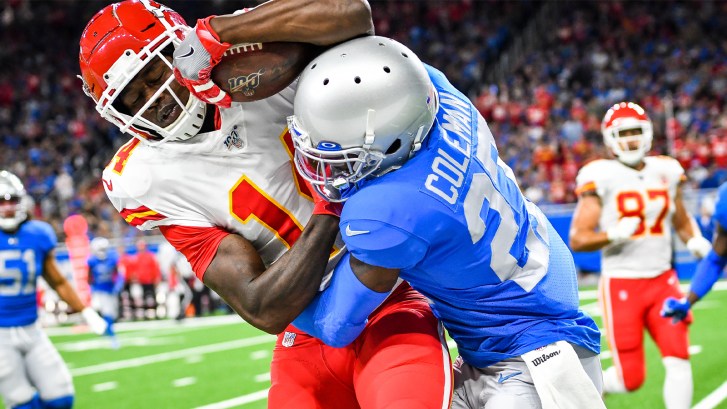
Allowing referees to make subjective rulings with the potential to have a major impact on the game is always a recipe for disaster, and the NFL spent far too long cooking with the force-out rule that was thankfully abandoned in 2008.
Prior to that point, receivers didn’t have to land with two feet inbounds for a catch to count on plays where a defender influenced their momentum, as officials could rule they would have made the completion if they’d been able to make the catch unimpeded.
There were some concerns the tweak would lead to more players being injured by giving defenders more incentive to force them out of bounds, but I think most NFL fans would agree it’s been a very welcome change.
The Tuck Rule
Getty Image
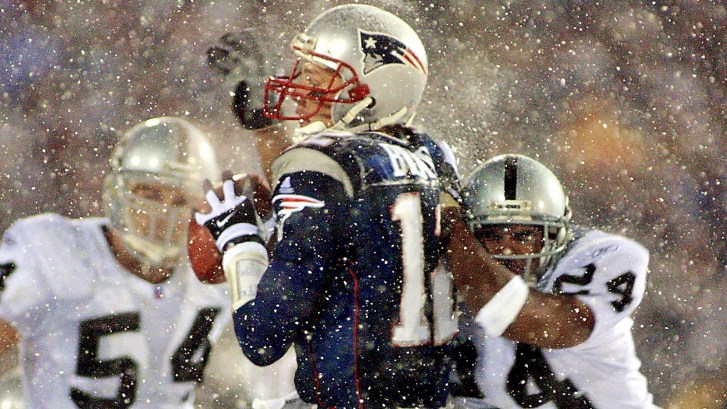
On January 19, 2002, the Patriots trailed the Raiders 16-13 in the closing minutes of their AFC Divisional showdown and were driving toward the end zone when Charles Woodson appeared to force a game-winning fumble by sacking Tom Brady.
However, the call was overturned after a video review determined Brady’s arm was moving forward when the football was jarred loose, which made it an incomplete pass due to the “tuck rule” that had been introduced in 1999.
New England capitalized with a field goal to tie the game before winning in overtime en route to a Super Bowl victory that would usher in the Patriots dynasty.
The ensuing outrage led to the tuck rule coming under a ton of scrutiny, but it remained on the books until it was abolished in 2013.
The NCAA's Ban On Slam Dunks

Getty Image
Oklahoma A&M center Bob Kurland is credited with throwing down the first slam dunk in college basketball history in a game in 1944, and there were plenty of other big men who started taking advantage of the high-percentage shot during that era.
However, the NCAA opted to ban the practice a little more than two decades later with what was commonly referred to as the “Lew Alcindor Rule” after the man you probably know better as Kareem Abdul-Jabbar routinely harnessed slam dunks during his meteoric rise at UCLA.
That rule—which cited player safety as the primary motivation—was instituted in 1967 (the man who was largely responsible asserted it was also racially motivated) and stood until it was repealed at the college and high school levels in 1976.
The NBA's Ban On Zone Defense
Getty Image
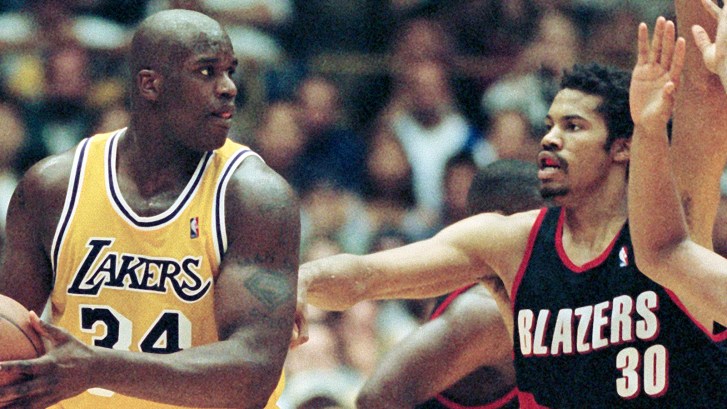
Man-to-man defense became the default in the NBA when the league was founded in the 1940s due to a rule that explicitly banned the use of a zone strategy due to fears it would make the game less exciting by suffocating offenses and preventing players from scoring in the paint.
Those rules evolved a bit in the decades that followed, but zone defense remained outlawed until the rules changed ahead of the 2001-02 season (a tweak commonly chalked up to Shaq’s dominance in one-on-one situations) to allow it with the notable introduction of the three-second violation that prohibited defenders from simply posting up in the paint.
Most NBA teams still opt for man-to-man in the vast majority of situations, but it took longer than it probably should have for the league to give them the option.
NHL's Two-Line Pass Rule
Getty Image
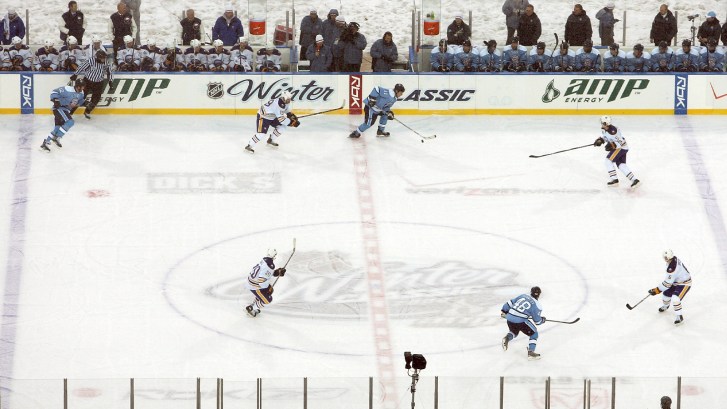
In 1943, the NHL passed a rule that prohibited teams from passing the puck from behind their own blue line to a player who’d already crossed the red line at center ice in a move that was largely designed to cut down on the practice of cherry-picking.
The two-line pass rule was intended to make life easier for defenses that were already at a disadvantage thanks in part to the comparatively undersized pads goalies were equipped with at the time.
However, the game (and equipment) eventually evolved to a point where offenses were clearly stifled by the inability to make lengthy passes as scoring began to decline.
The rule was changed following the lockout in 2005, and you’d be hard-pressed to find many hockey fans who miss it.
Basically Everything About Baseball's Early Pitching Rules

Getty Image
Baseball has come a very long way since Abner Doubleday dreamed up the rules in Cooperstown in 1839, and the modern version of the sport is significantly different than the one that was played back in the 19th century.
There have been hundreds of rule changes in the nearly 200 years that have elapsed since the first baseball game was played, but there are a couple that really stand out on the pitching front.
Prior to 1883, pitchers weren’t allowed to throw overhand and had to release the ball when it was still below their hips.
However, it took another four years for the rule change that dictated batters were allowed to request either a “high” or “low” pitch before one was thrown, which is a patently absurd concept when you consider the intrigue of the veritable chess matches that now unfold during each at-bat.