


Owning an NFL team tends to be a pretty lucrative venture, but it’s a position that comes with plenty of pressure and scrutiny due to the many responsibilities you’re burdened with while trying to operate a successful franchise.
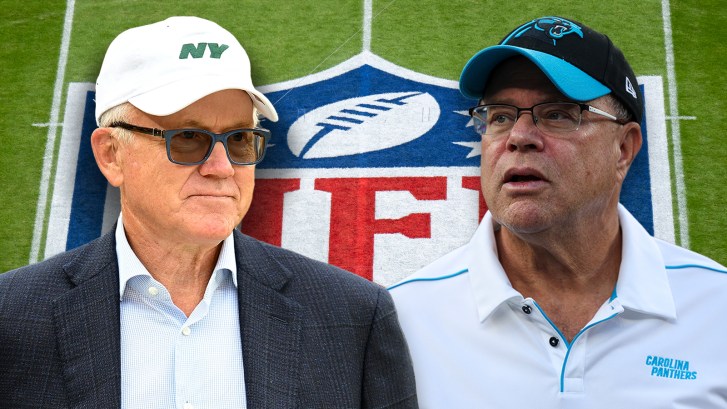
Getty Image
There are obviously plenty of NFL owners who genuinely care about their franchise and are more than happy to spend the money you need to compete in the league, and it would be unfair to label the likes of Mark Davis and Shad Khan as “bad” because those efforts haven’t translated to success on the field.
On the flip side of the coin, there are a number of owners who seem to be actively undermining the team they own on a regular basis thanks to their incompetency—including six who really stand out from the rest of the pack on that particular front.
David Tepper—Panthers

Getty Image
I’m not listing these owners in any particular order, but I feel like you have to start with the billionaire who once threw a drink at a Jaguars fan from his luxury box after his team let him down once again.
That was undoubtedly a bad look, but it would obviously be foolish to say David Tepper deserves to be among the NFL’s worst owners over a temper tantrum. However, he’s done more than enough to set himself apart on other fronts since purchasing the Panthers in 2018.
Carolina has failed to post a winning record (nevermind make the playoffs) under Tepper’s watch, and his tenure has been defined by baffling trades, disastrous draft picks, and a revolving door of head coaches.
Tepper also received a “D” on an NFLPA survey thanks in no small part to the decision to install artificial turf at Bank of America Stadium even though players made it very clear they were against the move that was made so he could generate more cash by hosting concerts at the venue.
Jimmy Haslam—Browns

Getty Image
The decision to not only trade for Deshaun Watson but give him the biggest guaranteed contract in NFL history is probably enough to merit Jimmy Haslam’s spot on this list, but it’s just one in a long line of awful moves he’s made since buying the Browns in 2012.
Haslam was also at the helm when Hue Jackson went 1-15 during his inaugural season in 2015 before somehow outdoing himself with an 0-16 campaign the following year—a run that still wasn’t enough to merit the dismissal that mercifully came midway through the 2017 campaign.
The Browns have shown a bit of promise in recent years thanks in no small part to the hiring of Kevin Stefanski, but Haslam has still failed to inspire much confidence due to what’s transpired since taking over.
Woody Johnson—Jets

Getty Image
It’s been close to 25 years since Woody Johnson bought the New York Jets to usher in a new era largely defined by the pain and suffering fans have been subjected to during that span.
Johnson’s acquisition of the team coincided with Bill Belichick’s decision to resign as head coach due to concerns with the new ownership—a development that led to the Jets largely playing second (and third and fourth) fiddle to the Patriots for most of the ensuing two decades.
The Jets currently hold the dubious honor of having the NFL’s longest playoff drought, which is slated to extend to 14 seasons in the wake of the ill-fated Aaron Rodgers Experiment.
That was just the latest misstep in a long line of retroactively regrettable decisions, and all signs point to there being plenty more in store given his dubious track record at the helm.
Dean Spanos—Chargers
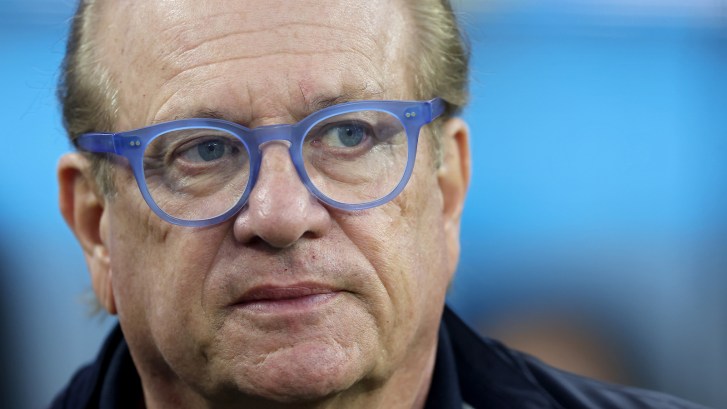
Getty Image
Dean Spanos has technically only owned the Chargers since 2018 after inheriting the team in the wake of his father’s death, but he’s spent three decades calling the shots since being named president and CEO in 1994.
You can’t talk about Spanos without discussing his decision to relocate the Chargers from San Diego to Los Angeles while attempting to pin the blame on the city they called home for 56 years. That move may not have had a dramatic impact on the product on the field, but he does shoulder the blame for many of the shortcomings on that front.
Eli Manning has implied his concerns with Chargers ownership and the team’s front office influenced his decision to refuse to sign with them after being drafted in 2004, although they did get a solid consolation prize in the form of Phillip Rivers.
Spanos is also a notoriously frugal owner with a reputation for sticking with lackluster coaches longer than he should so he doesn’t have to pay them. There’s also been an unwillingness to invest in a roster that has routinely left a lot to be desired, which is a major reason the Chargers haven’t been to the Super Bowl since his first year in charge of operations.
Michael Bidwill—Cardinals

Getty Image
Michael Bidwill joined the Cardinals front office in 1996 before eventually inheriting the team after his dad’s death in 2019, and it didn’t take long for him to earn a less-than-stellar reputation thanks to a number of reports concerning his behavior behind the scenes.
Bidwill’s father Bill was a well-known penny-pincher, and it appeared Michael decided to carry the torch when you consider the Cardinals were the only team in the league that charged players for meals at the team’s facilities based on an NFLPA survey from 2023 (it’s worth noting that’s no longer the case thanks in no small part to the negative attention that generated).
He was also at the center of a string of fairly explosive accusations levied by former VP Terry McDonough that surfaced that year concerning a toxic and discriminatory work environment he allegedly fostered as well as orchestrating a burner phone scheme to communicate with former GM Steve Keim while he was serving a suspension for a DUI.
The franchise responded by hiring a private investigator to dig up dirt on McDonough and was ultimately forced to fork over $3 million due to the “false and defamatory” information it distributed to attempt to undermine him.
I’m sure some people would be willing to overlook those issues if the Cardinals were a competitive team, but they’ve also largely failed to check that particular box.
Mike Brown—Bengals
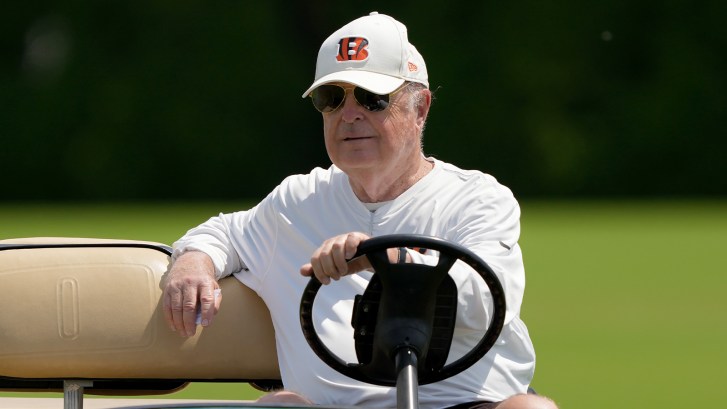
Getty Image
The Bengals have turned over a new leaf with the help of Joe Burrow (although that has not been the case this season), but I’m not letting Mike Brown get a pass due to that recency bias.
Brown has been involved with the Bengals since the 1960s and took over as owner in 1991 after his father died. They were consistently one of the worst teams in the NFL in the decade that followed, and while they rattled off a string of playoff appearances once the new millennium rolled around, they went 31 years without a postseason victory until the streak was snapped in 2021.
He’s also been a historically stingy owner who’s largely unwilling to fork over the cash you need to operate a successful franchise, and I’d argue his daughter Katie Blackburn deserves the bulk of the credit when it comes to the strides the team has recently made.
Cincinnati has gotten a brief taste of success in the 2020s, but it doesn’t make up for the decades of mediocrity fans have been subjected to thanks to their owner.