


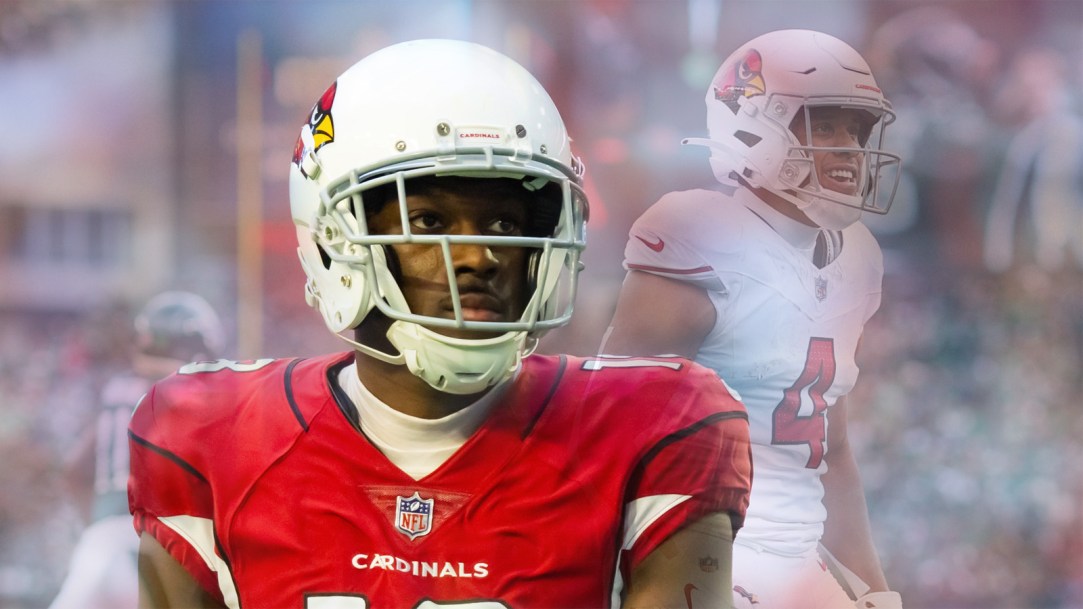
Retired NFL wide receiver A.J. Green has joined a growing chorus of players and former players who believe the NFL isn’t doing enough for the mental health of the athletes it employs.
Wide receiver Rondale Moore died last month at the age of just 25-years-old, reportedly from a self-inflicted gunshot wound. Green and Moore were teammates on the Arizona Cardinals during the 2021 and 2022 NFL seasons.
Following Moore’s death, former Pittsburgh Steelers practice squad player Breiden Fehoko used social media to criticize the NFL for prioritizing getting players on the field on game day over their mental health.
“These NFL teams come out here and post these mental health awareness posts talking about they care about players ‘don’t be afraid to reach out’ etc. All they care about is what you bring to the table when it’s game day,” he wrote.
A.J. Green addresses the death of Rondale Moore
On Wednesday, A.J. Green, who apparently grew close to Rondale Moore during his final two NFL seasons, addressed the issue in an article for The Players Tribune.
“I’d always joke with him about how he’s ‘Rondale Green, my third and oldest kid.’ And looking back, that’s probably one of those jokes where it’s funny because it’s based in a feeling that’s true,” Green explained. “Man, I swear….. sometimes he really did feel like my son. I hope he knew I really did love him that way. And I guess I just wanted to share a few thoughts with y’all, now that he’s gone.”
Green was so close with Moore that he said he was one of the first people he told about his plan to retire. He said he and Moore kept in touch during the following season, Moore’s third with Arizona. They also stayed close when Rondale Moore got injured and was forced to miss the entire next season.
And then Moore hurt himself again, in his first preseason game, on his first play back, while returning a punt. Same injury. And things changed. Green said Moore “went to a lower, darker place.”
Still, Moore had opportunities to coach and was still planning a comeback when A.J. Green got the call that he had passed.
A.J. Green says real change has to start at the top of the NFL
“I know I’m just a former player. I’m no expert,” Green wrote. “But to me, there’s a lot that could still be improved in the NFL, as far as how the league is helping its players with their mental health. And one way I would start is by making it mandatory, if you have a major injury, that you see an independent mental health counselor as part of your rehab. And by also making it mandatory, if you have a second major injury, that you see an independent mental health counselor for an extended period of time, even after your rehab. And the reason I say this — it’s because I’m not an expert. You know what I’m saying?
“Like, Rondale, he had a support system. He wasn’t alone. He had friends who loved him, family who loved him. But those relationships can be complicated. And while those people can give you love and support … what they can’t give you is professional help, and what they can’t do is equip you with tools so that, if you ever do have a mental health crisis, or even just a really bad day, you know how to handle it. And you don’t go and do something you can never undo.
“In my opinion, if Rondale’d had those tools, he might still be alive today. And I want to make sure we’re never saying that again about a young NFL player.”
A.J. Green echoed a lot of what Breiden Fehoko said
“All the rules … all the initiatives … all the public statements about awareness … none of that means anything if the people who are making the football decisions, in private, are viewing mental health issues how I feel like a lot of times they still get viewed: as a red flag,” he continued. “That’s the truth. No one in any front office will ever say it out loud. No scout is ever gonna put it in a scouting report. But that’s how it’s viewed in this league by a lot of people.
“And as long as that’s the case? Stories like Rondale’s will probably keep happening.”