


© Julia Hansen/Iowa City Press-Citizen / USA TODAY NETWORK via Imagn Images
A flawed formula led to highly controversial seeds for the 2026 Big Ten Wrestling Tournament, which came out on Monday. The seeds, which could well play a role in the eventual seeding of the national tournament, caused a major uproar in the college wrestling world.
In previous years, coaches from across the conference would convene virtually in order to seed the tournament. However, this year, the Big Ten turned to a formula that, given a lack of context, made for some absolutely baffling seeds.
Big Ten Network
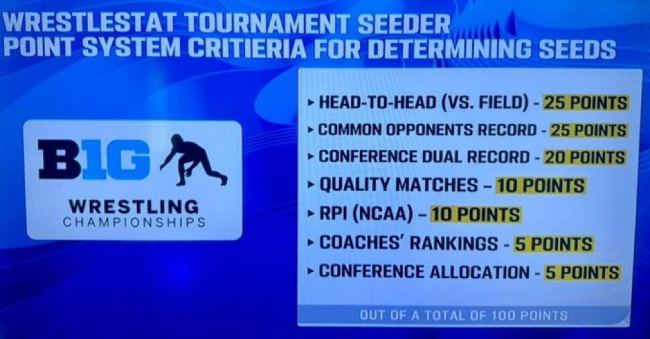
The new formula compares all 14 wrestlers at each weight head-to-head using a points system, with points awarded on seven different criteria.
However, because teams do not wrestle balanced schedules, and because multiple wrestlers missed significant time due to injury, the eventual seeds saw several big names dropped well down the order.
Cael Sanders Goes Off On Big Ten Wrestling Seeding Issues
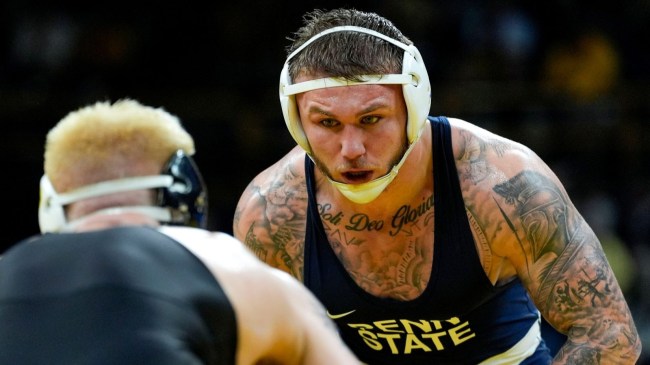
Perhaps the most notable flashpoint came at 174 pounds, where undefeated Penn State star Levi Haines was seeded second behind Nebraska’s Chris Minto, despite beating Minto head-to-head earlier in the season and having a better conference win percentage.
Haines’ seed was brought down by the fact that he faced four backups during the Big Ten portion of the schedule, something he has no control over.
Legendary Penn State coach Cael Sanderson did not mince words when asked about the matter.
“What happened isn’t going to work,” Sanderson told members of the media on Tuesday. “There needs to be a common sense application. So we’ve got to figure that out. I don’t know if it’s too late to maybe re-seed it as coaches, but maybe we should.”
What Happened With The Big Ten Wrestling Seeds?
The Nittany Lions also ended up on the short end of the stick at 157 and 184 pounds.
At 157 pounds, Penn State true freshman PJ Duke earned the second seed, but will likely faced seventh-seeded Brandon Cannon of Ohio State in the quarterfinals. Cannon is undefeated on the season and was ranked No. 1 in the nation prior to an injury in late January against Minnesota’s Charlie Millard, whom he beat 12-6 in the match. Cannon is 13-0 on the season, while Millard is 17-6.
Additionally, at 184, Rocco Welsh of the Nittany Lions, who is ranked No. 1 in the country, received the top seed but could square off with Angelo Ferrari of Iowa in the quarterfinals. Ferrari, like Cannon, was ranked highly before getting injured in January. In fact, Ferrari’s lone loss on the year came to Welsh in on January 16, where he lost 2-1 in tiebreakers and appeared to suffer the injury.
At 165 pounds, Purdue’s Joey Blaze, an undefeated returning national finalist was seeded third behind top seeded Mitchell Mesenbrink of Penn State, who is the undefeated national champion at the weight, but also behind Iowa’s Mikey Caliendo, who is 15-3, including losses to both Blaze and Mesenbrink.
Fans And Coaches Call Out Baffling Big Ten Wrestling Seeds
“You would think the Big Ten would be embarrassed to put the seeds out like this!” one fan posted on X.
“These seeds just show, you NEED a human component,” said another.
North Carolina assistant coach Tony Ramos noted that the ACC previously used WrestleStat, the company contracted to do the Big Ten seeding this year, but changed its seeding process the following year.
Ultimately, the seeds are flexible. On Friday, the day before the tournament begins in State College, Pennsylvania, the coaches will meet. They can challenge any seeds that are within a 15 point difference of one another.
But as Sanderson mentioned, they don’t know the math on each said. And there shouldn’t need to be significant changes. Something tells us this will be the last year the Big Ten uses this seeding forumula.