


Bryceharper3 on X
Philadelphia Phillies superstar Bryce Harper didn’t have the type of season he would have hoped for in 2025.
Harper played in 132 of 162 games, but he hit just .261 with 27 home runs and 75 RBIs, enough for 129 OPS+. While those are certainly solid numbers, they’re not what the Phillies expect from their $330 million man, and general manager Dave Dombrowski made as much clear after his team was eliminated from the postseason.
Now, Harper is going to extreme lengths to ensure he’s ready for the 2026 season.
Bryce Harper Underdgoes Extracorporeal Blood Oxygenation and Ozonation
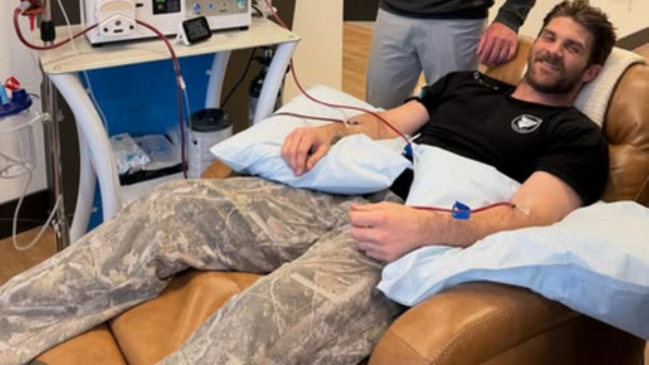
On Friday, Harper took to Instagram to share that he had undergone an EBOO treatment. EBOO standard for Extracorporeal Blood Oxygenation and Ozonation. Harper described it as follows:
“EBOO is a procedure in which 1/3 of your blood is drawn from your body, passed through a filtration and ozonation device, and then returned to your bloodstream.
“Circulates your blood outside your body, exposes the blood to ozone (O₃) and will oxygenate or filter the blood before returning it to you.
This will:
Improve circulation
Reduce inflammation
Fight infections
Support immune function
Remove toxins
Increase energy
Not only is the treatment extremely bizarre, something that is not exactly uncommon for Harper. But fans also believe he may have violated MLB rules in the process.
Bryce Harper had a third of his blood drawn out then returned to his body pic.twitter.com/zQem9Un30C
— Jomboy Media (@JomboyMedia) December 6, 2025
“Sounds like blood doping, increased oxygen to the blood enhances athletic endurance and performance. Sounds similar to what Lance Armstrong did,” one fan wrote.
However, EBOO is not only not the same as blood doping, but the FDA does not approve the treatment and many doctors believe it does nothing at all while creating risks of complications.
The FDA states that using ozone for medical conditions “may do more harm than good,” and severe complications following the procedure have included neurological crises, ischemic infarcts, and persistent cognitive deficits in previously healthy patients.
So yes, Bryce Harper could come back next year and have an MVP-caliber season. But it’s not necessarily due to this treatment. He could also revive some disease we thought to be eradicated centuries ago.