


Getty Image
Millions of people rely on energy drinks to get their caffeine fix, and that includes plenty of professional athletes who are looking for a boost. However, one brand has been forced to deny that its product contains an ingredient that can make you fail a drug screening for cocaine due to a rumor that can be traced back to a minor league baseball team.
Humans have been turning to natural sources for a pick-me-up for more than a thousand years.
A goat herder in Ethiopia is widely (and apocryphally) credited with discovering coffee in the ninth century after watching some members of his flock perk up after chowing down on some beans, and archaeologists have found evidence that suggests South American civilizations in the Andes were harnessing the coca leaf for energy for millennia before that point.
As you likely know, that second plant is used to produce a slightly more potent upper in the form of cocaine (which was synthesized for the first time in 1860). It was also famously an ingredient in the original Coca-Cola formula until the start of the 20th century, and while the soft drink behemoth still has a partnership with a company that’s legally allowed to produce a flavoring extract that’s free of any psychoactive ingredients, you’d be hard-pressed to find many other drinks that contain it.
That brings us to a story that stems back to a tweet that Emily Waldon, a writer who covers the Detroit Tigers farm system, sent out over the weekend after hearing members of the West Michigan Whitecaps (the franchise’s High-A affiliate) engaged in a discussion concerning ” MLB-approved energy drinks.”
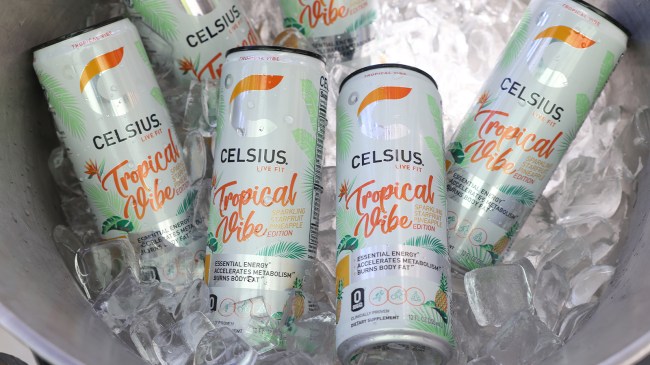
According to Sports Business Journal, that now-deleted post noted C4 and Red Bull were the energy drinks of choice for Whitecaps players before asserting, “Celsius has an ingredient known to flag as cocaine in MLB drug testing and although it’s not officially banned, it’s ‘strongly discouraged,’ I’m told.”
That allegation understandably caused a bit of a stir after it started making the rounds online before coming to the attention of some folks at Celsius, which firmly denied that’s actually the case with a statement that reads:
“Celsius is completely safe and is enjoyed by professional athletes, fitness enthusiasts, and college students as part of their fit lifestyles.
Claims that Celsius could cause one to fail a drug test have been proven false, and there is no merit to these claims.”
It appears the confusion stems from a list the National Science Foundation has compiled concerning drinks it deems “Certified for Sport,” which Celsius is absent from. It’s not entirely clear why that’s the case, but both the MLB and MLBPA told SBJ they are “not aware of any specific ingredient in Celsius that would cause a positive test result, and have not communicated this view to any Club or player.”
As I mentioned above, Waldon took down the tweet in question, which presumably stemmed from what players who were seemingly responsible for the rumor relayed to her before she shared the piece of misinformation.
There may be some risks that come with consuming an excessive amount of Celsius (as well as every other energy drink), but there isn’t any evidence that suggests testing positive for cocaine is one of them.