



Kiyoshi Mio-Imagn Images
College football ends annually with a series of bowl games, some of which have more meaning than others. Many of the sport’s oldest contests are used to determine national champions. Others have storied histories as staples of the postseason.
This year, all of those games will again be played. They’ve survived the everchanging college football landscape to remain a key part of each campaign.
Here, we’ll take a look at the nine oldest bowl games dating back decades.
College Football’s Oldest Bowl Games
Nine yearly postseason matchups precede 1970. Each pays out a significant amount of money to participants.
There are some things to know about those payouts. First and foremost, conferences collect the cash to divvy up to schools. Money does not go directly to the football teams.
That goes for both the College Football Playoff and other bowls. Below is the CFP pay structure with the prize going up the further a team advances.
- Each conference will receive $300,000 for each of its schools when the school’s football team meets the NCAA’s APR for participation in a postseason football game. Each independent institution will also receive $300,000 when its football team meets that standard.
- A conference will receive $4 million for each team that makes the College Football Playoff (12 schools) and each team that advances to the Playoff Quarterfinals (eight schools).
- A conference will receive $6 million for each team that advances to a Playoff Semifinal (four schools) and each team that advances to the national championship game (two schools).
- Each conference whose team participates in the College Football Playoff will receive $3 million to cover expenses for each round.
With all of that being said, let’s dive into the oldest bowl games in college football and see how each rewards its participants.
Peach Bowl
© Sam Greene via Imagn Content Services, LLC
The first Peach Bowl was played in 1968 between the LSU Tigers and Florida State Seminoles. Since, it’s often involved a team from the SEC and ACC.
The first three contests were played on the campus of Georgia Tech. The bowl has since moved to Mercedes-Benz Stadium but has never left Atlanta.
With the inception of the College Football Playoff in 2014, it became one of six rotating bowl games used to determine a national champion. It is now included annually in the 12-team format.
Last year, it paid out $4 million to each team as a quarterfinal matchup. This year, the number grows to $6 million as it will decide one of two national title participants.
Liberty Bowl
© Justin Ford-Imagn Images
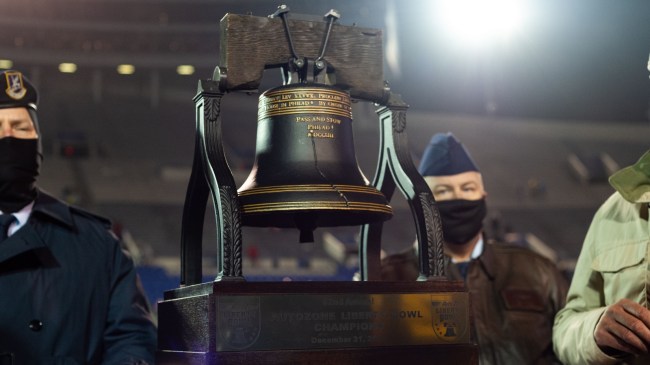
The first Liberty Bowl was played in Philadelphia between Penn State and Alabama. Cold weather initially impacted attendance, resulting in a move.
Following a one-year stint in Atlantic City, the game was moved to Memphis, Tennessee where it’s been held since 1965.
The postseason matchup has had many different conference affiliations. Currently, it pits a team from the Big 12 against a rival from the SEC.
The annual payout is listed at $6 million.
Citrus Bowl
© Jasen Vinlove-Imagn Images
The Citrus Bowl was first played in 1947 and featured a matchup of Catawba vs. Maryville. At the time, it was known as the Tangerine Bowl.
The name change came in 1983, and it’s since seen a number of different title sponsors. The current conference tie-ins include the SEC and Big Ten.
The annual payout is listed at $8 million. It is one of the oldest non-CFP bowl games in college football.
Gator Bowl
© Corey Perrine/Florida Times-Union / USA TODAY NETWORK via Imagn Images
Another of the non-playoff bowl games, the Gator Bowl dates back to 1946. That inaugural matchup saw the South Carolina Gamecocks take on Wake Forest.
Since, it’s been played annually in Jacksonville outside of one matchup that was held on the Florida Gators’ campus due to a stadium construction.
The current conference tie-ins involve the SEC, Big Ten, and ACC. Those participants benefit from a total payout of $5.35 million.
Cotton Bowl

© Jerome Miron-Imagn Images
The Cotton Bowl was first played in Dallas in 1937. The first contest saw the TCU Horned Frogs face off against Marquette.
In 2010, the game was moved to Arlington to be held in AT&T Stadium, the home of the Dallas Cowboys.
It is one of the six College Football Playoff affiliated bowl games and boasted a payout of $6 million as it was a semifinal contest.
This year, participants will earn $4 million each as it’s been moved to the quarterfinal round.
Sun Bowl
© Omar Ornelas/El Paso Times / USA TODAY NETWORK
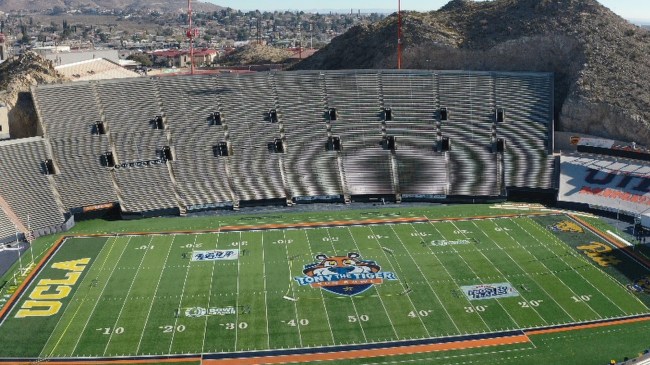
The oldest of the non-CFP bowls, the first Sun Bowl was played in 1935 though that matchup featured the El Paso All-Stars and Ranger High School. It wasn’t until Year 2 that colleges began participating.
The game has always been set in El Paso, Texas, though the venue has changed on occasion. Currently, its conference tie-ins include the ACC and PAC-12.
The bowl game’s payout is listed at $4.55 million.
Sugar Bowl
© Stephen Lew-Imagn Images
The first Sugar Bowl was played in New Orleans in 1935 between the Tulane Green Wave and Temple Owls. The game was played at Tulane Stadium up through 1975.
It then moved to the Super Dome, with one game being played in the Georgia Dome due to Hurricane Katrina.
The matchup has often featured an SEC team and Big 12 squad. It is one of the six CFP bowl contests with each participant banking a $4 million payout this year as a quarterfinal game.
Orange Bowl
© Tommy Gilligan-Imagn Images
The Orange Bowl is tied with the Sugar and Sun Bowls as the second oldest in the sport. It, too, dates back to January of 1935.
The first edition pit the Bucknell Bison against the Miami Hurricanes at Miami Field in South Florida. It has remained in the area in the 90 years that have followed.
The Orange Bowl is one of the six College Football Playoff bowl games. As a quarterfinal matchup this year, participants will earn a $4 million payout.
Rose Bowl
©Adam Cairns - Imagn Images
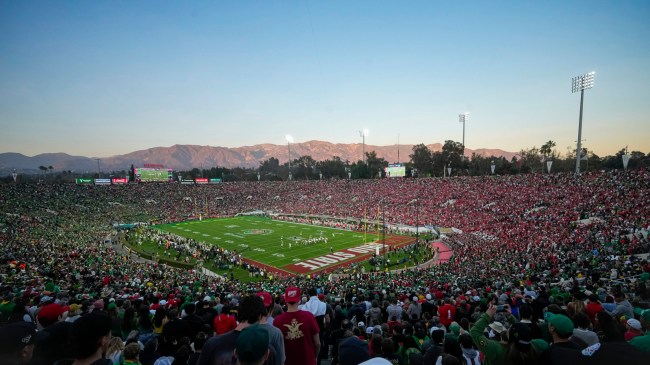
The Rose Bowl is referred to as the “Granddaddy of Them All,” and for good reason. It is, by far, the oldest bowl game in college football.
The very first Rose Bowl was played in 1902 between Stanford and Michigan, though it was then called the Tournament East-West football game. There would then be a 14-year hiatus before a return in 1916 due to a lopsided 49-0 final score in that debut.
While typically held in Pasadena, California, there have been two seasons in which the location differed. In 1942, the game was played at Duke because of World War II. In 2021, it was played in Texas at AT&T Stadium.
The Rose Bowl is a College Football Playoff bowl game, and it will be paid out as such this year. It will be a quarterfinal matchup this season, making the payout for each school $4 million.