


iStockphoto
Time’s up for some counterfeiters. That’s because U.S. Customs and Border Protection (CBP) officers in Louisville, Kentucky recently seized a shipment of 160 fake Rolex watches.
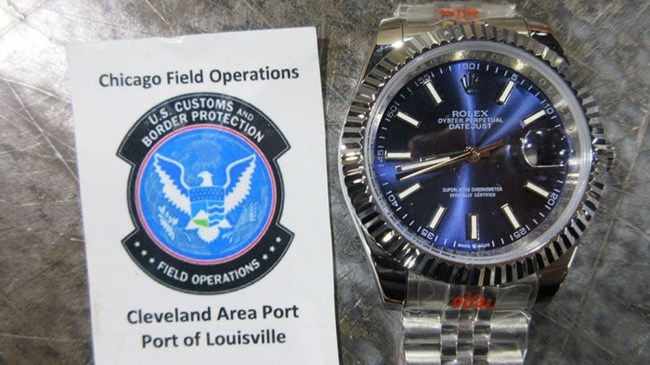
The large shipment of counterfeit Rolex watches was intercepted earlier this week when officers inspected the parcel. The 160 Rolex Just Date watches packed in the parcel were supposed to be sent to a residence in Houston. Instead, after the CBP Centers of Excellence and Expertise deemed the watches inauthentic, they aren’t going anywhere.
Had the Rolex watches been genuine and not fakes, the shipment would have carried a combined manufacturer’s suggested retail price of $2.57 million.
“Our CBP officers diligently work to protect honest and hardworking legitimate businesses by targeting and intercepting these fraudulent items,” said Director of Field Operations, LaFonda D. Sutton-Burke, Chicago Field Office. “We continue to protect our community and the consumer from these unregulated counterfeit items that could potentially cause harm to our economy.”
CBP
Billions of dollars’ worth of counterfeit items are seized by Customs and Border Protection agents each year
In fiscal year 2025, U.S. Customs and Border Protection seized nearly 79 million counterfeit items with a combined manufacturer’s suggested retail price value of over $7.3 billion. In fiscal year 2024, CBP officers seized a total of $1.4 billion worth of fake watches.
Earlier this month, U.S. Customs and Border Protection officers in Louisville confiscated two different shipments of fake watches. Had those been authentic, they would have been worth around $6.6 million.
In those cases, the counterfeit watches bore the trademarks of Richard Mille, Rolex, Hublot, Cartier, Swarovski, G-Shock, and Patek Philippe. Those shipments originated in Hong Kong and were addressed to residences in Georgia and Florida.
“Illegitimate sales are some of the most profitable transnational crimes. Counterfeiters sell inauthentic versions of popular products in response to trends, often through online sources,” U.S. Customs and Border Protection said in a statement.