


Provided by Jonny Davies
The 2026 BPN G.1.M Ultra (Last Man Standing), a backyard ultramarathon, is set to take place this week. For those unfamiliar with this type of ultramarathon, it is a race that has managed to combine a unique type of mental torture with a level of physicality and endurance that is incomprehensible to most people.
In short, you must be wired different to compete in a backyard ultra. It requires the athletes to complete one 4.2 mile loop, every single hour, until there is only one person left standing. Eating and sleeping is up to the athletes. They just have to finish one loop, every hour.
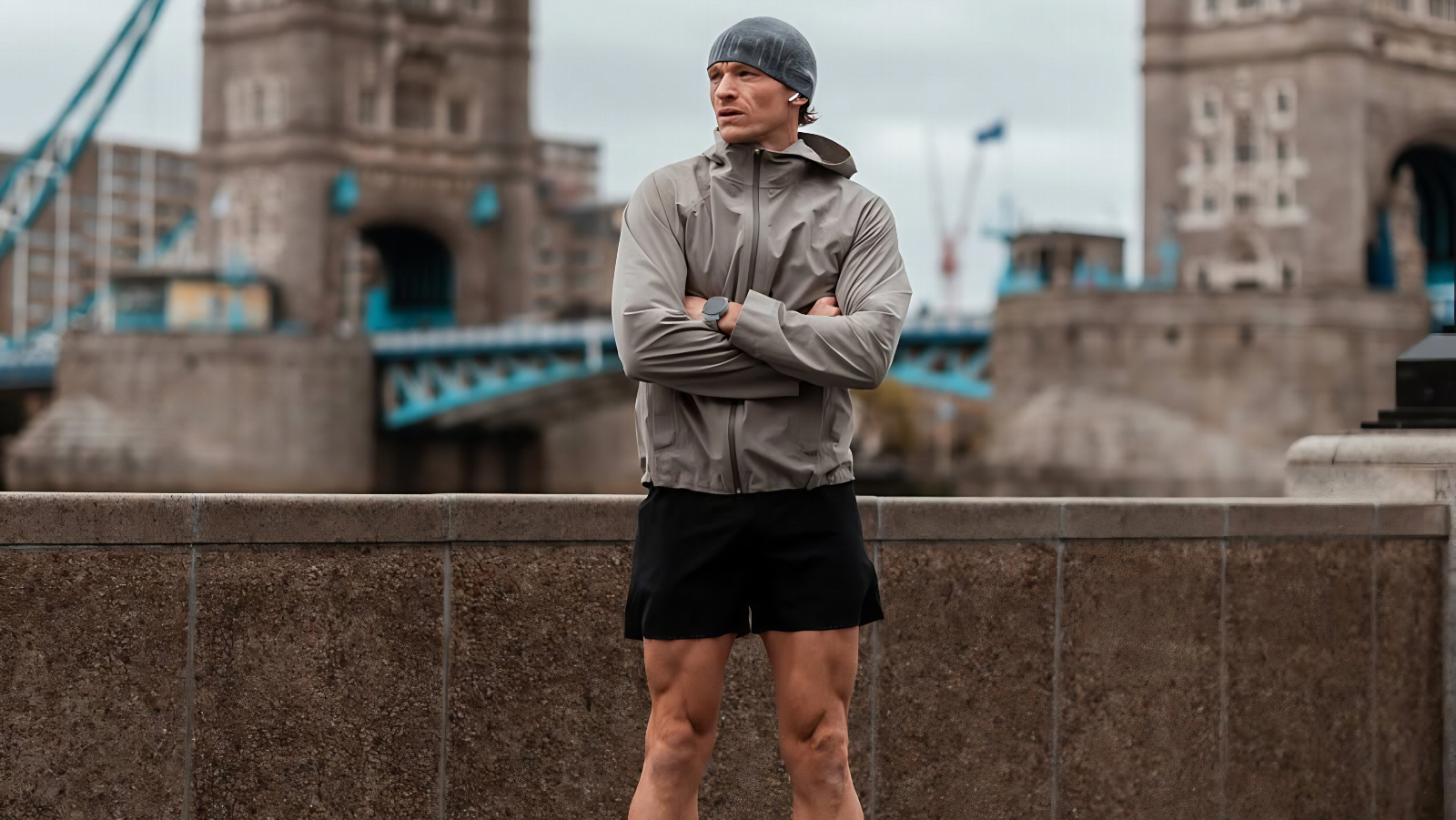
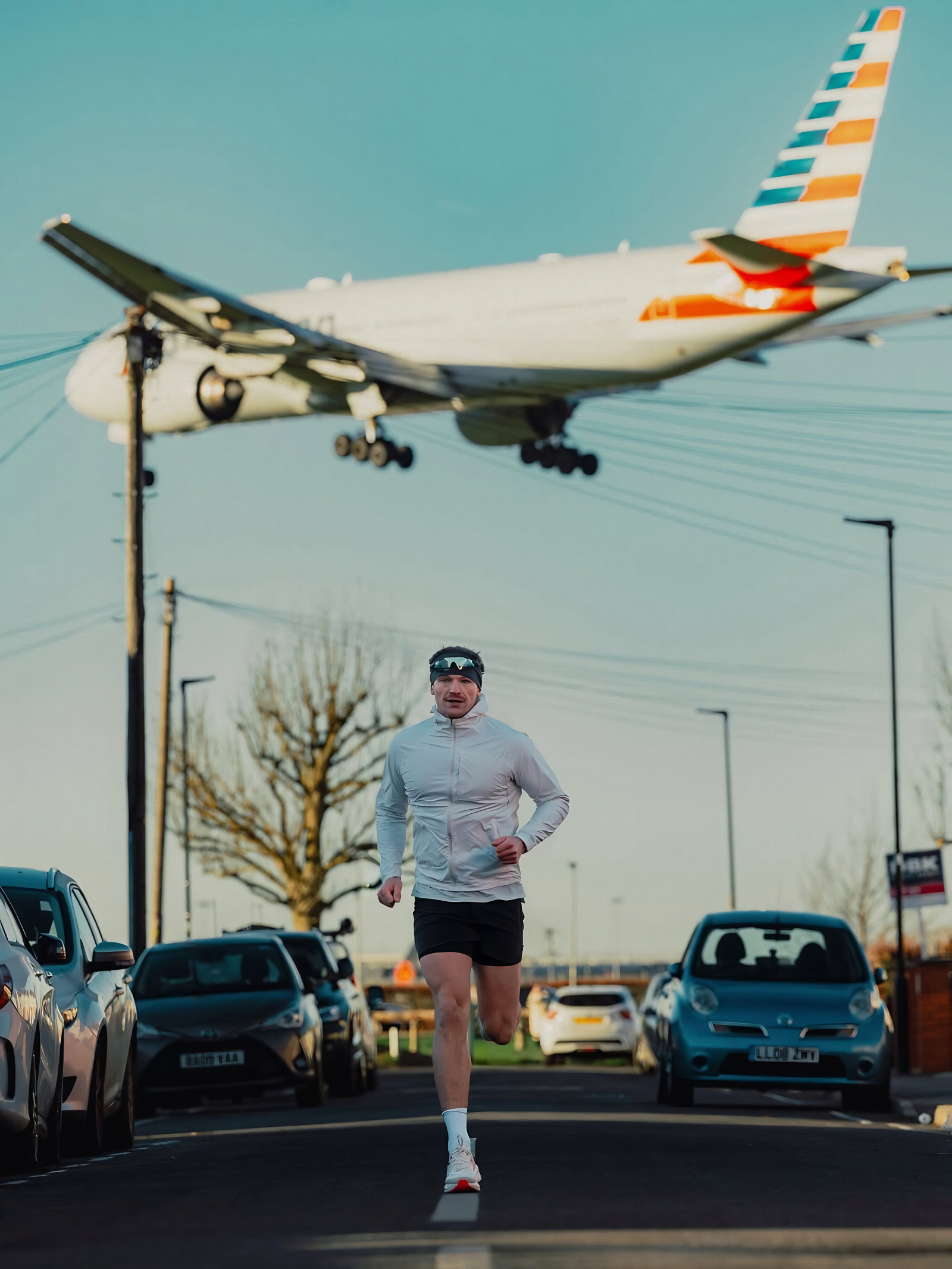
To seek out a challenge like this you have to be wired different and British ultra runner Jonny Davies is up to the task after he completed the Capital Challenge in 2024. It was challenge of his own devising, where over the span of 11 days he ran through the capitals of the UK and Ireland, over 960 kilometers (~600 miles), starting in Edinburgh and finishing in London while routing through Ireland and Wales.
Jonny is no stranger to pushing his body to the limits. As a BPN-sponsored athlete, he competed in last year’s BPN Backyard Ultra and will be returning this year for more. I spoke with him last week and have to say this is one of the more enjoyable conversations I’ve had in quite some time. His enthusiasm for the sport, for telling real stories, vulnerability in social media, and his methodical and analytical approach to fitness and fueling was all infectious.
Interview With Ultra Runner Jonny Davies Ahead Of BPN Backyard Ultra
Provided by Jonny Davies
Cass Anderson: So, what does your preparation look like now a little over a week out, are you tapering?
Jonny Davies: Yeah, I’ve been tapering for about a week, but I still keep some volume. I’m a big believer in maintaining momentum. I don’t like going into a race completely idle. The next few days are about final prep, mental preparation, strategy review, and my team is flying in from the UK. We’ll have a team dinner and go over a few different scenarios, like under what conditions we would ever stop. Otherwise, the mission is simple: just keep going.
Cass Anderson: Do you have signals or a code word with your crew on when to pull the plug so they know you mean business or is the plan to just have them gaslight you through the misery so you keep going one more?
Jonny Davies: Not really. We rely on experience. My crew knows me well. When I did a 600-mile run across the UK, they handled things the same way… If I was struggling, they’d let me rest briefly, feed me, ignore all of my complaints. Then it was straight back out. No negotiation.
Is Being Jacked A Pro Or Con In Ultra Running?
Cass Anderson: At 6’4″ and 220 pounds, you carry significantly more muscle than most ultra runners. Do you see that as a strength or a drawback?
Jonny Davies: Both. I think there are pros and cons. So the cons would be massive increase in fueling. With my metabolic testing, even at a Zone 2 cardio, I’ll be burning about 750 calories per hour so my calorie demand is huge. My top end over that distance isn’t going to be great… But that’s why these big challenges, the big ultras like this where top end speed really doesn’t matter too much is okay.
Then the pros to being more muscular are injury resistance. You know I can put some serious miles to my legs and my bone density’s fantastic and that is from years of strength training, multi-directional sports with rugby, you know.
And even things like my tendon strength… My tendons are pretty much the same size they were when I was 115 kilos (253 pounds)… So like now when I have when I have my tendons scanned and tested, the doctors look at it like you have the tendons of a man who is 40 pounds heavier and I’m like “yeah, I used to be 40 pounds heavier.’ Which again, it works for my strengths. So you know, whilst I may not be the fastest, it just means that, I have a greater capacity to be able to keep continuing on.
There are also many people who are ex-rugby players who end up in the ultra-American running world, and they found their specialty in the multi-day space. I’ve got some friends who are fantastic 50-mile, 100-mile runners, but the idea of doing a multi-day to them, they’re like, ‘absolutely not’, because that sounds insane. Even my coach is a sub-2:30 marathoner, and the idea of an ultramarathon to him, he’s like, ‘absolutely not.’ He’s never ran more than 3 hours in his life, because his first marathon was like a 2.5-hours, so he’s like his long runs are done in about 2 hours’ time, whereas my long runs can be 10 hours fast.
Cass Anderson: There’s an interesting phenomenon in this sport where runners earnestly celebrate the last place finishers, the ones who make it in right before the cutoff. And I don’t think the people on the outside realize that the last place finisher is burning thousands upon thousands of more calories than the top finishers, that they are putting multiple additional days of stress on their bodies compared to the front of the pack.
Jonny Davies: Yeah, oh my God, 100%. I was with Tom Evans the other day who won UTMB (Ultra Trail du Mont Blanc) last year and we were chatting away and he was saying how the fact that some people are out there for nearly 48 hours… and he was like ‘I was done in 19. I did not want to be out there for a second longer.’ Let alone the fact that people are out there for multiple days and multiple nights.
‘Do people think you’re crazy?’
Cass Anderson: When you propose something like your Run the Capitals Challenge, 960 kilometers through Edinburgh, Belfast, Dublin, Cardiff, and London, do people in your life think you have lost your mind and gone crazy?
Jonny Davies: Well, ‘yes’ is probably the best answer to that one. But they are more confused than anything. I only got into running around 2019–2020 and I actually hated it at first. But I focused on improving what I was worst at and that eventually turned into something I loved. It was the one thing I probably needed to progress at the most and therefore I got the most enjoyment out of that progress.
I just started ticking off these running distances… 20K, 40s, let’s see what 50s are like, and then let’s see what 100s are like. My friends and family don’t come from a running background, my dad was a rugby man growing up, and none of my family are like incredibly fit so ultra distance running wasn’t on the radar for anyone. So at first it didn’t make sense to them. But once they saw the community and support around ultras, they started to understand. And I think the more they come to events and racing challenges and they’ve seen the support that comes through for me, and there’s a real sense of community around this sport where, you know, it’s a team effort.
Cass Anderson: When does a race like this, like the BPN Last Man Standing Ultra, stop being fun for you as a runner??
Jonny Davies: I’ve always said that like it goes through phases of fun and horrible, it’s a roller coaster, right, it starts out super fun. The first few laps are like ‘oh my God, this is great! This is the thing we’ve all trained for for so long.’
There’s an element of, the anticipation’s still there because for the first few laps it’s super slow, super easy. Nobody wants to be the first person to mess up or drop out. And that’s all really fun.
Then I think when everyone’s trying to settle into a rhythm, then it stops getting fun. It’s more like ‘OK, let’s just get to the next… For the first 12 hours it’s just ‘let’s just get through this’ because, you know, everyone’s fresh, everyone’s fine, everyone’s well rested, hopefully.
And then it starts when the first night hits and all of a sudden there’s no optic flow going on past your eyes, it’s just darkness. You see your head torch. That’s when it starts to get a bit like ‘oh ok, this is getting harder.’ You start to get tired, you start to go ‘okay, we’re in a different part of this race now.’
That’s when it really doesn’t get fun and then then you start overthinking things and then all of a sudden it’s like, oh, I’m not sleeping on every lap. You might get a couple of minutes and you think ‘damn, OK I’ve gotta hit it again’ and when you start that first wave of tiredness or things start to get a little bit tight, maybe the weather conditions shift, that’s when it starts to not get fun.
But then I think you pull yourself back from those dips. I think so much of that is dependent on like have I fueled properly, am I at the right hydration levels? When I’ve had maybe slight stomach issues and I’m not taking on as much as I need, that’s when often I’ll feel a bit extra fatigued. Or last year it was crazy temperatures above 100 degrees and I was throwing down 2.5 L of fluid an hour and I still got really bad dehydration and I was like 10 hours in, my entire posterior chain was cramping and I was like, ‘oh my God, how can I keep going? How’s it gonna happen?’
And then my team just literally forced like 4 liters of fluid down me, a load of salt tablets, and they’re like, ‘we need to now increase your volume, you’re you’re not hydrated enough.’ And as soon as I got back to being hydrated, I was like ‘I feel fantastic, this is great!’ It’s just a game. It’s a balancing game of ups and downs and when, when you feel great, just remember this is temporary, but also when you’re feeling pretty bad, this is also temporary too.
Jonny Davies On Mental Preparation
Cass Anderson: How do you mentally prepare for a race with no defined finish line?
Jonny Davies: I mean that’s the really hard part of these races. It’s like you don’t really know how long you’re running for? A lot of people set the big milestones, right? You’ve got 50… A lot of people drop at 50 miles because that’s a big achievement. That’s their goal, right? They can get to 50 miles and they hit that and they, they feel great, and that’s, that’s awesome. I’ll speak to people on the course who are like ‘I just want to make it to 50’ and I’m like ‘I’m really happy to help you to get to 50, like I’ll support you all the way.’ And then the 100KM mark is another big milestone, and then the big one, the 100-mile marker.
But then realistically it’s a case of taking it one lap at a time. You break it down. Instead of thinking about the end you think ‘just get to breakfast, get to lunch, get to dinner. Or ‘one segment at a time.’ You create small ‘finish lines’ to stay focused.
I also think the pressure of my crew all flying out from the UK’s to make sure I do a really good job. I owe it to them to give everything. There is no way I could not do a great job if the pressure’s on me to be like, ‘well they’ve traveled all this way, they’ve given up their time to be here to support me, come all the way to Texas, traveling for 10 hours on an airplane for me not give it my all for them. So I think that’s an added bonus of like, not pressure almost, but a case of like I owe it to them to to keep on, keep on going in there.
Dialing In Nutrition
@jdrunsfar Full day of eating as a somewhat larger man who runs and lifts #running #run #runner #hybridathlete
Cass Anderson: How long did it take you to dial in your nutrition or is that a process that’s forever ongoing?
Jonny Davies: It’s always a work in progress. I’ve done some ultras where I’ve just done gels because it’s what I fancied on that day. And BPN gels are fantastic but I can’t take them for 67 hours straight. After a while they just become the same and I like to mix up with powders. You know, the G1M Sport products, they’re a fantastic collection which I find works better on my stomach.
But at the same time I then need some solid foods. And then testing around with solids, every time I do a simulation of the format I’ve got a massive sheet to track and I’m testing out how foods sit on my stomach. So I’m really also testing the carbohydrate numbers, like where the upper limit sits. Say I’m in a really bad place where I’m really struggling I’m like ‘OK, well what happens if I introduce 200g of carbohydrates in this feeding window and we’ve got a combination of like slow releasing carbs, fast releasing carbs, how is that gonna sit, how’s that gonna feel?’
And then we want some things that aren’t just carbs, you know. Some things got a bit more bind to it, but a little bit of trace fats and proteins in there just to help the stomach, you know, be a bit more normalized and it’s all testing work and it’s always changing.
3 years ago I did a challenge around the London Underground where I ran the entire list of that. What I was having those days was great because I was in Central London the entire time, anything I wanted it’s right there at the shops, I can just go over and get it.
Sometimes I’m like ‘hey, I want 6 large fries from McDonald’s and put a load of salt in the bag with it and like 10 ketchups’ and oh my god that was perfect. And then other times it would be ‘I need powder, a powder in a bottle and just shake it and I’m just gonna put that down.’ So it really does depend.
I get a lot of flavor fatigue and some things that I absolutely love all of a sudden it’s like the worst thing I’ve ever tasted. On the Capital Challenge every night for the last like 5 kilometers, I would basically just take it super slow while my team was making food in the RV. They would pass me a giant mixing bowl of like chicken and pasta and everything in there, like a family size portion that was my dinner, but we just wanted to get it in. And I was using like a gorgeous sauce that I absolutely love, and the first 3 days I was like ‘this is fantastic, I love this meal’ then on Day 4 I had one bite and I’m like ‘this is the worst thing I’ve ever had.’ My body didn’t just reject it, for some reason the taste of it completely changed for me.
Cass Anderson: As someone who inspires millions with your challenges and videos, who among the ultra running community inspires you in the space?
Jonny Davies: Oh my God, there’s so many people that I’m so grateful for, so many people in the Ultra space that are making content. Andy Glaze with his positivity and willingness to just do these crazy things and his attitude throughout it, but also his vulnerability throughout those races. Like he just posted a video today where he’s in a flood of tears. It’s real. There’s a real emotional weight to what he’s doing and it matters to him. I thin it’s a really beautiful thing to see. Tom Evans is another with his elite performance.
Especially here in the US, a lot of the guys on the BPN team… Luke Hopkins is a great example of someone who takes their fitness seriously but also just like enjoys life. I think that’s one of the most beautiful parts of people… As much as I love seeing people perform at a high level and doing great things, I also love seeing people who enjoy life alongside of it, you know?
I always say running isn’t everything. It’s a really beautiful thing and it’s brought me so much in life, but there’s so much more to it.
USA! USA! USA!
Jonny Davies: I think I’m inspired by a lot of Americans who do this sport because I think there’s much more willingness to be open and a willingness to share their stories, and the general attitude here is much more positive. Whether we’re cynics (in the UK), no one likes to talk about their achievements, we like to down talk downplay our achievements and our hopes and our dreams and I find when I’m out here in America it’s much easier to talk about things, your aspirations, your dreams, and you can always find that that’s much more welcomed.
Cass Anderson: When did this become a full-time pursuit for you?
Jonny Davies: Great question. I really started making videos around 2022. A friend of mine was like ‘hey, you’re quite entertaining.’ He was making content and I was appearing in his videos quite often and I saw what he was doing no one had ever told me how to make a video or a piece of media like that. I worked in financial tech for years, my whole career in there, and I was on a bit of a career break looking at maybe changing careers or changing industries and I was taking my fitness a lot more seriously, and I thought ‘you know what, a lot of people in the ultras, the ultra space has always fascinated me.’
I read so many books growing up about people who who’ve done these crazy achievements. There’s a book by Mark Beaumont, he cycled around the world when he was like 19 years old, and at the time he was the fastest person to ever cycle around the world solo, and, it fascinated me. So the idea of these crazy endurance things struck me and I remember thinking like ‘how is this his job?’ And I realized that he self-recorded everything on a camcorders, he didn’t have a crew, he just did it himself.
He wrote an amazing book and then all the footage he used got picked up by the BBC into like an eight-part documentary series. And I just remember that the feeling that gave me of belief in myself of ‘OK, you know, this is a guy who lives up in Scotland somewhere who just had this idea, he’s trained relentlessly to do it. And along the way he’s having a fantastic time as well, and he’s having impact on the people. He’s not doing it in a vacuum. He’s recording it. He’s documenting it. And the lessons he’s learning and the processes about himself that he’s, he’s taking on. And he’s sharing that and I was like, well yeah, he’s written a book and he’s made a documentary about it. OK, there’s a space for this here.
Do I know how to do any of those things? Absolutely not. But it’s a skill, right? You pick it up, you learn, you practice it, by, you get better. So I was like, you know what, why don’t I just, alongside of my work, I’m just gonna start documenting this process.
I had a 100 KM race coming up and I was like, there’s not many people at 100 km races that look like me, I’m 6’4. I’m usually a good foot taller than most people and definitely a lot heavier. And I thought there’s a uniqueness to this, and also again it was just a case of I’m not trying to go into this to try and win. I’m trying to do this to, to share the journey, the process of getting to that start line is just as important that the who you become along the way is, if anything, that’s where the really valuable parts are because that’s what you get left with afterwards, you know, you’re the person who’s trained for this thing and completed it.
The medal, or whatever you get, that’s great, but you take it off the next day and it probably goes in a drawer or maybe you hang it up on the wall and I think that’s the most beautiful part about these things is that becoming of something new. And I thought why don’t I share more of that process of the becoming… ‘OK, what does this mean now becoming someone who wants to now pursue bigger challenges or more adventurous, more adventurous, runs. OK, well why don’t I share not only the challenge itself, which is super interesting, but how do you get there? What does that look like, the behind the scenes, the training, the journey is fantastic, all the little things?’
Cass Anderson: Lastly, what’s your prediction for this year’s BPN G.1.M. Ultra (Last Man Standing) race?
Jonny Davies: Originally, I thought around four days. Now, with storms predicted to be coming in over the weekend, it’s harder to say. Mud and wet conditions will make things much tougher. I’d say it will definitely go over three days but it depends heavily on the conditions. There are some incredible runners in the field like Harvey Lewis, who has gone over 450 miles in this format.
You will be able to track live results of this year’s BPN ‘Go One More’ Backyard Ultra through BPN’s socials as well as on YouTube. And make sure to go follow Jonny Davies on Instagram, TikTok, and YouTube as he dives into this year’s challenge.