


Eric Bolte-Imagn Images
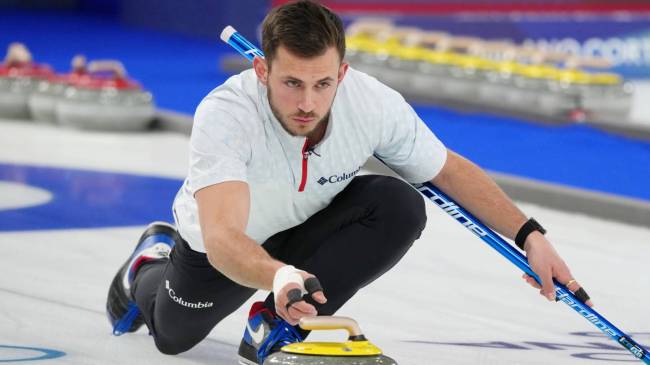
Every four years, curling gets thrust into the international spotlight at the Winter Olympics, and America’s Korey Dropkin took full advantage of his moment on the international stage during the impressive run that ended with him and Cory Thiesse winning a silver medal in mixed doubles. We got the chance to talk to him in the wake of his trip to the podium, and he shed some light on how he celebrated, his dedicated workout routine, and what needs to be done to help the sport grow in the United States.
We interviewed American curler Korey Dropkin, who helped secure the first medal the United States has won in mixed doubles at the Winter Olympics
Monster Brewing
“Sorry if my service is spotty, I just took a gondola to the top of a mountain.”
Those are the words Korey Dropkin greeted me with after hopping on a video call where I was treated to a view of The Dolemites he was soaking in a few days after capping off his time at the 2026 Winter Olympics with the silver medal he and Cory Thiesse secured after giving Sweden a run for their money while vying for the gold in mixed doubles curling.
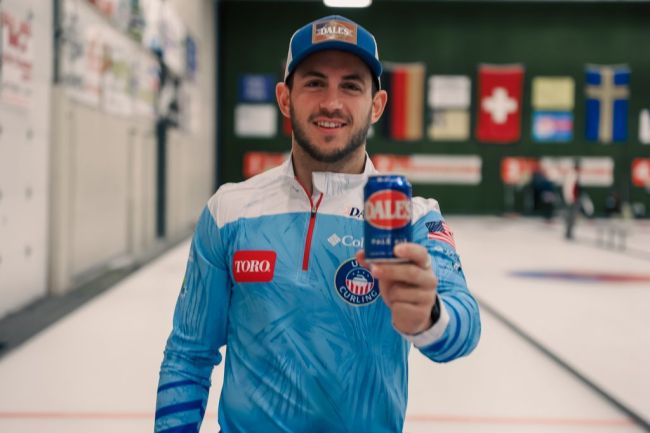
It was a well-earned respite for the 30-year-old who’s devoted 25 years of his life to the sport that brought him to Milano Cortina, and I was chatting with thanks to his role as ambassador with Dale’s Pale Ale, which has cemented itself as the Official Beer of USA Curling.
As a longtime Dale’s drinker who didn’t miss a single match during Korey and Cory’s run to the gold medal game, I pounced at the opportunity to speak with him, and he may also be responsible for the most idyllic backdrop I’ve seen during the many interviews I’ve conducted over the years.
I want to kick things off by congratulating you. I’m very amped to get to talk to you after watching you do your thing. How did the partnership with Dale’s come together? I assume beer is probably a little less integral when you’re training for the Olympics, but could talk about its role in the sport of curling in general?
Curling has a long history of spirits being involved in the game. You go out on the ice, have a fun game, come off and have a beer and enjoy some conversation with the other team. That’s been a part of the game since way back in the day.
At Duluth Curling Club, you get done with a league curling game on an average Tuesday night and you’re gonna see all the teams head upstairs for a beverage. The Dale’s partnership means a lot to USA Curling and all the athletes. Beer isn’t necessarily an integral part of the sport, but Dale’s has a background of getting into some unique things, and curling was an awesome twist.
Last year, at the men’s national championships in Duluth, which is my home, you had a big Dale’s can on the end of sheet one. One of my favorite moments of the whole event was when we made this big shot in the extra end of the championship game. There’s this photo of all of us throwing our brooms up with the big Dale’s can in the back.
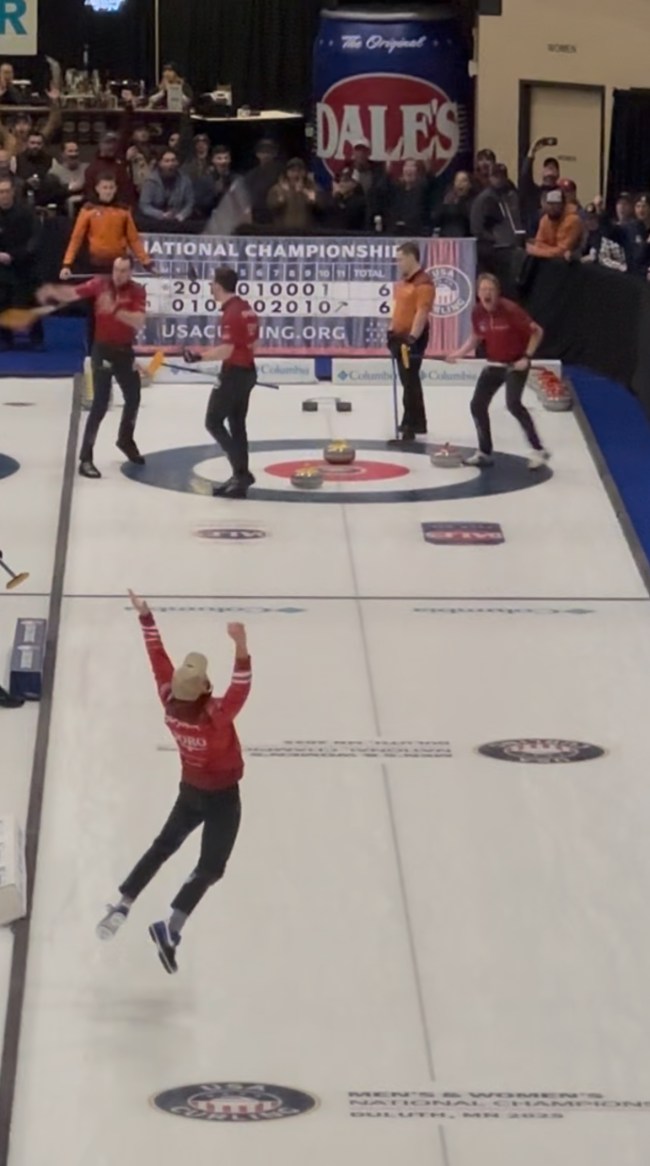
Dale’s has a special place with USA Curling, and we’re just so thrilled and appreciative of them getting involved in our sport, and just showing some love for us, because that’s important.
I wanted to touch on that league. It’s open to anyone, right? So you have people who are mostly playing for fun and they end up finding themselves facing off against world champions and Olympic medalists?
Yeah. Clubs throughout the state will have weekly league nights. Some people call it beer league. There are different types; some mixed leagues, some newer curler leagues for younger players or people newer to the sport.
There are also competitive leagues, which I still play in. For me, league is very important because it’s the grassroots of the sport. The community is part of why I love the sport. There’s just such good people that are involved in our sport who come together not just for curling but for conversation and networking and creating connections and community.
Every night, there’s usually some sort of league going on. I play on Tuesday at 6 P.M. at the DCC. It’s a competitive league, but a lot of the members will get there a bit early to, um, warm up at the bar, we’ll say, and then head down to the ice, have a game, and come back up.
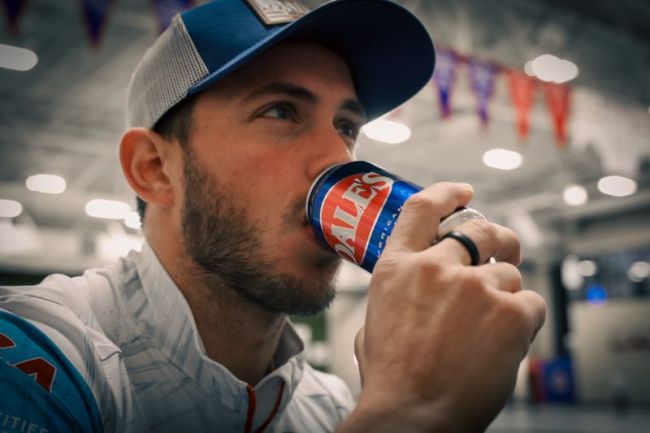
The winner usually buys the loser the first beverage and then you enjoy some good conversation.
Monster Brewing
I assume you have to buy a lot of beverages. Are you the reigning league champion?
I’m not.
Really?
I think we’ve actually won the league before, but the leagues all pool into their own different championships. At the DCC, there’s a big tournament called the Bagley Championship. That starts at the end of February or early March, and I’m usually busy with competitive curling so I don’t get to show up in those games.
But no, I’ve never won the Bagley Championship at the DCC. Maybe one day I’ll get that opportunity, but for now, I’m enjoying my opportunity in the Dolomites.
I guess an Olympic medal isn’t the worst consolation prize. Can you walk me through how you celebrated after getting the silver? Did it take a while to set in?
For sure. I think it’s been a process in terms of processing it. It’s all been a whirlwind experience where we get here after spending years and years and years training for this one ultimate goal of ours.
Cory and I qualified back in early May, so we’ve known for close to a year that we were going to be here. There’s just been a whole bunch of buildup and wait time to get here. We had training camp in Switzerland right before this, then there’s actually getting to Milan, going through the welcoming experience, and finally getting to Cortina and getting settled in before we finally start playing.
For us, it was really squished into five days of two games a day. It was really Eat, Sleep, Curl, and before you know it, you’re on the ice playing your last game. It goes by so quickly. We did our best to try to appreciate the moments and the whole experience.
It’s been so special because our families were here and so many of our friends have been here. It’s been amazing to have a community of support that we’ve had going through years of training, living through big losses that have been heartbreaking, to finally having some success and being on the big stage.
We didn’t really get to see our family very much and be with them during this. They got here on the 4th, which was when the competition started, and we had our first game on the 5th, so we got to see them that night for a short bit. From there, we were kind of in our own shell.
We could see them in the stands and got all the love and support that they gave us, but it was mostly going from the Olympic Village to shuttling to the stadium, to on the ice, and then the media, and then back to the village. We didn’t actually get to hug them and love on them.
After the gold medal game, we had the medal ceremony and the media before we went to this hotel in town that had this big room. We got some food from a restaurant and were finally able to celebrate all together with all of our family and our friends. That was really special, just to have that night as a big moment.
My family left after that night to go home. It’s a long trip for them, and it’s not cheap to be here, but just to have one experience and celebrate together was very, very special and meaningful for me.
Can you walk me through what a day in the life of an Olympic curler looks like during training? I’m especially interested in your fitness routine and diet. How much time do you spend training in the gym as compared to on the ice?
It’s different in the offseason and during the curling season.
Out of season, I’m in the gym at least six days a week. I typically do four strength workouts a week where I’m focusing on two or three big muscle groups. I’ll also have about three cardio days where it’s either full body HIIT circuits or isolation workouts where I’m training single legs or focusing on stability and mobility.
I’m working on my flexibility every day by doing yoga-type stretches and focusing on the pliability of my muscles so my body is equipped and able to sustain long durations of stress. We really stress trying to prevent injury,
It’ll usually be two-a-days, where I’ll do a strength workout in the morning and the endurance workout in the evening. I take off Sundays to give my body a little bit of recovery.
In season, it depends on whether or not we’re competing at an event. If we are, I’m not usually doing much of a workout because the games are a workout themselves. I’ll probably do some stretching and maybe a little bit of light cardio work on a bike or go for a walk outside to get the blood flowing a little bit. I’m typically still in the gym three or four times a week.
When we’re training, we’re burning a lot of calories, but I’m definitely aware of what I’m having. I eat pretty well in general. You don’t see me having dessert every night or going to fast food restaurants, but that doesn’t mean that I don’t enjoy having a little bit of fried food or a little bit of beer. I’m not one who says no to a nice beer.
My mom always told me everything is best in moderation.
Monster Brewing
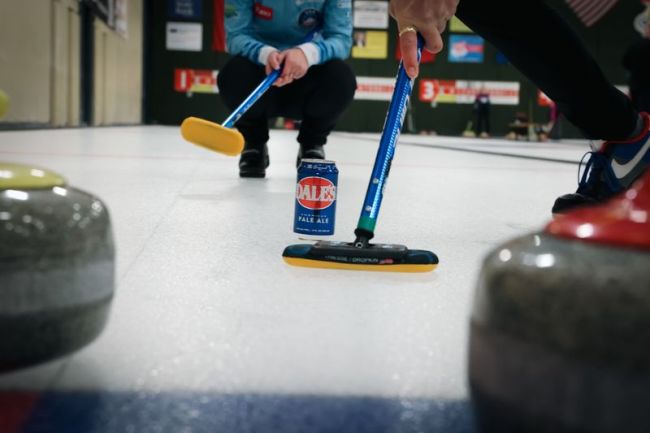
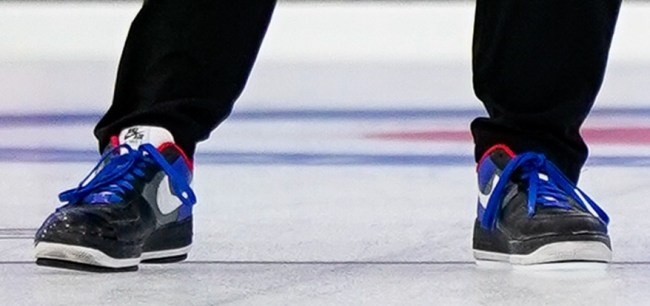
I couldn’t help but notice the shoes you were rocking, which just so happen to be the same color as a can of Dale’s Pale Ale. Is that a custom job? How much of a difference does the specific shoe make? Do you tinker with different ones before you decide on the pair you’re going to wear?
USA Curling/Jayson Ortiz
Everyone’s feet are a little bit different, right? There are a lot of manufacturers that make shoes specifically for curling, but I’ve always been someone who likes to have a little flair and express myself with what I wear.
My shoes have a nice little red, white, blue, and black type of theme that I enjoy rocking, and yes, it matches nicely with a can of pale ale from Dale’s.
I’ve had four or five different pairs of shoes that I’ve customized throughout my career. Three years ago, Cory and I won the World Championships, and I wore the Air Force Ones that I brought to the Olympics. I actually retired them after that. I thought they had run out of luck. I figured I’d make a couple of other pairs and see what works best.
Last year, I pulled them out for my fiancée’s dad to try on because I was teaching him how to curl. We were getting toward the end of practice, and he had taken them off and I decided to take a slide in them. I put them back on and slid in them and I was like, “Oooh.” I never took them off after that when competing and practicing.
A couple of months later, we won the national championship, so I was like, “We’re back.” I’ve worn them all this year.
As I’m sure you know, curling gets thrust into the spotlight every four years with the Winter Olympics and then mostly fades away from the general public’s consciousness before the cycle starts again. Winning medals obviously helps when it comes to promoting in America, but what else do you think needs to be done for the sport to grow and keep the momentum going?
It’s awesome to see the amount of attention that our sport gets during the Olympics. One of my big goals competing here, whether I won or lost, was to be able to share with the world how much I love curling and how passionate I am for the sport.
I wanted to show both how fun it is and how physically demanding the sport is; show that curlers are athletes. That was one of my big goals beyond trying to get on that podium, and I think we did a really great job of that. We got some really great feedback and some great exposure.
I think in order for people in the United States to embrace curling, we’ve got to keep growing it to help it get the recognition that it deserves and create more opportunities for new curlers to get involved.
There are areas that don’t have curling clubs, and it is a big investment to build and develop them. Everything costs so much nowadays, but you have to get them built in communities that don’t have them right now so that people who are getting interested don’t feel like it’s an impossible feat to get on the ice and experience our sport.
The other key is creating a platform where curling gets exposed on a regular basis. All it takes is one mainstream network buying in. In Canada, the Grand Slams are on Sportsnet, and there’s curling on pretty much every week. That’s a big part of why it’s such a big sport in Canada.
It could be just as big, if not bigger, in America. It could be bigger than in any other country. We just have to feed the sport to people.
We do we have a professional curling league, the first of its kind, starting in April. It’s called Rock League. It’s the first-ever mixed gender professional pro league. There are six franchises: one is based in the United States, two in Canada, two out of Europe, and one in Asia. I’m actually the captain of the American team, Frontier Curling Club.
I think this is the next big thing. It’s a new chapter of the sport that’s kind of rebranding curling to create more of a festival feel to bring in a younger audience. That’s one of the biggest things we need to do.
That audience loves action, loves noise, and the type of atmosphere that feels electric. When you think of sports like hockey, football, and basketball, you think of that kind of vibe. When we were in Cortina, the whole time I was playing in mixed doubles, it was vibrating throughout the entire arena.
During our semifinal game against Italy, the Italian crowd showed up. The American crowd showed up. The cheers back and forth vibrated throughout the stadium. We felt it on the ice. I get energized by that stuff. I feed into that. It was just a great show, and I think that’s what curling should be.
Traditionally, curling is known for etiquette, and its “Quiet, Please” type of play. Our sport won’t make it if it stays traditional. With everything in life, there are changes that are needed, and our sport needs changes too. I think we’re on the precipice of that.
So, it’s a combination of things that needs to happen, but what I certainly can say is that it’s huge to be able to bring home a medal to the United States, and we’ve still got a men’s and women’s team with the opportunity to bring home some hardware.
At this point, Dropkin pauses and says, “Speaking of hardware” before pointing his camera at the silver medal he is holding in his hand with a breathtaking view of The Dolemites in the background. In this moment, he is excuding what the kids refer to as “aura,” and I compliment him on the objectively sick flex.
The other thing that seems to happen every four years is that people watch curling and convince themselves they could probably compete at the Winter Olympics if they really wanted to. I assume you have some thoughts on that.
How long did it take you from when you first started curling before you reached the point where you realized you actually had what it took to fulfill that dream and had a legitimate chance to win a medal? Was there a specific inflection point?
I started curling when I was five. It was a family sport for me. My older brother was my hero. I was raised at the curling club, which is where I caught the fever. My parents were both super involved, and I had my nose pressed up against the glass watching my brother all the time.
The Olympic dream really started when I was 10 years old and I watched Pete Fenson and those guys bring home the bronze medal from Torino. That’s when I realized, “Oh my god, a curling team from the United States can go to the Olympics and win a medal.” That’s when I decided I wanted to be an Olympian. It’s kind of a full-circle moment for me in Italy 20 years later.
In 2013, I was 17 or 18 when I played on a mixed team with Tom Howell and Sarah and Taylor Anderson. We won the inaugural Winter Youth Olympic Games trials and we went to Innsbruck, Austria for the Youth Olympics. That gave us a taste of what it felt like to be part of that atmosphere, and I wanted more of it. It gave me more fuel for my fire and motivation to keep pursuing the big dream.
It wasn’t very long after that, maybe a month or so, that my junior men’s team, led by my brother, won the U.S. Junior Nationals, before we went to Junior Worlds in Ostersund, Sweden to represent the United States there. So, within the span of a handful of months, I had all of these opportunities to represent the America on an international level.
That was when I truly believed that if I kept working hard, that if I kept persevering and trying to get better every day, that maybe this big Olympic dream is true and possible. Maybe I can get there one day. It wasn’t easy. I experienced some pretty massive losses on the Olympic trial stage. It’s always been about picking yourself up and moving forward.
Portions of this interview were lightly edited for clarity.