

iStockphoto / © Wesley Hale-Imagn Images
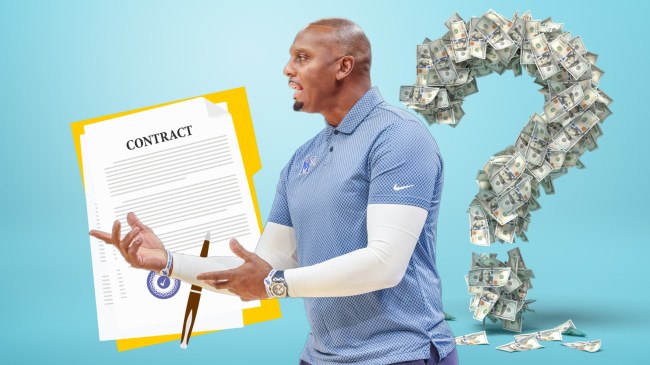
Memphis basketball players are being fined for violating team rules. Head coach Penny Hardaway confirmed it in a recent press conference.
That admission sparked a debate on pay for play and NCAA amateurism. Should college athletes be treated like employees?
Penny was asked about reportedly fining Aaron Bradshaw and others for violating team rules last night.
“You can fine guys for sure,” he said. “They’re paid athletes now…It’s effective. That’s not just something going on at Memphis. It’s going on everywhere.”
More in my story. https://t.co/sjqfInXjZc pic.twitter.com/sUX5Ct1CfQ
— Roman Cleary (@RoAClear) December 21, 2025
Memphis is docking its basketball players’ pay.
Wrongdoing, like missed workouts, showing up late to practice, and other team violations, is leading to fines. Tigers forward Aaron Bradshaw has been the target of this punishment on numerous occasions.
“Three grand here, three grand there… Guess who started to put the effort in,” Hardaway said of the impact that fines had on his star player.
Many, as Hardaway noted, have docked players’ income as a means of discipline. Kirby Smart introduced financial punishment in order to curb driving related issues that have plagued his Georgia football team.
Those infractions are not directly linked to performance. Penny Hardaway’s explanation of fines, however, is a bit different.
“If you’re off the court, being late, and doing the things we’re asking you not to do, and then you get into practice and do those things, then you’re going to do those things on the court,” he explained. “That’s the main reason we’re 4-7…
“You can fine guys for sure. They’re paid athletes now… It’s effective.”
Effective or not, it’s sparked a social media reaction surrounding the purpose of NIL.
College athletes are not employees.
NIL was introduced in 2021 as a way for players to benefit off their personal brands. Athletes can be paid for things like autographs, community appearances, merchandise sales, public speaking engagements, and more.
It is not “pay for play.”
NIL refers to a student-athlete’s ability to profit from their name, image, and likeness — elements of their personal brand. This concept is rooted in the “right of publicity,” which gives individuals control over how their identity is used for commercial purposes.
NIL was introduced to help players profit off of their fame through business partnerships and local endorsements. It has transformed into the ultimate recruiting tool.
Offers are being made to lure athletes to certain schools. Terms are being negotiated yearly. Players are leveraging deals to ignite bidding wars. College sports have become the Wild, Wild West.
Football and basketball are where we see the most money being tossed around. The incredible income being generated by these “amateurs” has created debate.
Student athletes are not employees. There is no collective bargaining. That’s made it difficult to enforce certain restrictions that would keep playing fields level in terms of recruiting and player payment.
There are, however, contracts. Each side has a responsibility to uphold, student athletes included. That responsibility, according to NCAA rule, should not relate to performance or production.
Penny Hardaway is fining Memphis basketball players for violations directly related to on-court availability.
Is it legal? The coach insists he’s not the only one doing it. It’s yet another murky aspect of a cloudy college sports landscape.