


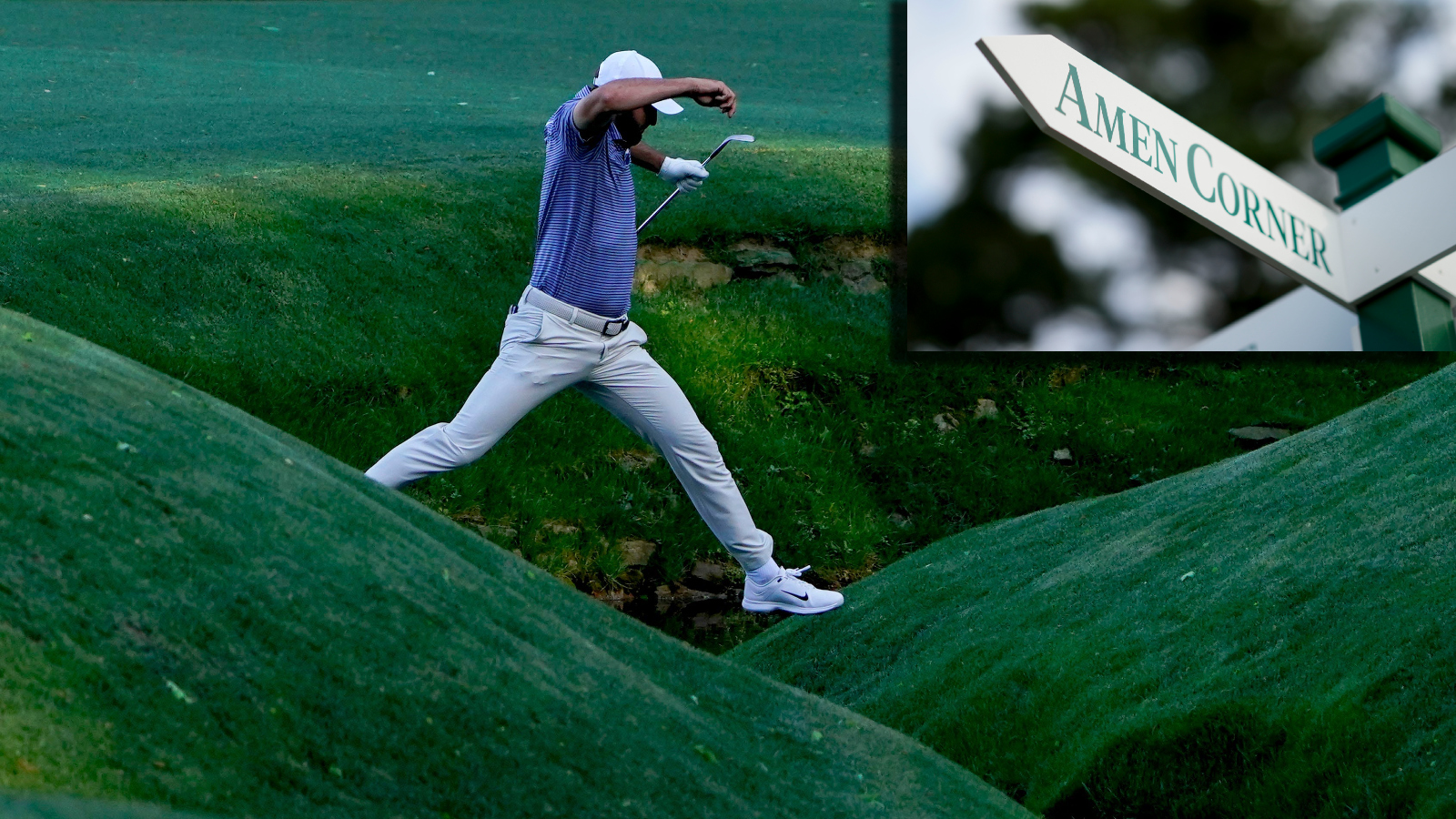
© Katie Goodale / © Rob Schumacher-USA TODAY Network via Imagn Images
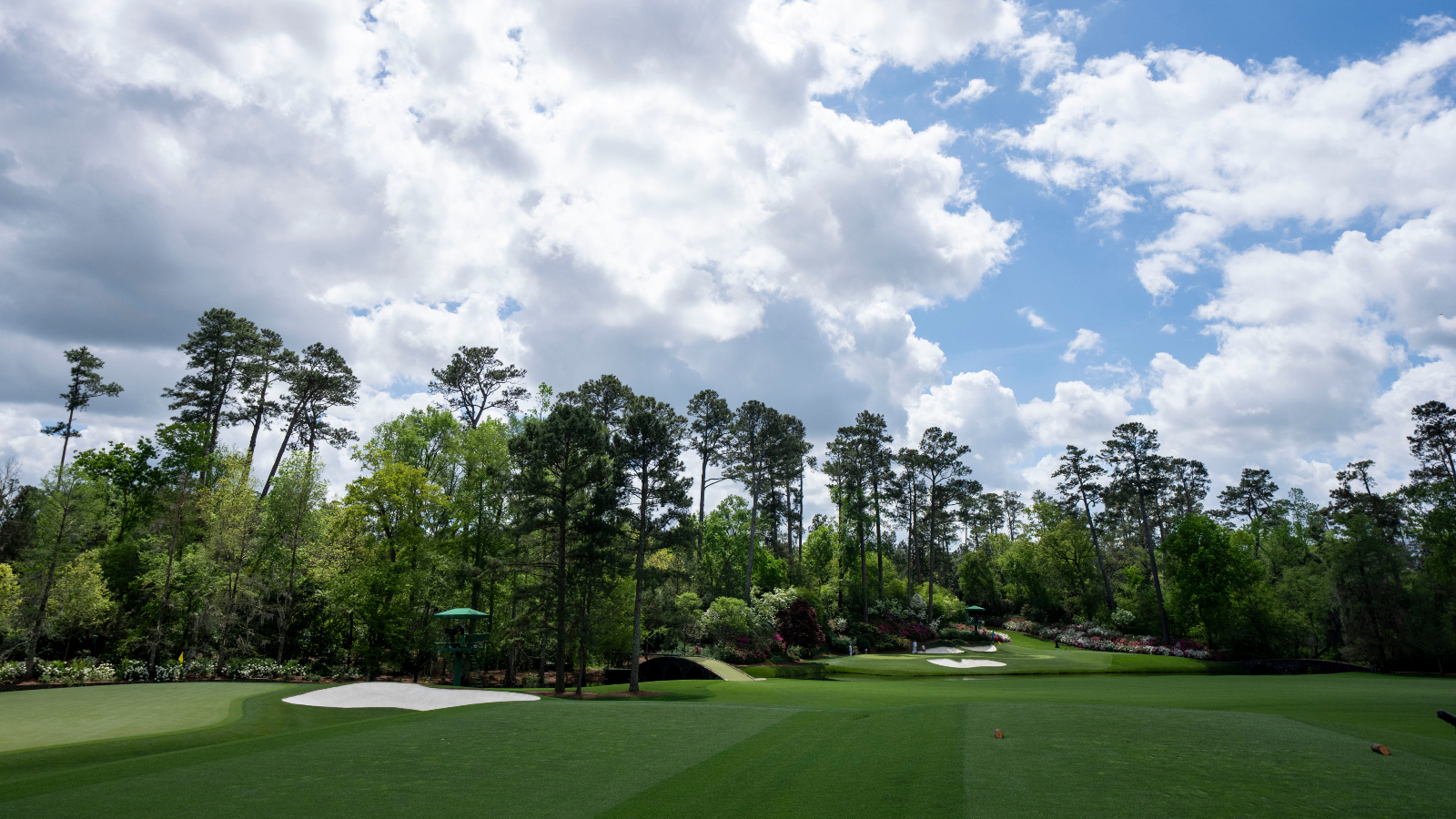
Amen Corner at Augusta National Golf Club is the most famous 3-hole stretch in golf. The three holes (11, 12, and 13) go par-4, par-3, and par-5 and provide a test unlike anything else that professional golfers face.
Not only is it the most famous 3-hole stretch in golf, Amen Corner is also arguably the most picturesque. Plenty of courses have signature holes and architecture but there really is not another 3-hole stretch in the golf world that can be put in the same conversation as Amen Corner when it comes to prestige.
Masters Trivia: 9 Facts About Augusta National’s Amen Corner
With The Masters upon us, we break down some trivia from Amen Corner at Augusta National Golf Club including the origin, what makes it so special, and more. Let’s dive in.
1. The Name ‘Amen Corner’ Dates Back To 1958
© Rob Schumacher, Rob Schumacher / USA TODAY NETWORK
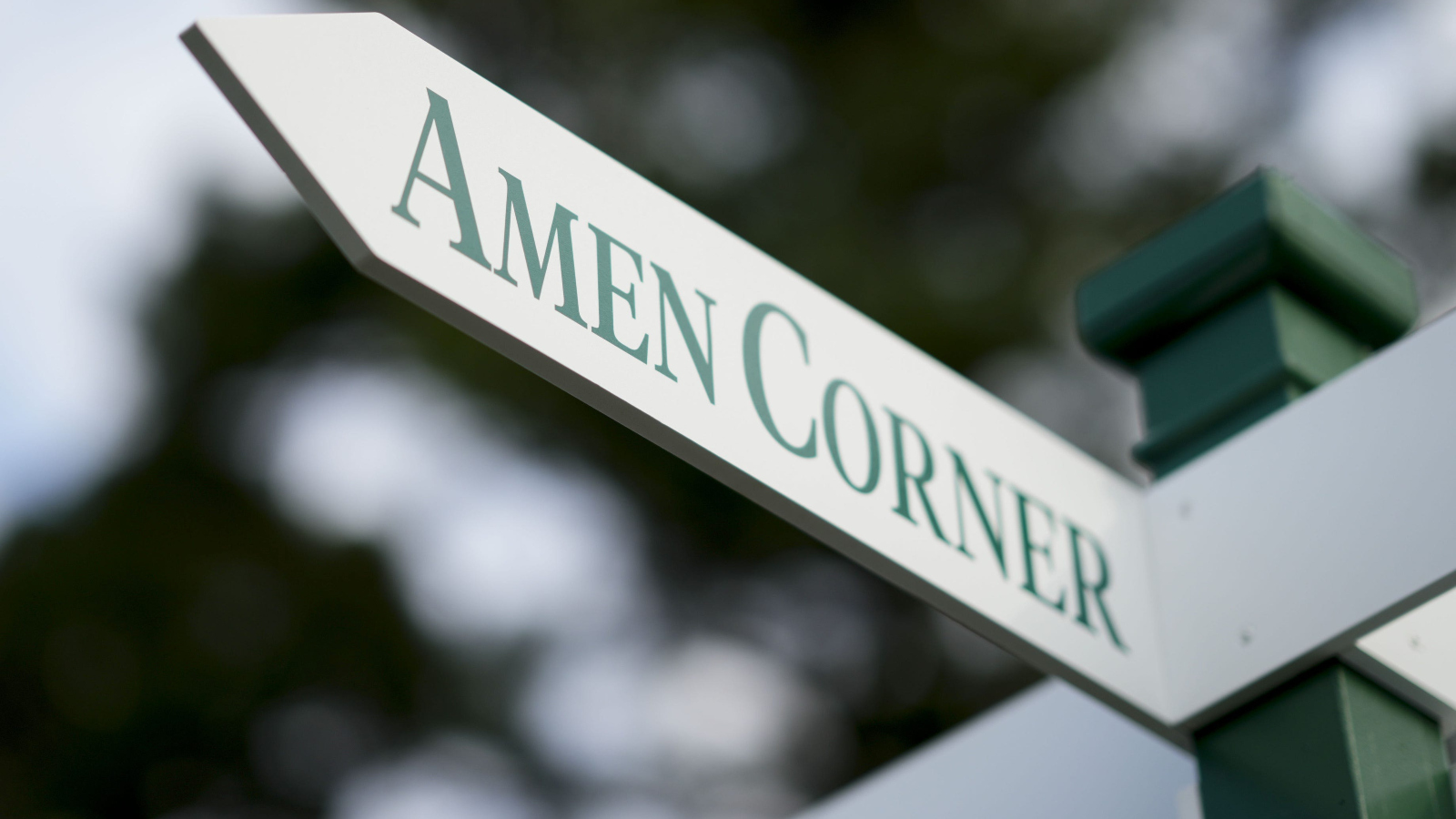
Construction on Augusta National Golf Club took place over 1931 and 1932, with the club opening in 1932. But it wasn’t until 1958 when Herbert Warren Wind coined the phrase ‘Amen Corner’ in an edition of Sports Illustrated did the nickname come to be.
He borrowed the phrase from the song ‘Shoutin’ in that Amen Corner.’ Later remarking “With plenty of time to think out the article, I felt that I should try to come up with some appropriate name for that far corner of the course where the critical action had taken place … The only phrase with the word ‘corner’ I could think of (outside of football’s ‘coffin corner’ and baseball’s ‘hot corner’) was the title of a song on an old Bluebird record.”
It is arguably the most famous 3-hole stretch in golf and the nickname ‘Amen Corner’ has certainly only elevated the aura around those 3 holes throughout the years.
2. Water Is A Key Element
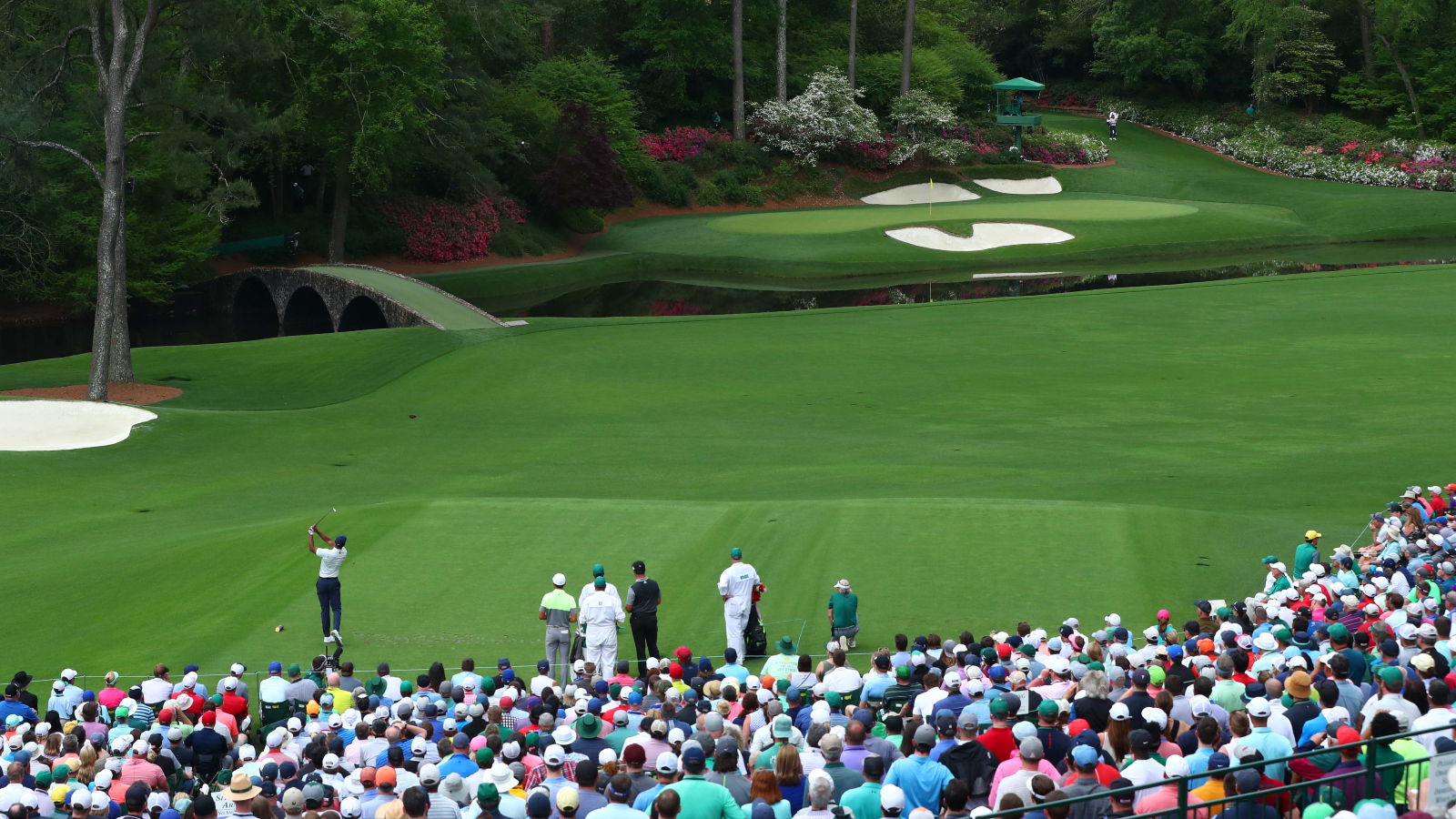
Each of the three holes, White Dogwood (No. 11), Golden Bell (No. 12) and Azalea (No. 13), all feature water in a way that forces golfers to play smart golf shots if they want to get out of Amen Corner without dropping strokes.
On White Dogwood (#11), a pond sits to the left of the green. The iconic Rae’s Creek runs past the green on 12. That same creek (or a tributary of it, rather) runs alongside No. 13 ‘Azalea’ and in front of the 13th green. Many a ball have found the water in front of that green with balls rolling back off the green into the creek.
3. Great Rounds Can Fall Apart In A Hurry
© Rob Schumacher-Imagn Images
The highest single-hole score (to par) ever recorded in Amen Corner was a +10 by Tom Weiskopf. You might think he recorded that at the par-5 13th hole but you would be wrong. Weiskopf had a 13 at the par-3 12th during the 1980 Masters after he hit five consecutive shots into Rae’s Creek. An absolutely devastating way to go out.
That ’13’ on the 12th hole was tied by Tommy Nakajima who had a 13 on the par-5 13th hole at 8-over par during the 1978 Masters. And to round it out, a 9 is the highest score ever recorded at #11
4. Holes-In-One Are Exceedingly Rare
Despite there being a par-3 in Amen Corner, the 12th hole that typically plays around 155 yards, there have only been there holes-in-one there in the history of The Masters tournament: Claude Harmon (1947), William Hyndman (1959), and Curtis Strange (1988). That’s right, it has been 38 YEARS since the last hole-in-one at Amen Corner!
5. Everyone Knows The Bridges

© Rob Schumacher-Imagn Images
3 holes, 2 bridges. All iconic. The Hogan Bridge named in honor of Ben Hogan (2x Masters champion) is how players get to the green on the par-3 12th hole. And the Nelson Bridge on the 13th hole, named in honor of Byron Nelson, also a 2-time winner, is how players reach the fairway on the 13th hole after teeing off.
6. Wind Is Always A Factor
© Rob Schumacher-Imagn Images
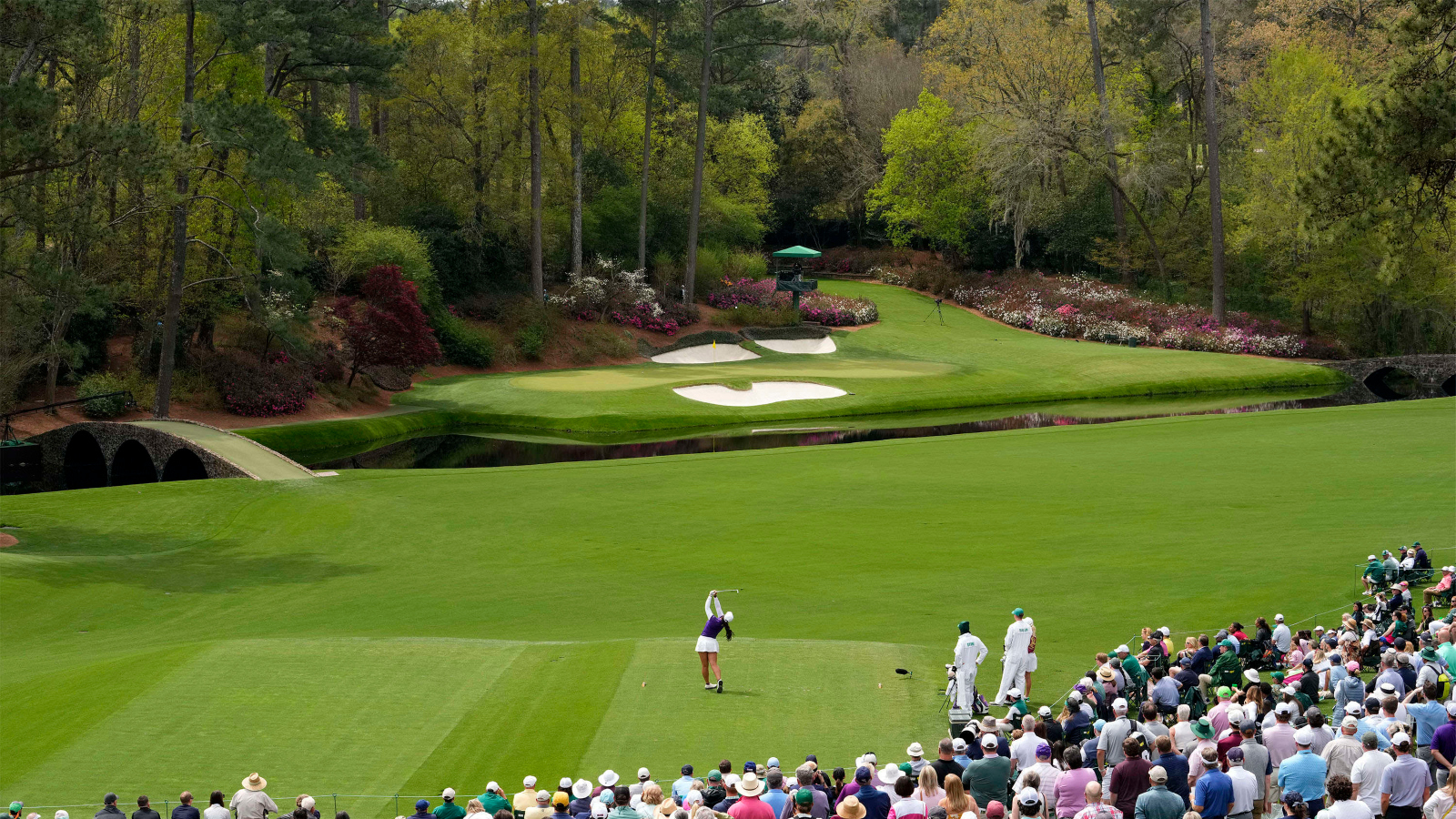
One of the reasons the 155-yard 12th hole is one of the most feared par-3s in the world is the wind. All of Augusta National GC is pretty protected from the round level.
You don’t feel a great deal of wind in most spots when you are walking the course, and that’s because of the dense forest protection. But when the ball gets up in the air in certain spots like the 12th hole the swirling wind can cause mayhem. Players often pull the wrong club at this hole due to the wind playing mind games.
7. This Is Where Legends Are Made
When Phil Mickelson won the 2010 Masters it was due, in no small part, to him going for the green in two at the 13th hole. Mickelson nearly had back-to-back-to-back eagles in 2010 during Saturday’s round, aka ‘Moving Day,’ and that all started at the feared 13th hole.
8. It’s Where Golfers ‘Win Or Lose The Masters’

© Grace Smith-Imagn Images
Often times, when a golfer ascends to greatness and wins The Masters it is because they successfully navigated Amen Corner along the way. Conversely, when players take themselves out of contention is is often tied to blow-up holes between 11-13 during their rounds.
Jordan Spieth is a perfect example of the latter in 2012 when he hit two shots in the water on the par-3 12th hole. It is such a mean par-3 that locals in Augusta often joke that the 12th hole ‘has broken more men than marriage and moonshine.‘ Spieth finished in 3rd at the 2016 Masters, three stokes back from the winner Danny Willett, and hitting two in the drink at #12 is the source of him missing out on another coveted green jacket.
9. The Greatest Golfers Rise To The Challenge
© Kyle Terada-Imagn Images
In recent years, Jon Rahm has dominated Amen Corner. The Spaniard has navigated the most famous 3-hole stretch in golf at 0.31 under par over (11.69 strokes). Xander Schauffele has been phenomenal too at 11.63 over the 12-strokes. When looking at who might win the next Masters green jacket, this is always a great place to start.
When Tiger Woods birdied #11 in 2001 he was the first (eventual) Masters winner in 20 years to birdie that hole. Let that sink in!