


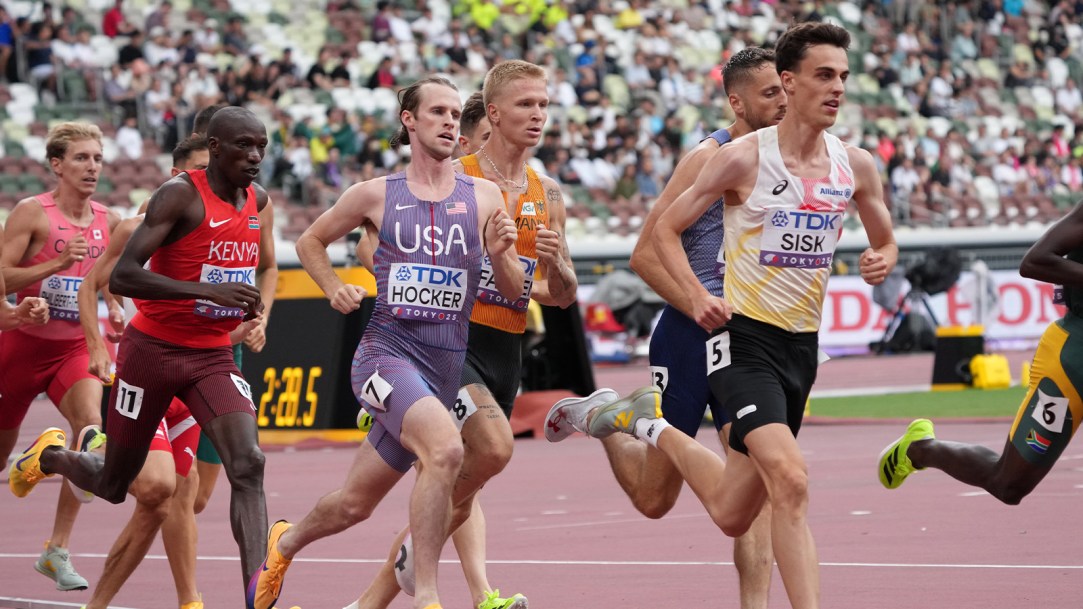
World Athletics is currently embroiled in controversy at the track and field world championships. It chose to disqualify American middle-distance runner Cole Hocker for harmless contact with an opponent while choosing not to punish Kenya for cheating.
It’s a bad look for the organization.
Part of the problem stems from the amount of subjectivity in track and field. The real problem stems from inconsistency.
Kenya cheated.
Kenyan athlete Peres Jepchirchir won the women’s marathon in Tokyo on an epic sprint finish. American marathoner Susanna Sullivan, who works full time as a sixth-grade math teacher, finished fourth.
Although it was a strong performance, she was robbed of the podium.
Members of Kenya’s support team supplied the eventual world champion with aid (water, ice, etc.) outside of the designated support zones. She received an extra boost in hot and humid conditions. That is against the rules! Bottles can only be passed at specific locations.
The second-, third- and fourth-place finishers only received aid at the designated zones. Jepchirchir received illegal aid.
Multiple countries, including the United States, filed a protest against the result. World Athletics chose to only issue a yellow card. A yellow card serves as a warning.
Sullivan would’ve been bumped to third if the protest was successful but the result was not overturned even though Kenya explicitly cheated. Just a slap on the wrist.
Cole Hocker ran a clean race.
Just one day after World Athletics allowed Kenya to cheat, it decided to disqualify Cole Hocker from the 1,500-meter final for “jostling.” The reigning Olympic champion cut in front of German runner Robert Farken in the final 50 meters of the race.
It was ruled that Hocker impacted the position of his opponent with unnecessary contact. However, if you look closely at Farken’s stride, that does not seem to be the case.
Cole Hocker has been DQd ? US is appealing
— LetsRun.com (@letsrundotcom) September 15, 2025
What do you think?
Discuss: https://t.co/EfSCNLj9IO pic.twitter.com/L13zYiZVAC
He was not going to make the final anyway. He was gassed. Contact was minimal.
The head jerk by Farken was from gassing out and giving up, not from getting impeded. This doesn’t look like a DQ. pic.twitter.com/Ae8cSqmrL8
— Bill Walsh (@wwalsh) September 15, 2025
And it’s not like you aren’t allowed to make minor contact with an opponent in track and field if you are fighting for position. World Athletics made that clear during the women’s marathon at the Paris Olympics.
If this was allowed, then why was Hocker disqualified? Check it out:
You're allowed to touch people while racing them btw
— Daniel Moore (@fluidathletics) September 15, 2025
example: pic.twitter.com/l7GYC6ePu0
Cole Hocker was out. Just like that. World Athletics denied the United States’ appeal.
And to make matters worse, Farken was allowed to advance despite his ninth-place finish.
World Athletics proved hypocritical at the track and field championships.
World Athletics issued a warning to Kenya for illegal support on course in the marathon. It allowed the results to stand even though the illegal aid had a direct impact on the outcome of the race.
Meanwhile, World Athletics claims to take a “zero-tolerance stance against cheating.” The governing body of track and field is committed to protecting honest athletes by enforcing strict rules against a wide range of misconduct, which are detailed in the World Athletics Integrity Code of Conduct.
Just one day later, World Athletics issued a disqualification for light jostling in the 1,500. It removed Cole Hocker from the final and ended his bid for back-to-back world titles even though his minor contact with Farken did not have a direct impact on the outcome of the race.
What gives?