



Jerome Miron-Imagn Images
The NHL has a history that stretches back more than a century, and it’s filled with stats and facts that sound pretty absurd until you realize they’re 100% true. That includes these especially mind-blowing tidbits that really stand out from the pack.
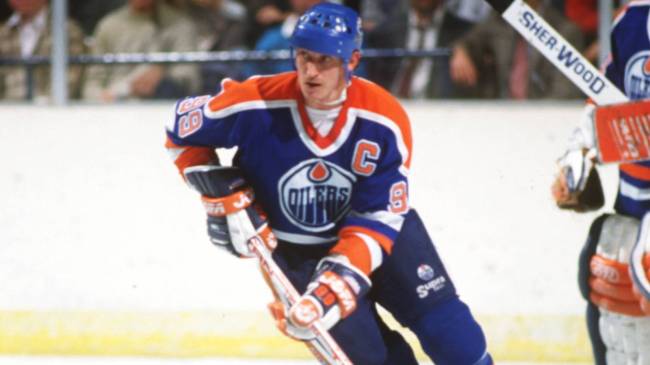
Wayne Gretzky would still be the NHL’s all-time points leader if he had never scored a single goal
Porter Binks-USA TODAY NETWORK
I could probably do an entire list like this dedicated entirely to Wayne Gretzky, but I’m going to try to exercise some restraint. However, this is the first one that immediately sprang to mind.
The Great One is firmly at the top of the list of NHL players who scored the most points over the course of their career with the 2,857 he racked up by tallying 897 goals and 1,963 assists. Jaromir Jagr sits in second place with 1,921, which means Gretzky would still be in first place even if you only took his assists into the equation.
Someone who played with Jaromir Jagr has appeared in the Stanley Cup Finals 45 years in a row

Sergei Belski-Imagn Images
Speaking of Jagr…
Only three players have appeared in more than the 1,733 games Jaromir Jagr played in during a career where he was a member of nine different teams over the course of 24 seasons between 1990 and 2018.
As of February 2024, Jagr had played with or against 36.8% of every single guy who has appeared in at least one NHL game, and he shared a locker room with hundreds of different players during his time in the league.
In 2025, Alexsander Barkov appeared in the Stanley Cup Finals for the third year in a row, which was also the 45th straight season in which at least one person who played alongside Jagr in the NHL was a member of one of the last two teams left standing.
Nathan Horton scored a goal in a game he didn’t play in

Timothy T. Ludwig-Imagn Images
On March 10th, 2014, a game between the Blue Jackets and the Stars was postponed four minutes into the first period when Dallas center Rich Peverley collapsed on the bench due to an irregular heartbeat.
Nathan Horton had already put the Blue Jackets on top with a goal, and the NHL opted to keep it on the board when the two teams kicked off a full 60-minute contest against each other around a month later.
The man responsible was scratched due to a lower-body injury, but Horton was still officially credited with a goal and contributing to a 3-1 win in a game where he didn’t record a single second of ice time.
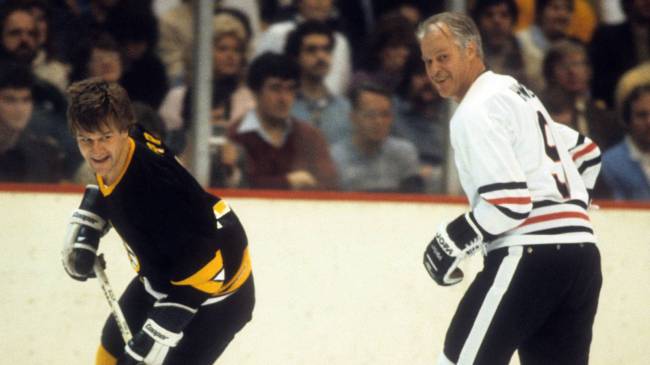
Gordie Howe started his NHL career before Bobby Orr was born and it didn’t end until after the Bruins legend was inducted into the Hall of Fame
B Bennett/Getty Images
Gordie Howe kicked off his NHL career with the Red Wings on October 16, 1946, around a year and a half before Bobby Orr was born in Ontario.
The man known as “Mr. Hockey” kicked off his 21st season in Detroit in the game where Orr made his debut with the Bruins at the start of the 1966-67 campaign, helping Boston earn a 6-2 win that ushered in a career where he cemented himself as one of the best defensemen in the history of the NHL.
Orr’s career was cut short by the knee injuries that forced him to retire six games into the season in 1978, and the Hall of Fame waived the three-year waiting period to induct the 31-year-old on June 12th, 1979.
The ceremony was conducted a few months before the Hartford Whalers played their inaugural season in the NHL after joining the league as one of four WHA expansion teams, which also marked Howe’s 26th and final year in the league.
Wayne Gretzky scored at least four points in a game more times than he failed to record a single one

RVR Photos-Imagn Images
I know I said I was going to try to take it easy on the Gretzky front, but I have to throw one more into the mix.
The Great One appeared in 1,487 regular season games over the course of his career, and opposing teams were able to prevent him from posting at least one goal or assist in 203 of them. However, he more than had the ability to make up for those instances when you consider he had at least four points in 217 of those contests.
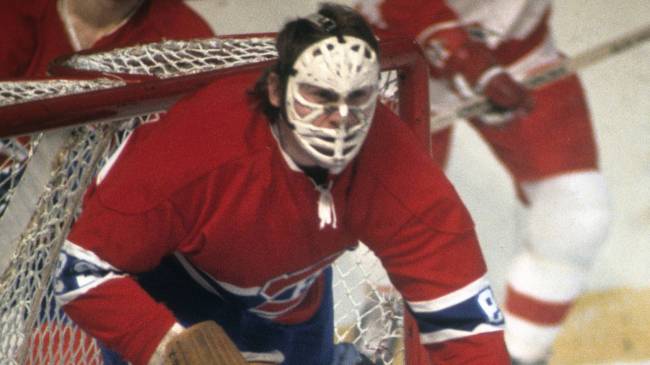
Ken Dryden won the Conn Smythe and a Stanley Cup before earning the Calder Trophy
Malcolm Emmons-Imagn Images
Ken Dryden had the chance to turn pro after the Canadiens secured his rights in the 1964 NHL Draft, but he opted to get a degree at Cornell while helping the Big Red win a national championship in 1967.
He started the 1970-71 season on Montreal’s AHL team, but he was called up by the Canadiens at the end of the season and earned the right to replace Rogie Vachon heading into the playoffs after posting a 1.65 goals against average in the six games he played in before the postseason rolled around.
His GAA rose to 3.00 in the playoffs, but he had a 12-8 record and a .914 winning percentage en route to earning the Conn Smythe Trophy as Montreal hoisted the Stanley Cup. Dryden was still considered a rookie when he returned the following season, and he ended up winning the Calder Trophy when everything was said and done.
The Sabres used a draft pick on a fake player from Japan
David Kirouac-Imagn Images
The NHL was waging a battle with the WHA when the entry draft was held in 1974, and it rolled out measures designed to prevent the rival league from poaching players with a secretive approach conducted via conference call.
Those tweaks turned the proceedings into a slog where it took three days to get through all 25 rounds, and the Sabres decided to stage a protest during the 11th one by using the 183rd overall pick to select Taro Tsujimoto, who was purportedly a center for the Tokyo Katanas.
The NHL verified the selection before discovering Tsujimoto was not a real person, and it was officially scrubbed from the record books despite living on forever in the hearts and minds of hockey fans.
The Flames drafted the wrong player in a draft where three guys had the same name

David Kirouac-Imagn Images
Unlike Tsujimoto, Stefan Nilsson was a very real player for a pro team in Sweden’s Elitserien who had caught the eye of the Flames heading into the 1988 NHL Draft.
The Flames were under the impression they’d used their fifth-round pick to select him before things took a turn when the Canucks also selected Stefan Nilsson in the 12th round.
Calgary complained to the NHL, which discovered Calgary had picked the Stefan Nilsson who played for HV71 as opposed to the one they wanted, a Luleå forward who ultimately went to Vancouver (there was a third one who did not end up being a factor but was also up for grabs in the draft).
In the end, it turned out to be a non-issue, as neither Nilsson ever played in an NHL game.
The Penguins had a real, actual penguin for a mascot before it died of pneumonia

David Kirouac-Imagn Images
The Penguins were trying to figure out ways to get new fans engaged after playing their inaugural season in 1967, and the Pittsburgh Zoo agreed to lend them a penguin named Pete to serve as their mascot.
The team commissioned CCM to make the penguin a tiny pair of skates and even recruited a figure skater to try to teach him how to navigate the ice. Unfortunately, his tenure was short-lived, as Pete died from pneumonia that was linked to warm temperatures in the habitat that was constructed for him at Civic Arena after appearing at just six games.