


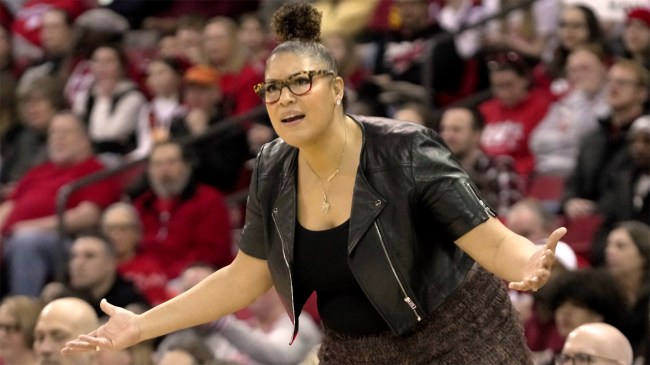
Mark Hoffman/Milwaukee Journal Sentinel / USA TODAY NETWORK via Imagn Images
Five former women’s basketball players have filed a civil lawsuit against the University of Wisconsin Board of Regents, former coach Marisa Moseley, and former administrator for women’s basketball and senior associate athletic director for external communications Justin Doherty, claiming psychological abuse. Moseley resigned as Wisconsin’s women’s basketball coach in March citing “personal reasons.” Doherty retired in April. The players are now seeking unspecified compensatory and punitive damages.
Claims of psychological abuse
The plaintiffs, former Badgers players Alexis Duckett, Krystyna Ellew, Mary Ferrito, Tara Stauffacher and Tessa Towers, claim Doherty was aware of the abuse by Moseley, but took no action. They claim Moseley bullied players, discriminated against their disabilities or perceived disabilities, and interfered with their mental health treatment by subjecting them to retaliation and abuse, according to Front Office Sports.
The lawsuit claims, among many allegations, that Moseley forced players to “sign agreements authorizing the release of all medical and mental health records to the University… threatening to remove them from the team if they refused.”
Numerous players left the program
11 Wisconsin women’s basketball players allegedly left the program and a “disproportionate number” of women’s basketball players needed treatment for mental health issues. Tessa Towers, in particular, was allegedly taken off her ADHD medication “so she could bulk up,” after which university medical staff put her on 11 new medications in less than a year. Towers shared a slide show on TikTok in January in which she made multiple inflammatory allegations against Marisa Moseley and the University of Wisconsin.
“Tessa’s teammates found Moseley’s behavior towards their friend and teammate disturbing,” the lawsuit reads. “Her teammates knew about Tessa’s ADHD, and they watched their coach bully her because of it. Then, as they witnessed Tessa’s mental health problems escalating in multiple crises, they observed their coach’s behavior grow even worse. They could do nothing about it since Moseley threatened to reduce their playing time if they visited Tessa in the mental health facility or continued their friendships with her.”
One-on-one meetings
Moseley also allegedly put players through “nearly daily” one-on-one meetings “pressuring them to divulge everything from issues with their parents or romantic partners to their confidential mental health symptoms and treatment choices.” Moseley allegedly “accomplished all of this by abusing her position of power by making threats about scholarships and playing time, and manipulating her players, claiming that she was simply ‘building trust’ with them on and off the court.”
Moseley also allegedly punished players for calling 911 in a mental health emergency, and forbade them from visiting a teammate while at a mental health facility. Multiple players were also allegedly “placed on a cocktail of prescription mental health medications by team doctors.”
An attempt to reach Moseley and Doherty by the Milwaukee Journal-Sentinel weren’t immediately successful. A spokesperson for the athletic department did not immediately respond to a request for comment from Front Office Sports.