



via BroBible
Like a lot of artists and live-music fans right now, Andrew McMahon has had it with StubHub.
You’re probably aware of this if you follow the Something Corporate and Jack’s Mannequin frontman on Instagram.
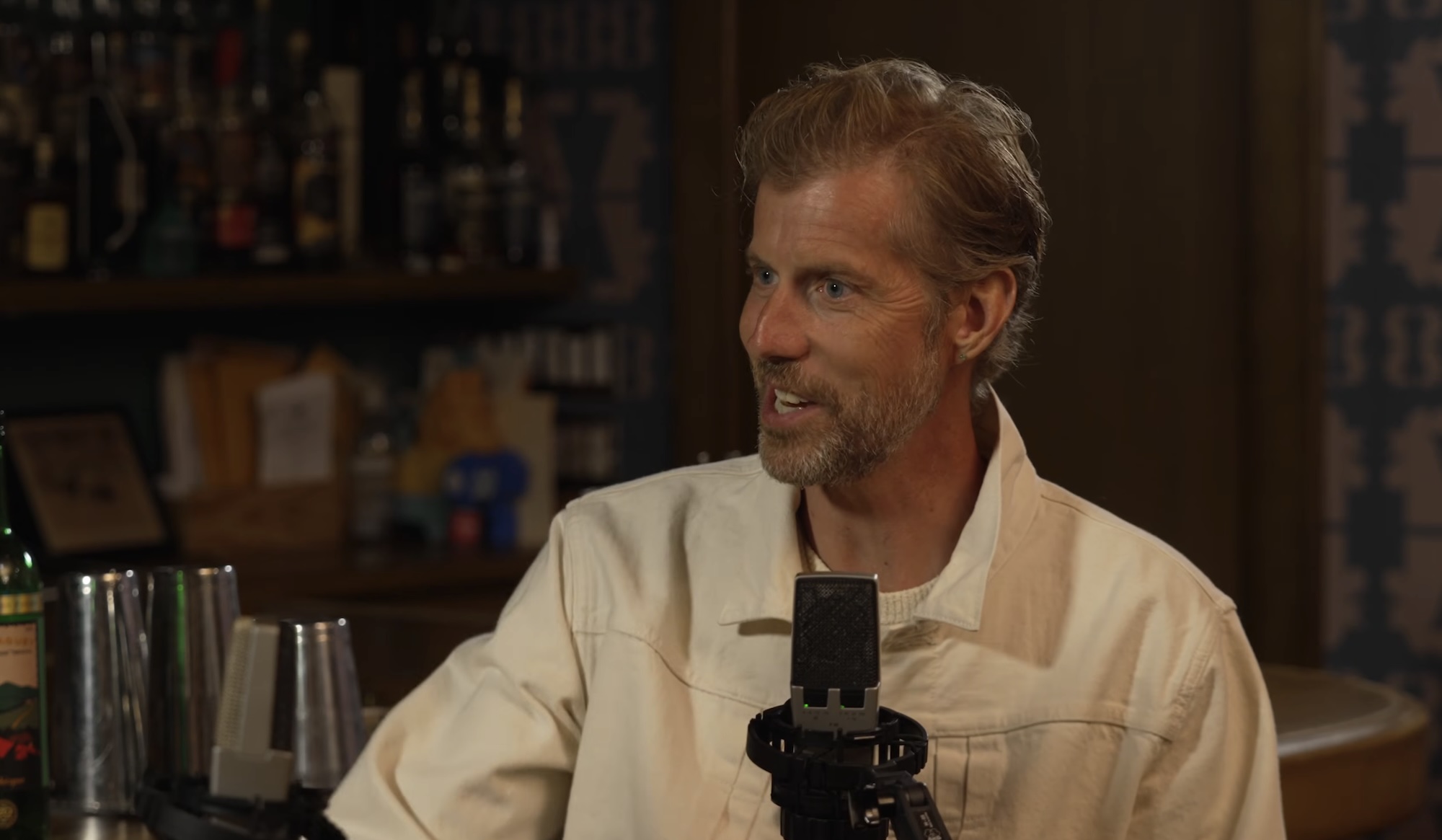
I found this out over a tasting of rare mezcals, which is how I’m determined to find most things out on Side Quests, my new BroBible YouTube series built on getting the culture makers we love out of the podcast studio and into the thing they’re actually obsessed with.
During our nearly hour-long conversation, the subject of ticket resellers inevitably came up. Suddenly, the most charming millennial pop punk troubador in California spent the next few minutes as a populist preacher, sticking his neck out against music industry giants like StubHub that milk fans for concert tickets.
Watch the whole episode of Side Quests on the BroBible YouTube when you get a chance. And if you dig it, maybe consider hitting the subscribe button…
But if you want the short version of why McMahon has become one of the loudest artist voices against the resale racket, here it is in his own words.
Andrew McMahon vs. Ticket Resellers
McMahon’s noble quest against ticket resellers starts from a place of artistic connection with his fans.
“At my core, I just believe that music is meant to be a vehicle that connects with all people,” he says. “This idea of gathering to listen to music predates ticketing. It is something we did around campfires, it’s something we did in the worst circumstances, it’s something we do at church…”
As a big live music fan, I get it. Being gouged to see your favorite artist absolutely sucks.
People have been gathering around music since long before anyone figured out how to charge for a seat, let alone flip that seat for ten times its face value.
People have been gathering around music since long before anyone figured out how to charge for a seat, let alone flip that seat for ten times its face value. It’s tribal, plain and simple.
So… who is he actually mad at?
“The level of excess… the level of greed is so… disgusting,” McMahon tells me.
McMahon’s target for this rant is industrial operators milking the suppy-demand economics of the free market without regulation or any kind of optionality. He’s mad about the bots, the hedge funds, the slick management-type middlemen who look at a sold-out room and see an arbitrage play. They operate like greedy phantoms between the artist’s intended live experience and fan that just wants to sing their favorite song with thousands of other like-minded fans at the top of their lungs.
Because all the data points are out there, these bad operators have run the numbers on exactly how badly you want one night with your favorite band, then built server farms and backdoor workarounds to hoover up the inventory before you’ve finished typing your card number. The whole thing hums along like a logistics company.
Andrew says he isn’t losing sleep over the guy with two spare seats because his buddies flaked. That’s not the point.
“It is now being managed by very intelligent people manipulating algorithms, manipulating data, using bots to steal the large share of concert tickets,” he says. The bots snatch inventory the instant it drops, and the price goes wherever they feel like taking it.
It’s fascinating to me to hear something in Andrew’s position, with millions of worldwide fans, address this. Here at BroBible, we’ve spent all summer documenting this exact machine.
A blockbuster CBC investigation this year clocked StubHub moving $9.2 billion in tickets in 2025, with somewhere between 70 and 80 percent of tickets on global resale sites in the hands of mass scalpers, not the mythical fan offloading his spare Coldplay pair.
In our conversation, McMahon humanizes the macro business forces he’s up against when it comes to accessing his shows: “A concert ticket that I charge you $35 for, going for $500.”
“But that’s just supply and demand”
Someone always shows up to this conversation to note that tickets are finite and fans are not, so prices climb.
Sure.
Supply and demand is a reality when it comes to unpacking ticket markets.
Ticketmaster and venue gatekeepers like Live Nation and AEG are not the only broken gear in the machine. Flattening the whole issue into only corporate greed does the argument a disservice.
But… here’s the part that rebuttal skips. Big money has penciled out the math and figured out that demand for your favorite artist never disappears. Fans will always show up and pay what they can to see an act they love, which makes it perfect to buy low and sell high. This first-principles understanding of pop culture hoovers up as much inventory as it can, sits on it, and resells at a markup a regular fan could never pull off.
Everyone who matters in this flow of money gets squeezed. The artist watches his audience get financially wrung out before they reach the door, which stings…. After all, they want fans that show up, have a great evening, buy a t-shirt or two, and then when their next endeavor comes out, do it again and again.
On the other side of that bridge, the fan pays way more than the artist ever intended just to walk in. The only winners are the guys in the middle who have never written a bridge in their lives.
And the middle is where it gets ugly. Reporting on StubHub’s IPO filings this summer turned up that CEO Eric Baker has been linked with Andro Capital, a fund that sells millions of dollars’ worth of tickets on the very platform he oversees. CBC found StubHub went further, extending short-term financing through Colloquy Capital, an affiliate of Baker’s own fund, to bankroll other mass scalpers buying up and flipping inventory on the platform.
It feels like a rigged game at the carnival. The house that is supposed to referee the game has money riding on the players. And plenty of artist management teams are fine with all of it, because there is real margin in that gap for anyone positioned to skim it.
A fair market would have some regulated middle ground between the fans buying and the artists selling. What we run instead is laissez-faire capitalism pointed at live music. Even a Live Nation exec admitted to CBC that the scalper-driven model is “exploitative,” which is quite a word to hear from that corner of the industry.
The outrage and reckoning over ticket markets is showing up late
McMahon figures the outrage just hasn’t found its teeth yet.
“People should be in the streets about this,” he says, baffled that Congress hasn’t touched it. Congress hasn’t done a thing. The courts have started to.
Baker and StubHub are now facing a proposed $5 million class action in New York that accuses them of deceptive practices, arguing fans were sold a “fan-to-fan marketplace” while the CEO personally profited from the scalping and the platform helped finance it. Now stack on the World Cup non-delivery suits, open probes from the Texas and British Columbia attorneys general, a roughly $1.2 million fine from UK regulators over hidden fees that came with refunds to more than 50,000 customers, and a separate FTC case already aimed at Live Nation and Ticketmaster.
None of it has cracked the model open yet, but the knocking on the issue is getting loud.
The scam even fools the artist
This is the part I keep thinking about. Scalpers will buy up a show that might not even sell out and sit on the tickets. They will intentionally keep the price jacked up rather than bending to a lower market price out of principle.
So the room ends up two-thirds full, and the bean counters with a spreadsheet maybe lose a nickel as a cost of keeping that inventory at a premium.
“The artist thought they had a sellout show, and now the room has got 60 to 70% of the people in it,” McMahon says. “Those guys don’t care because they got 10 or 15% of them to buy those tickets for 10 times what they were on sale for.”
Empty seats, gouged fans, and a middleman who has never heard the record collecting on both.
What he actually wants is almost boring
I appreciate a good rant as much as anyone else. But solutions are more important. Andrew is caustious to speak for other artists, but he has an ask for his shows that he’d like to see:
A simple checkbox to opt out of ticket reselling for the crowd.
“If an artist wants to participate in that system, that’s their right,” he says. “All I want as an artist is to be able to opt out. There should be a button that says, ‘No, these can’t be traded.'”
That’s it. And he knows why it doesn’t exist yet: “It’s simple, but they want to make it sound like it’s not.”
He has tried the workarounds. Advance registration, fan-club presales, private drops for the people who actually follow him. Every time, the industry pushes back. “We want to be able to make $300 on your $45 ticket, despite the fact that we have no association with you or your band or your fans or your music in any way.” If you ask McMahon how hard they push and he laughs. “You should see the phone calls I’ve got.”
He’s telling fans to just not buy
The part that gets me is what he tells his own audience.
When scalped tickets go up and his fans start to panic, the guy whose livelihood depends on butts in seats tells them to walk away.
“I just say don’t buy the ticket. Come another time when you get it.”
He gets the temptation, because he has caved to it. I’ve been there too to see my favorite bands, like Dead & Company during sold out nights at The Sphere or Phish.
He copped to dropping $500 on a show he was desperate to see. Loved it, too. “But you walk away and you’re going, but was it $500 great?”
Why Andrew is cool with fighting this fight
Live music is a sacred human experience, and Andrew is down to fight the good fight to keep the space pure of greed. It’s quite admirable.
“Concerts are one place where we can actually feel alive next to our neighbor, agree on something when we’re told that we don’t agree on anything, and now that’s only going to be available to the richest people.”
Then, for the people in the back: “F— that.”
The man beat leukemia at 22 has watched this business reinvent itself every three years since. He is not precious about it, which is refreshing compared to artists that seem coldly calculated about the economics of all while their fans take it on the chin.
He just thinks the campfire is worth defending, and the greed circling it is, in his word, “so disgusting.”
We’ll drink to that. We did, actually. Mezcal, straight… a few times.
Turns out he’s not yelling into the void
I posted the clip of this on Instagram. It’s a hot-button topic that many of us can relate to, so the comment section lit up.
Fans flooded the comments to thank him, then piled on their own horror stories: the $80 face-value seat that reappeared at ten times the price the night before the show, the tours they got priced out of at $500 a pop, the presales gone in the sixty seconds it took to log on. A bunch of them flagged the wrinkle McMahon left unsaid. The third-party scalpers have company, because the primary sellers run the same play with “platinum” and “demand-based” pricing. The legal definition of what scalping is and isn’t is hotly contested on a state-by-state basis, but none of this passes the sniff test.
The replies that landed hardest for me were the ones crediting him for walking the walk, pointing to the face-value resale caps and old-school will-call pickup he is using in some cities this run.
Which teed up the question worth chewing on: if the fix is this easy, why aren’t more artists demanding it? It seems like a no-brainer.
Go see him do all three eras at once
Conveniently, you can put his no-scalper gospel to the test this week.
McMahon’s tour hits Philadelphia, Chicago, and Long Beach, and the format is a swing for Andrew’s musical projects over the last three decades: all his musical chapters in one night, Something Corporate into Jack’s Mannequin into Andrew McMahon in the Wilderness.
Call it his Eras Tour if you have to.
Just buy the ticket the right way.
Watch the full 50-minute Side Quests premiere on YouTube with Andrew McMahon. Let me know about how you’ve been locked out of great live music or sports experiences thanks to these ticket reseller fiascos below, in our comment section.