


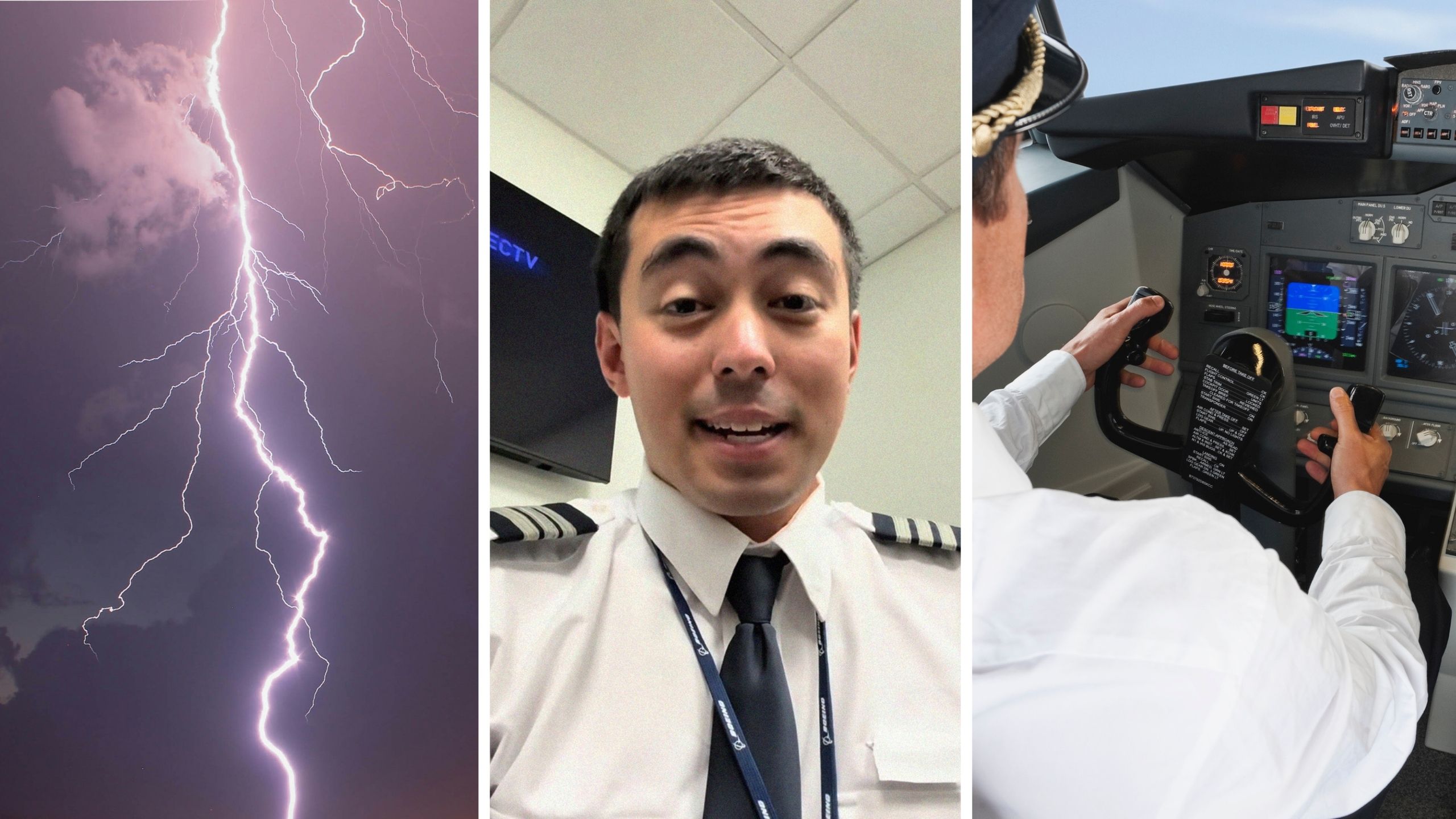
A California pilot’s routine descent turned into a terrifying encounter with nature at 15,000 feet.
What started as a mesmerizing light show on the aircraft’s nose quickly escalated into a blinding flash that temporarily robbed him of his vision.
The experienced aviator’s firsthand account of the lightning strike offers a rare glimpse into one of aviation’s most dramatic—yet surprisingly common—weather phenomena.
Pilot Describes Lightning Strike
In a trending video with more than 25,000 views, pilot Brian Uretsky (@uretskyaviation) recounts the moment he and his captain experienced a direct lightning strike while descending through the clouds. The incident began with an almost beautiful precursor to what was coming.
“We noticed—Cap and I noticed—some static discharge dancing on the nose of our airplane,” Uretsky says in the TikTok.
From the cockpit, they could see the top of the nose as it rounded down. They watched as lightning danced across the windshield and nose cone. Uretsky describes it as beautiful—right up until the moment it struck.
“Flash. The lightning struck. And we heard it. We felt it. I felt it in my chest,” he says.
“And it was the brightest thing I’ve ever seen in my life.”
The impact was so intense that it physically affected him. He describes being flung back into his seat, covering his eyes instinctively. But he recounts seeing nothing but white—as if he had been staring directly at the sun. The temporary blindness was complete and disorienting.
“I couldn’t see anything,” he says.
“And I’m, like, trying to look back up at the—at the my instruments. And I’m just—I couldn’t see anything,” he says.
The Effects
The vision loss lasted approximately 10 to 15 seconds before his eyesight slowly started to readjust. When he and the captain could finally see each other again, they shared a moment of shocked realization about what had just happened.
The aircraft sustained some damage from the strike, but no critical issues. His Flight Mode Annunciator went blank. Though, he notes the captain’s side remained functional. His panel clock also reset. Beyond those systems, the aircraft appeared operational.
Uretsky immediately reported the incident to air traffic control, requesting left and right deviations as needed. They landed without further incident. During the post-flight walk-around inspection, they couldn’t find any visible evidence of the strike, leading maintenance to suspect it may have hit the top of the aircraft.
Even after landing safely, the effects lingered. Uretsky mentions his eyesight was still adjusting. And he says he developed a headache from the experience. It was his first time experiencing a lightning strike in the air.
In an Instagram direct message, Uretsky shared the following with BroBible:
Lightning Strikes Planes Fairly Often
Lightning strikes on aircraft are far more common than most passengers realize.
According to the National Weather Service, commercial transport passenger planes are hit by lightning an average of one or two times per year.
The International Air Transport Association estimates an aircraft is struck by lightning every 1,000 flight hours, which translates to approximately one strike per aircraft annually, Mainblades reports. Notably, the Los Angeles Clippers’ plane was struck by lightning back in 2023.
What many people don’t realize is that aircraft often trigger the strikes themselves. The plane’s presence enhances the ambient electric fields typical in thunderstorms and facilitates electrical breakdown through the air. Lightning strikes most commonly occur during the climb and descent phases of flight at altitudes between 5,000 and 15,000 feet.
Around 60% of all lightning strikes happen from March through July, and they mostly occur at near-freezing temperatures during turbulence.
Despite how terrifying the experience sounds, modern commercial aircraft are specifically designed and built to handle lightning strikes. They have conducting paths that take the lightning strike and conduct the currents safely through the plane, essentially functioning as a Faraday cage.
There has not been a lightning-caused commercial transport airplane crash in many decades, though smaller private and experimental aircraft that aren’t required to have lightning protection remain more vulnerable.
When an aircraft is suspected of being hit by lightning, mandatory inspections are required before the next flight. The aircraft must be grounded and thoroughly inspected for damage to ensure airworthiness. This can result in flight delays and significant costs—the aviation industry estimates that lightning strike inspections cost airlines more than $2 billion per year in delays and cancellations.
Damage typically ranges from little to none, though strikes can affect electrical systems, burn paint, or create small holes at entry and exit points where the lightning entered and left the aircraft.
@uretskyaviation Struck by lightning: ✅
Commenters React
“Does the plane now say ‘Kachow?'” a top comment read.
“All while the passengers are in the back not knowing anything happened,” a person pointed out.
“The lightning booped your plane!” another joked.
BroBible reached out to Uretsky for comment via Instagram and TikTok direct message. We’ll be sure to update this if he responds.