



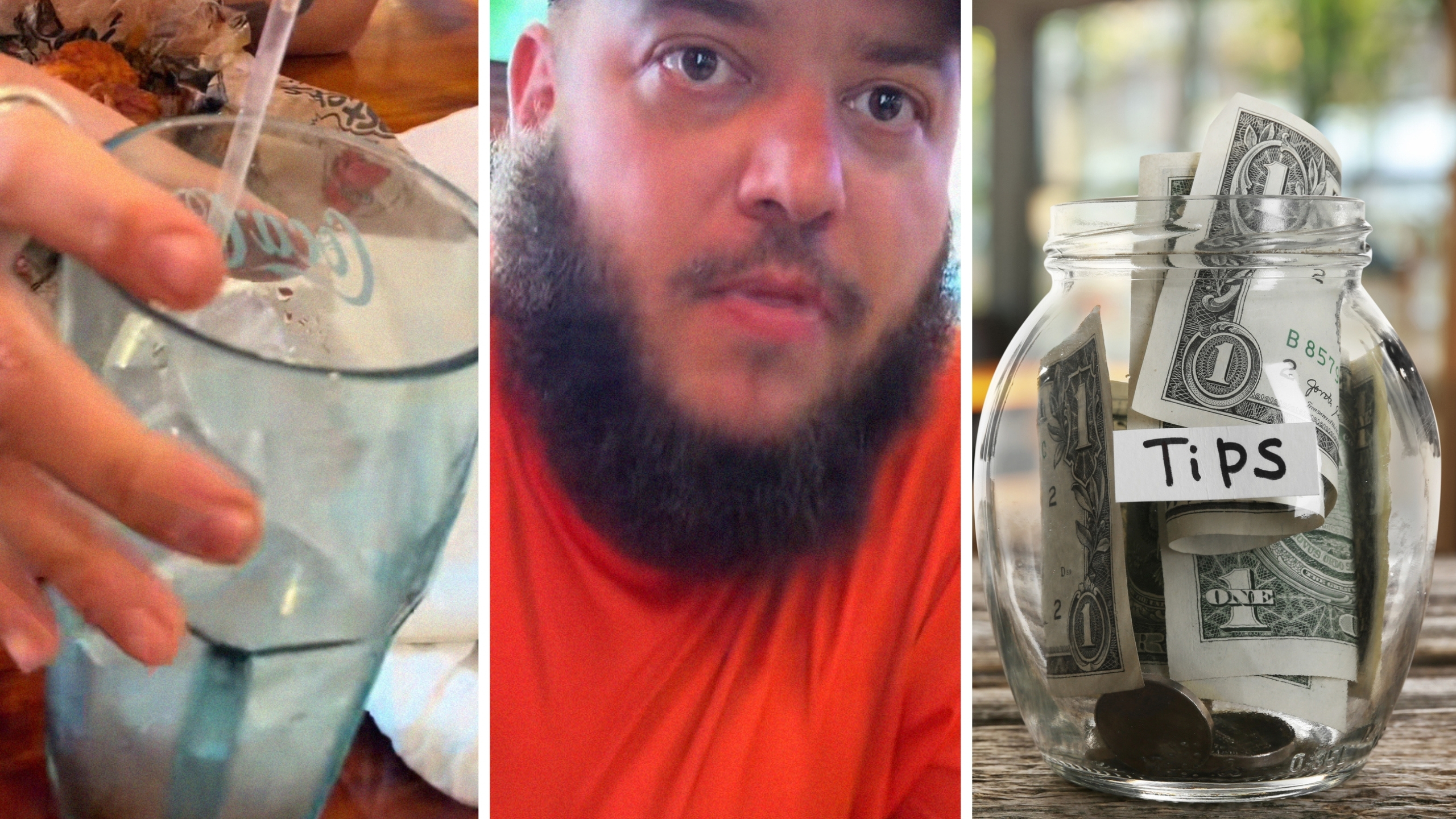
A Cincinnati customer divided the internet after saying he tips his server based on how long he goes without a refill.
On July 11, Jessica and Matthew Seifert (@jessica.n.matthew) posted a TikTok about their controversial tipping rules, which amassed over 485,000 views as of Friday.
What Is Their Rule For Tipping Servers?
“Anyone else judge their server’s tip based on how long you wait for a refill?” they write in the text overlay of the video, which shows the customer finishing his drink at a restaurant.
The comments section was heavily divided, with half the viewers agreeing with the customers that tips should be based on service.
“Tips are based off service provided, not bill amount,” wrote one comment.
“One of the easiest ways to impress guests is dropping off a fresh drink before they can ask or need one!” added another.
“Yep,” said a third. “Your tip is based on your service. Starts at 20% then goes down from there.”
However, many comments stepped in to defend service industry workers.
“Read the room,” wrote one individual. “If u see 900 tables and 4 servers, that’s management failing to staff properly.”
“No, because you’re not the only customer there,” mentioned another.
“No, because they’re busy and I know they make like $6 an hour,” added a third.
Why Is This Approach To Tipping So Controversial?
The video delves into the core of a long, controversial debate, asking if a tip reflects the quality of service or simply a fixed percentage of the bill. Supporters of the Seiferts’ approach argued that keeping drinks filled is one of the most basic responsibilities of a server. This makes it a reasonable way to judge attentiveness.
However, the discussion also highlights the broader controversy surrounding tipping culture in the United States. Under federal law, employers in many states can pay tipped employees as little as $2.13 an hour in direct wages. This is as long as their tips bring them up to at least the minimum wage. However, many states require higher base pay. Since tips make up a significant portion of many servers’ income, even small reductions can have a meaningful impact on their earnings.
Critics of performance-based tipping say customers often end up punishing workers for issues beyond their control. This includes understaffing, kitchen delays, or restaurant policies. In recent years, the U.S. Department of Labor has repeatedly investigated restaurants over wage and tipping violations. At the same time, labor advocates argue that the reliance on tips shifts too much responsibility for employee pay onto customers instead of employers. Still, many diners maintain that tipping is meant to reward service, not simply compensate workers regardless of the experience.
@jessica.n.matthew Anyone else or no? #refills #restaurant #fyp #thirsty #hereforagoodtime
BroBible reached out to Jessica and Matthew Seifert for comment via TikTok direct message and TikTok comment.