




The FBI seized over $8 billion in cryptocurrency, freed nearly 2,000 trafficked workers, and arrested nearly 300 people in a recent international operation.
As part of the operation, authorities shut down several “scam compounds” and crime organizations, including groups known as the Prince Group in Cambodia, Operation Sand Dollar in Dubai, and the Democratic Karen Benevolent Army in Myanmar.
“Scam compounds are modern-day criminal enterprises built to steal from Americans, launder money, and exploit trafficked workers,” FBI director Kash Patel wrote on X announcing the results of the operation.
Fox News reports that the U.S. The Democratic Karen Benevolent Army, an armed militia named after a region in Myanmar that is allegedly connected to the Chinese mob, faces sanctions imposed by the U.S. Treasury. The government has classified it as a transnational criminal organization.
Images from an operation in Thailand reveal that the FBI confiscated office supplies and thousands of smartphones.
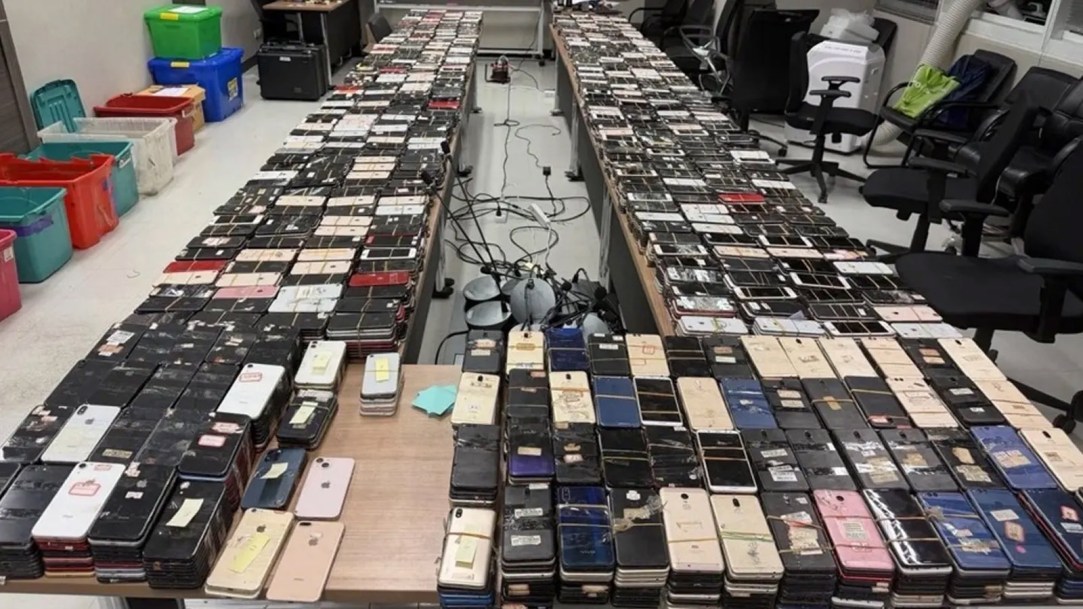
The FBI in Dubai will extradite six of the 275 individuals they and local police detained there to the United States to face federal charges, according to the FBI. The authorities raided nine “scam compounds” in Dubai, each allegedly generating $6 million in fraud proceeds annually.
Cryptocurrency scams in the US reached a record high in 2025
In April, an FBI report revealed that cryptocurrency scams in the U.S. reached a record high in 2025, with reported losses of almost $11.4 billion. According to the FBI, cyber-enabled crimes defrauded Americans of almost $21 billion in 2025, with the costliest complaints involving cryptocurrency and artificial intelligence (AI).
“The FBI’s 2025 Internet Crime Complaint Report highlights the ever-evolving tactics of internet scammers,” the FBI’s Baltimore office wrote on X. “From fake social media profiles to voice cloning and AI-generated content, cyber criminals are evolving.”
The Internet Crime Complaint Center (IC3) received over one million complaints in 2025, up from 859,532 in 2024. The most common complaints were about investment schemes, extortion, and phishing/spoofing.