


A team of dozens of scientists has identified 17 major global threats, warning that malicious AI and nuclear war pose potential risks of human extinction before the end of the century.
The Lancet Commission on 21st Century Global Health Threats assessed numerous potential threats through risk modeling for 204 nations and territories. The Commission then narrowed these to 17 significant threats, including pandemics, climate change, antimicrobial resistance, and nuclear conflict.
“The striking finding is not only the scale of these threats, but that humanity still has the agency to act,” said Christopher J.L. Murray from the University of Washington, co-chair of The Lancet Commission on 21st Century Global Threats to Health. “Across all 17 catastrophic threats, the decisions made by leaders today will shape the health and well-being of the next generation.”
The study assessed disability-adjusted life years, or DALYs, the number of healthy years that would be lost due to a specific threat. The researchers said one billion DALYs equate to two COVID-19 pandemics.
“The estimates highlight how much health loss could be avoided in each area,” said Murray. “Some are already imposing substantial health burdens today, while others carry a real danger if they materialize.”
The 17 threats could lead to the loss of billions of years of health
What they discovered is that these 17 catastrophic threats could lead to the loss of tens of billions of years of health if current patterns persist, and two could even carry “extinction potential” for humanity.
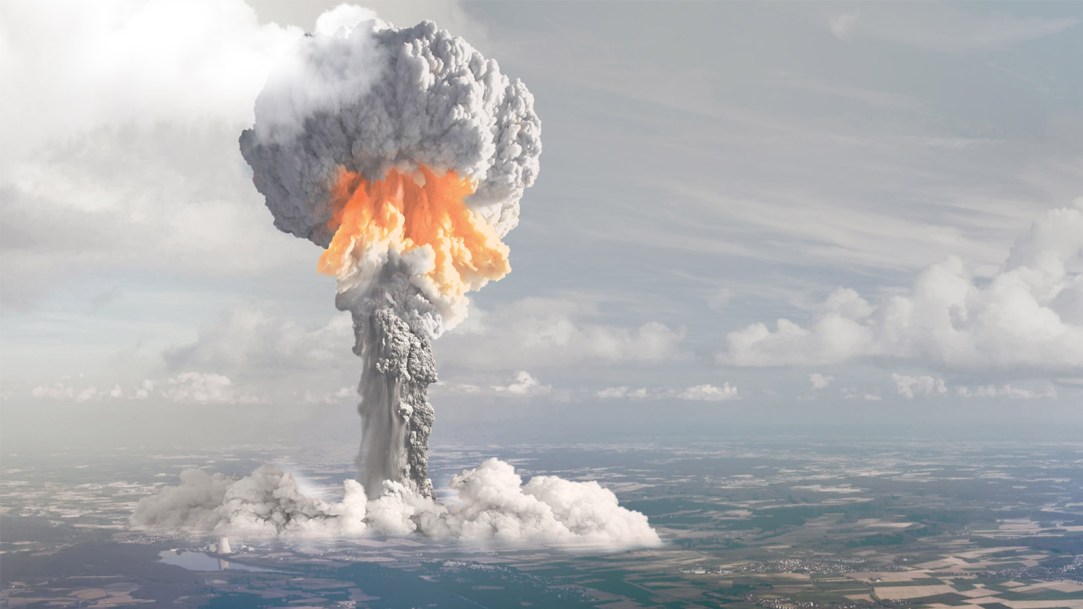
“These included harmful AI, such as employing AI to develop novel bioweapons, and nuclear war leading to nuclear famine,” the researchers reported.
Following malicious AI and nuclear war, the researchers pinpointed 15 other key catastrophic threats, each linked to over one billion potentially preventable DALYs from now until 2100. They include air pollution, antimicrobial resistance, childhood malnutrition, climate change, the collapse of international aid funding for health, conventional armed conflict, high alcohol use, high blood pressure, income inequality, low educational attainment, naturally occurring pandemics, obesity, poor mental health, smoking, and unhealthy aging.
“The other 15 are major catastrophic threats, each forecast to receive one billion cumulative DALYs, disability-adjusted life years, by the year 2100 in the reference scenario,” said Natalia Kanem, a former head of the U.N. Population Fund who co-chairs the Lancet Commission on 21st Century Global Threats to Health. “For scale, COVID-19 caused roughly 500 million full healthy life years lost. Every one of the 17 threats we identified is measured in billions of DALYs.”
Low education and income inequality are the next-largest extinction threats, followed by malicious AI, at 10.4 billion amenable DALYs, and nuclear war, at 9.35 billion. Poor mental health, unhealthy aging, conventional conflict and smoking are each over 7 billion.
The biggest threat to humanity is obesity
The threat linked to the largest reduction in healthy years was obesity, totaling 23 billion “amenable” DALYs. Researchers indicated that obesity is increasing in all nations globally, as food has more calories and physical activity is declining.

“Let’s admit there is a big, uncomfortable elephant in this room,” Kanem said. “These are threats that, frankly, we’ve known about for decades. Yet they’ve been systematically underprioritized.”
The rest of the catastrophic threats, in order of risk, include high blood pressure, antimicrobial resistance, pandemics, alcohol use, climate change, air pollution, collapse of health aid, and childhood malnutrition.
How can we reduce these catastrophic threats?
According to the commission, we can pursue three avenues to mitigate these 17 catastrophic threats to humanity. They include building and financing health systems prepared for these threats; significantly increasing funding for groundbreaking advances in health, climate, and technology; and establishing a permanent monitor of health threats to track and update threat assessments over time.
“These 17 threats to future health are greater in scope, they’re greater in magnitude, they’re greater in complexity than previously understood,” Kanem said. “Each has the potential to place unsustainable pressure on societies and economies, and the harms fall unequally.”