


As summer approaches, many of us are looking forward to all of the activities that the hot season brings.
One of those activities is heading out onto the water on a personal watercraft (PWC)—also known as a jet ski.
While these vehicles are pretty fun, they can also be dangerous. Although many riders understand the dangers of waves and other things that can get in the way at sea, there’s one jet ski danger of which most riders aren’t aware—and it might make you rethink your plans to ride one.
What’s Wrong With Jet Skis?
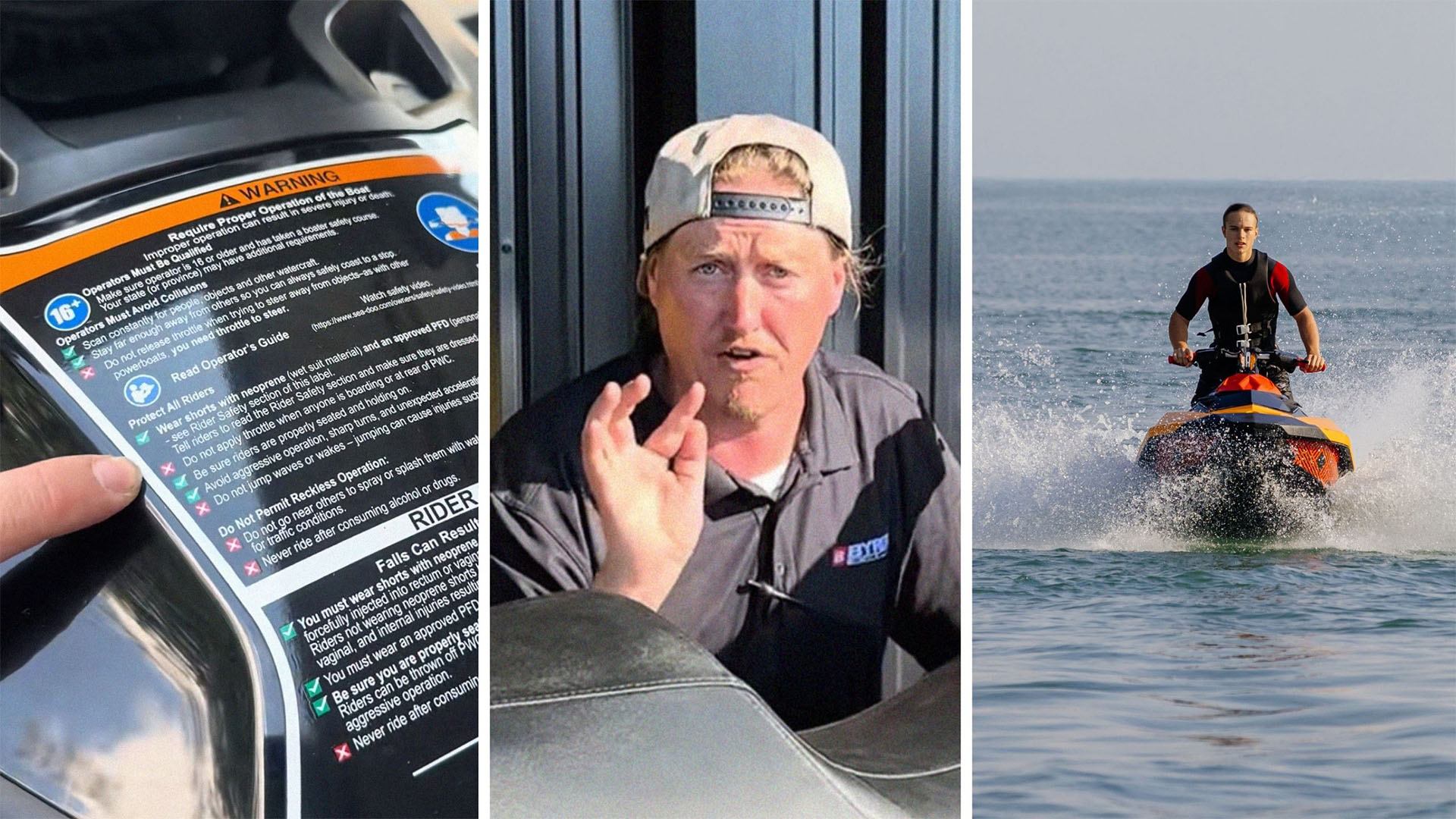
In a video with over 69,000 views, TikTok user Ron Cleghorn (@roncleghorn) points out a warning label on his Sea-Doo. According to him, this label is present on not only SeaDoo crafts, but “every single Yamaha, and I’m sure every single Kawasaki, too.”
“‘You must wear shorts with neoprene wetsuit material to keep water from being forcefully injected into rectum or vagina during a fall backward,’” Cleghorn says, reading from the warning label. “‘Riders not wearing neoprene shorts have received severe rectal, vaginal, and internal injuries resulting in permanent damage.’”
“You don’t want to be naked on this thing, OK?” Cleghorn adds. “Water can forcefully be injected into you. They’ve been saying that since, like, 2001.”
Is This True?
Is this label really present on all jet skis? And is this something that can really happen?
The answer to both those questions is, by and large, yes.
Although the verbiage may not be the same across all jet ski manufacturers, this warning is fairly common. For example, the website for the Yamaha WaveRunner reads, “Normal swimwear does not adequately protect against forceful water entry into rectum or vagina. Severe internal injuries can occur if water is forced into body cavities as a result of falling into water or being near the jet thrust nozzle.”
Warnings like these exist for a reason. While rare, there are documented cases of people suffering rectal or vaginal injuries as a result of a jet ski accident.
This Has Really Happened
Fair warning, the following cases are pretty extreme.
A 2011 case study told the story of a 14-year-old girl who fell off the back of a jet ski. Later, she showed up to the hospital complaining of severe stomach pain and bleeding. Scans showed that the pressure from the jet ski tore her intestine, leaking fluid and air into her abdomen. Surgeons were able to repair the damaged area.
Another case study, this one from 2020, explained how a 21-year-old man was riding on the back of a jet ski when the driver suddenly accelerated. He fell off with his legs wide open—causing the water jet from the craft to hit him directly between the legs. Shortly after the fall, he began bleeding from his anus and had to be taken to the hospital.
Later examination found that the wall of his rectum had been completely torn. Additionally, waste was leaking into his body through this tear. Thankfully, the man underwent surgery and was able to make a full recovery.
As noted on the warning label, in the 2011 case study, and in countless news stories, one way to prevent this is by wearing neoprene swimwear. This does a better job at protecting sensitive areas than a simple swimsuit.
Commenters Are Grossed Out
While many commenters expressed disgust at the idea, others noted that warnings like these are necessary.
“Had jet skis for 20 years. A lot of fun, but dangerous,” wrote a user.
“Valid warning. Anyone who has ever waterskied/wakeboarded knows,” offered another. “Stay safe.”
“I know a girl who was sent to the hospital with that exact injury. its a miracle she can still have kids,” stated a third.
@roncleghorn PWC warning label#roosterbooster #seadoo #waverunner #pwc #jetski
BroBible reached out to Cleghorn via TikTok direct message and comment.