



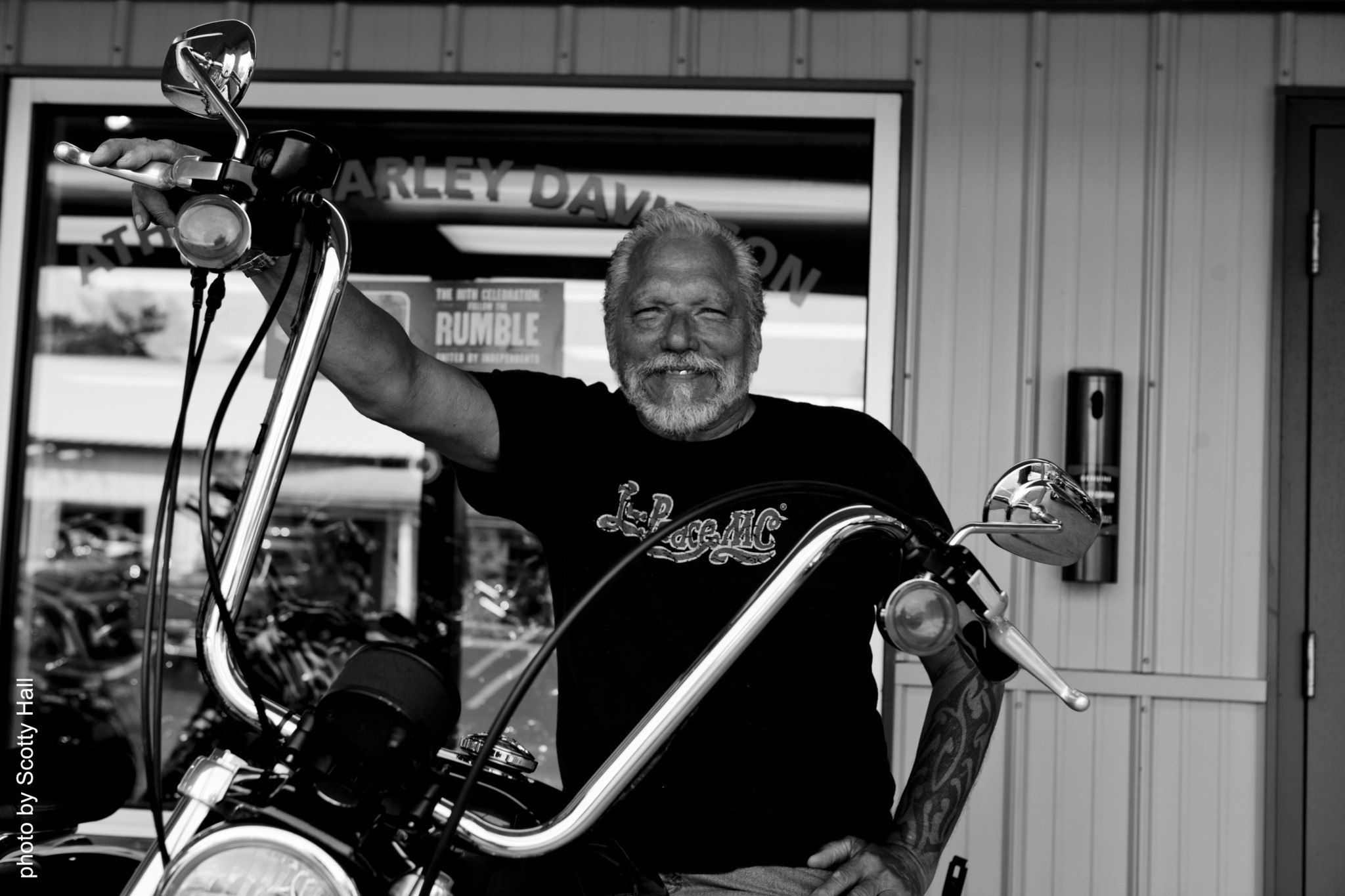
via Scott Hall with permission
A few months ago, Jorma Kaukonen found himself in a small Vietnamese restaurant in Columbus, Ohio. He was on his way to a radio show with his wife, Vanessa, and a friend. At 85, a hot bowl of pho is one of hist most reliable comforts. But as he sat down, he noticed the only other patrons in the restaurant were two uniformed ICE agents.
“This is unsettling,” he thought. “It was weird. I gotta say, it was absolutely… I felt weird about it.”
He ate his soup, but the moment lingered.
Here was a man who helped define the counterculture of the 1960s, a founding member of Jefferson Airplane who played the “Big Three” festivals of Monterey Pop, Woodstock, and Altamont. Decades later, he was sitting in a noodle shop in his home state, quietly confronting the anxieties and divisions of modern America.
This is Jorma Kaukonen at 85. He’s a living bridge between the chaotic hope of the 1960s and the fractured reality of today. He’s a Rock & Roll Hall of Famer, a Grammy winner, and one of Rolling Stone’s “100 Greatest Guitarists.” But in our recent conversation for The Load Out Music Podcast, it became clear he’s also something rarer: An artist who has navigated six decades of cultural change without losing his core identity.
That identity matured in a world far from the Summer of Love. As the son of a State Department official, he spent his youth in Pakistan and the Philippines. When he returned to America as a teenager, he found his friends had discovered guitars. He was hooked. His father, however, was not.
“’What do you know ’bout being worried?’” Jorma recalls his dad saying after he played him “Worried Man Blues.”
The old man grudgingly bought him a Gibson J-45, but the skepticism was clear.
“It made me go to our tile bathroom and play in the bathroom,” Jorma remembers, “where it sounded better than any other room in the house, anyway.”
He started with Johnny Cash and Buddy Holly, but his life changed forever at Antioch College when he met Ian Buchanan, a fingerstyle guitarist and friend of the legendary Reverend Gary Davis. Jorma was mesmerized by the sound of a complete band coming from one acoustic guitar. He begged Buchanan to teach him.
The method was brutal.
“He’d sit down, he’d play it for me, and I’d scurry off into the corner and try to get my thumb to do that thing that that kind of music requires,” Jorma says. “I’d come back, and he’d go, ‘You suck.’” But he kept at it. “After a while, I didn’t suck as much.”
That combination of doggedness and humility defines his career. He arrived in the San Francisco Bay Area in 1962 as a country-blues purist, but he had an open mind. When a fellow student at Santa Clara University—a guy with “longish hair and a beard”—suggested he meet a dropout named Paul Kantner, he hopped in a car and drove down to a surfer shack in Santa Cruz.
Soon after, Kantner and Marty Balin were looking for a lead guitarist for their new band. Paul remembered the kid from Santa Clara.
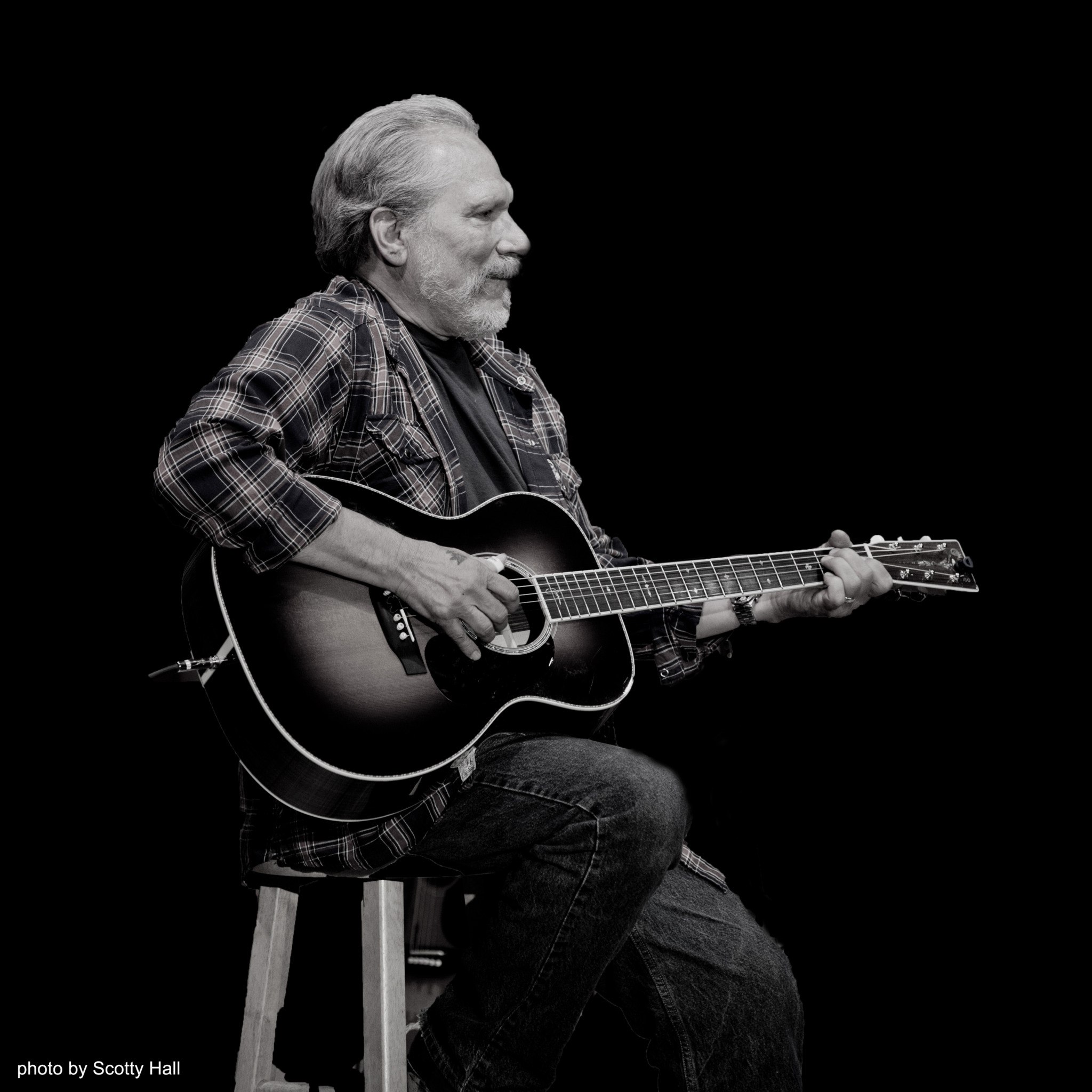
via Scott Hall with permission
“I drove up,” Jorma says, and the rest is history. When the as-yet-unnamed band was struggling for a name, Jorma threw out a joke nickname a friend had given him. “You want a stupid name? How about Jefferson Airplane?” Paul Kantner loved it.
The Airplane was a chemical accident of talent.
“Everybody in it was extremely talented,” Jorma reflects, “but in some way, the chemistry really worked.”
They weren’t a pop band, but they stumbled into hits. They were sonic architects of the San Francisco sound, a strange brew of folk, blues, rock, and psychedelia that couldn’t have happened anywhere else.
Throughout it all, Jorma kept his blues project, Hot Tuna, alive with friend and bassist Jack Casady. While the Airplane was a volatile super-collaboration, Hot Tuna was—and remains—a conversation between two musicians who have been playing together for over 55 years.
Today, Jorma’s life is anchored at the Fur Peace Ranch in southeastern Ohio, a music camp he and Vanessa founded. It’s a hub of creativity, where he passes on the traditions that were passed on to him.
“To be able to do what I do… and to be able to teach and pass it on, too. That’s important,” he says.
His career is in what he calls the “cresting wave” era, which may or may not be a thinly coded Fear And Loathing In Las Vegas reference. This is not a retirement, but a shift in pace. Nonetheless, he’s still as busy as ever. He just wrapped an 85th birthday tour with friends like Steve Earle and Susan Tedeschi. A recently unearthed 1965 live recording, Wabash Avenue, captures the sound of the young folk purist right before the electric circus of the Airplane took off. Hearing it again was a revelation. “The music is there to tell the story,” he says.
And what a story it is. Jorma Kaukonen has lived through America’s highest highs and its most turbulent lows. He was part of a generation that genuinely believed music could change the world, that they could “make a difference in society.” He now lives in a time where political divisions feel intractable, where even a quiet meal can be tinged with the unease of a nation at odds with itself.
Yet he remains stubbornly himself: A man who loves his family, his community, his motorcycle, a good cup of coffee, and the feel of six strings under his fingers. He is a relic of a more connected time, but he is not living in the past. He is here, now, still playing, still teaching, still processing the weirdness of it all—one song, and one bowl of pho, at a time.
Enjoy an amazing conversation on the latest Load Out Music Podcast with the great Jorma Kaukonen.