



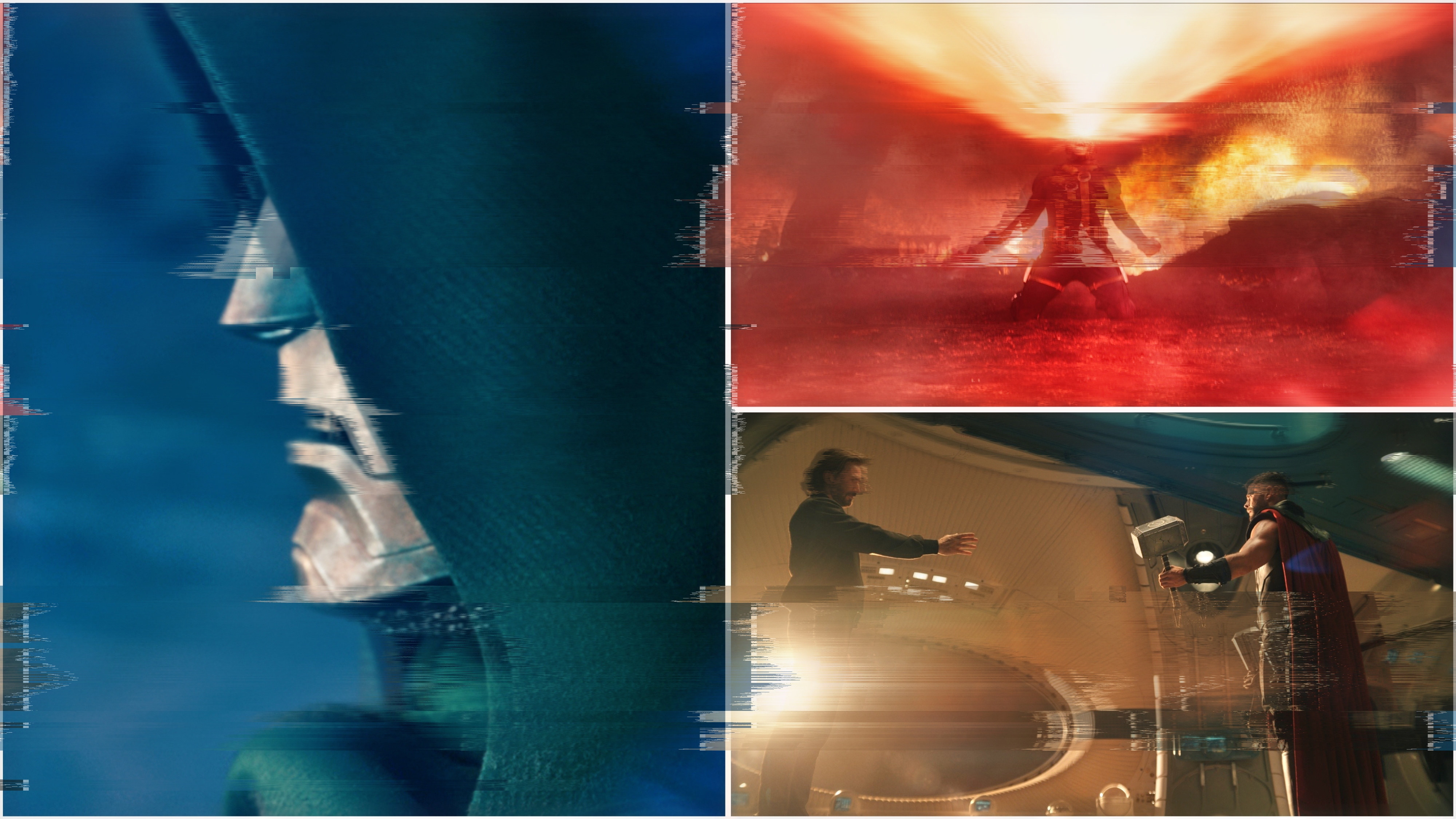
Marvel Studios
Marvel Studios feels like it rushed to
Joker once told Batman in The Dark Knight that his actions changed things forever in Gotham City and that there’s no going back to the way things were before. And when it comes to the Marvel Cinematic Universe, that crossroads came with the release of Avengers: Endgame: the culmination of over a decade of movie-making, a then-once-in-a-lifetime scale (more on that soon), and a peak in which Marvel has been struggling to ascend to ever since.
The release of the official Avengers: Doomsday trailer this week gave fans their first full looks at the film — the fifth in the Avengers franchise and the first since Endgame. And while Endgame, released in 2019, was only seven years ago, the circumstances surrounding the Marvel machine couldn’t be more inverted.
The MCU is no longer the pop cultural apex predator it once was
Back in 2019, the Marvel Cinematic Universe was pop culture’s apex predator. Whenever an actor either broke out or became a movie star, their names became attached to MCU roles, either through eager fan-casting or being asked about the prospect of joining Hollywood’s dominant franchise in interviews.
Captain Marvel, released just a few months before Endgame in 2019, made over $1.1 billion at the box office despite featuring a lead actress in Oscar-winner Brie Larson that was thrust into the center of cultural war debates across YouTube and Reddit before the film was even released. It has a 79% critics score and 45% audience score. But it’s still the 36th highest-grossing film of all-time, ahead of The Dark Knight Rises and The Rise of Skywalker and Toy Story 4 and Pirates of the Caribbean 2.
Why? Because you had to see it, that’s why. That’s no longer the case for the MCU. Its sequel, 2023’s The Marvels, made just $206 million at the box office. Spider-Man is the most popular comic book character in the world alongside Batman and remain co-produced with Sony, so that character remains in its own distinct silo when it comes to box office performance.
That then makes Thunderbolts the MCU movie that precedes Doomsday, just like Captain Marvel was for Endgame seven years ago. Thunderbolts — a team-up film that even pulled a “The New Avengers” marketing gimmick with its title — made $384 million at the box office.
That’s just the hard data behind a general cultural notion that the MCU, and the superhero genre in general, is in a different place than it was at its peak a decade or so ago. Audiences theater-going habits are changing, and so are their expectations.
As Supergirl proved just last month, with its brutal $121 million at the box office, audiences are no longer simply showing up for *the next thing* because it’s the next thing — a Part B in an A-to-Z story. Whether Disney has itself to blame for that dampening in audiences’ desire to go to the theater to, as Tim Robinson put it in Friendship, see “the new Marvel that’s supposed to be nuts,” when they can just wait 90 days for it to be on Disney+ is another discussion.
What’s relevant to this one is that the success of The Batman, or The Dune franchise — and on a smaller scale, recent films such as Sinners, Weapons, Obsession, and Backrooms — has shown that audiences will show up for elite filmmaking paired with unique perspective. Those two traits are essentially antithetical to the production line nature that Marvel is known and was once hailed for.
Marvel Studios knows Avengers: Doomsday may be rushed but think it’s worth it to move the narrative forward toward a reboot
This all leads us back to Avengers: Doomsday, which — given its cost, cast, and conditions — Marvel Studios is banking on being an Infinity War/Endgame-level phenomenon. They divisively brought back Robert Downey Jr., not to reprise his totemic role of Tony Stark/Iron Man, though, but as the villainous Doctor Doom, and directors Joe and Anthony Russo, who helmed some of the franchise’s biggest hits in Captain America: The Winter Soldier, Captain America: Civil War and the duo of Infinity War and Endgame. And, as the trailer staged as its big reveal, Chris Evans is back as Captain America, too.
It’s easy — and, to be honest, a bit fun — to break Marvel’s balls over its attempt to recapture lightning in a bottle, but their logic is sound: same actors, same directors, iconic characters, massive team-up movie. The means are the same, so the end should be too, right? But filmmaking, like cooking, is both an art and a science. Creative ingenuity is required to push the envelope and represents the cutting edge of the form. But any good dish has a recipe. Good luck trying to bake a cake simply by mashing eggs, flour and sugar together — you need to be precise. And that construction of Avengers: Doomsday has been anything but.
To a certain degree, the specific timeline they find themselves in is hardly their fault, as Avengers: Doomsday was originally supposed to be Avengers: The Kang Dynasty, with Jonathan Majors’ Kang the Conqueror positioned as the franchise’s next big bag a la Thanos. Majors, however, crashed out of Hollywood in 2023 after he was arrested for assaulting his then-girlfriend and eventually charged with two misdemeanor counts of assault and harassment. But “best laid plans,” “God laughs,” etc. The mechanical MCU was forced to pivot on the fly, and Doomsday was the result.
Majors’ ejection and the franchise-planning havoc it caused covered for an uncomfortable reality (pun intended) that was Marvel was going to have to confront sooner or later, though, and that’s that audiences weren’t responding to the Multiverse Saga (post-Endgame) the same way they were the Infinity Saga (pre-Endgame).
Hollywood, of course — more than most industries — struggled to regain its footing after the events of 2020. But Spider-Man: No Way Home was able to gross a billion by December 2021. From there, however, it was a mixed bag, with none of their subsequent releases hitting $1 billion at the box office until 2024’s Deadpool & Wolverine (featuring two characters that originated in an entirely different studio’s franchise), and films such as The Marvels and Ant-Man and the Wasp: Quantumania outright bombing. None of this accounts for the diminishing returns of its television endeavors on Disney+, either.
But while Marvel having to pivot away from a Kang-led storyline was forced upon them, every decision made since was theirs and theirs alone. And those decisions have led to a debut Doomsday trailer that have left a majority of fans with an empty, uncanny feeling. Their hearts aren’t lining up with the logic — the same logic that Marvel followed — that their brain is presenting: all of the ingredients are the same, so why doesn’t it taste the same? It’s because the film is the prestige of a magic trick that Marvel never showed the pledge and the turn for. The third act of a story that has no beginning and middle. A bridge disconnected from both shores.
I look at this… and I feel nothing. pic.twitter.com/6miTvUhVuA
— The Green Kasey 🎃 (@RawbertBeef) July 20, 2026
The current iteration MCU has reached the end of its lifespan and Marvel Studios knows it
The reason is, to a certain degree, Marvel Studios doesn’t care. Doomsday is a necessary and massive step toward its true goal, a goal that transcends any singular actor such as Jonathan Majors or issue such as sub-par CGI: rebooting the franchise. They don’t care that it has no build-up because anticipation requires planning and execution, which require time. But Marvel isn’t trying to grow, the way Game of Thrones did when it spread its characters across the map in its early seasons. Similar to Thrones, it’s trying to retract, and reel them all in so they can bring the story to an end.
Studio boss Kevin Feige has already confirmed as much, saying in a new interview this week that Doomsday’s sequel, 2027’s Avengers: Secret Wars, will introduce a new “streamlined, simplified, single universe that’s easier for audiences to follow.”
While Feige has claimed it won’t be a full reboot — “Some aspects will feel familiar. But many, many things will be entirely new,” he said — he also pointed to Jonathan Hickman’s Secret Wars from 10 years ago as a “nice roadmap” for how the franchise can evolve. Characters will be recast and storylines will be reset, sure. The real question for Feige and the future of the MCU is a spiritual one: does the formula still work? Or it it time to change their ethos, their very way of doing things?
And this, ultimately, is what has made Feige such an effective, history-making producer for the last two decades: he’s always thinking ahead. Whatever issues Doomsday may wind up having are a necessary evil the franchise must face in order to move its Top Hat on the Monopoly board forward.
That, combined with a wager that a movie of Doomsday‘s size will have a box office floor of over $1 billion regardless of its quality, is the calculation that the studio’s made. The sooner they can get to Doomsday, the sooner it can adapt Secret Wars. And the sooner it can take a swing at Secret Wars, the sooner it can launch its reboot — and more specifically, its own take on the X-Men.
If Doomsday makes a billion dollars along the way? Great! If it’s beloved by critics and fans? Even better! But neither of those objectives represent the ultimate goal of the project, which is — more than ever before in Marvel’s history of doing this very thing — moving the audience along to the next thing.
This time, however, the next thing is also a new thing — a reboot — making the stakes even bigger and Feige’s routes to realizing his plans even more scrutinized, as Marvel Studios isn’t just moving audiences forward, but out. Avengers: Doomsday feels rushed because it is — Marvel is an opera-house in the midst of shutting itself down; a maestro telling its band to play themselves off and bring their performance to an end.
Because despite how much they may wish, Downey Jr. and Evans and Chris Hemsworth can’t carry on forever, and audiences have seemingly let the studio know their feelings about the current iteration of the franchise without them. The decision then becomes simple because the math is binary: the only way to recreate the success of Iron Man and Captain America and Thor is to make new ones. Start the cycle over again. Begin anew.
Whether it be the abandonment of the Kang storyline, the audience’s reception of the Multiverse Saga, the pandemic, or the general tides of Hollywood, Feige has realized something about the current MCU that he can’t say out loud but needs to plan for all the same: it’s dying.
All things must come to an end — from heavyweight boxers to global empires, from the four seasons to multimedia movie franchises. And rather than slowly bleed out, Feige is choosing to race through the franchise’s twilight in order to reach an X-Men-led rebirth.