


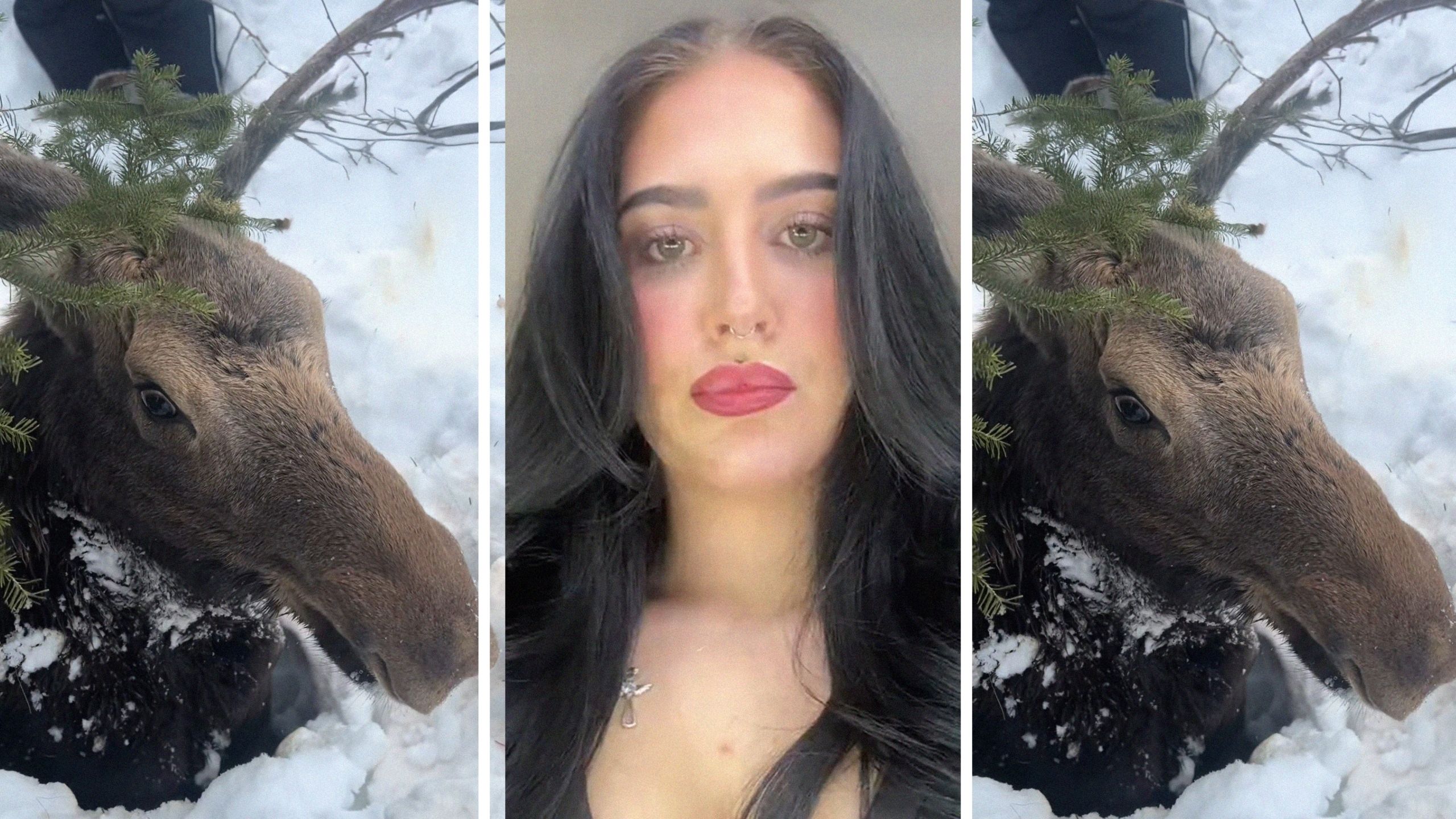
A moose buried up to her neck in 5 feet of New Hampshire snow couldn’t exactly ask for help (and we are curious how she got stuck in the first place).
Lucky for her, some strangers showed up at the right time. We don’t even want to imagine what would have happened if nobody had ever found her.
Dad And Friends Pull Off Snowy Moose Rescue
In a viral video with more than 12.2 million views, Pittsburgh native Ella Dion (@ellakdionnn) shares footage of her father and his friends coming to the rescue of a moose buried in 5 feet of snow in New Hampshire.
“POV my dad and his friends save a moose that is buried in 5ft of snow,” Dion says.
The moose is stuck nearly up to her neck, completely unable to move, and she seems to know people are there. She shoots a sideways glance at the group, clearly unsure whether these humans are a threat or a lifeline.
“Just a sweet little baby although he still weighed about 500lbs!” Dion adds in the caption.
In a comment, Dion added that the moose was stuck for hours. And once they pulled her out, she “just stood there after and looked at them. I’m sure the poor guy was so scared.”
In a follow-up video, Ella explained what it actually took to get the animal free.
“They packed down the snow around the moose and they all helped to pull her out,” she says in the text overlay.
She also issued a correction: “My caption was incorrect I believe it’s a female and she was more likely 300-400lbs.” And she shared that “everyone is safe and the moose did not hurt anyone.”
What To Do If You Find Wildlife In Distress
Ella’s dad and his friends pulled it off. But wildlife experts would generally pump the brakes on a DIY rescue like this one.
Wild Welcome advises that large mammals should not be handled by the public at all. They require professional handling and can pose a serious safety risk. The first call should always be to a local wildlife rehabilitation center, many of which have hotlines that provide guidance based on your specific location and the species involved.
That said, if you stumble across an animal that’s clearly in distress and help isn’t immediately available, Treehugger has some ground rules. Don’t touch the animal near the head. Injured and frightened animals will bite. Don’t offer food or water, either; an animal in shock can choke. If you do need to move it, thick gloves and a towel or blanket are a must.
And whatever you do, keep the environment calm. Wild Welcome notes that injured wildlife are already highly stressed and instinctively see humans as predators. The last thing they need is more chaos around them.
Are Moose Actually Dangerous?
According to the Alaska Department of Fish and Game, more people in Alaska are injured by moose every year than by bears. A moose that shows you the whites of its eyes, lays its ears back, or raises the hair on its hump is telling you it’s about to charge.
HowStuffWorks puts the numbers in perspective: Alaska’s moose population sits between 175,000 and 200,000, outnumbering bears roughly three to one. And they wound five to 10 people in the state annually, more than grizzlies and black bears combined.
Part of what makes them particularly unpredictable is that, unlike deer, moose don’t instinctively fear humans. They won’t run just because you’re nearby. They can run up to 35 miles per hour. And, if they knock you down, they will kick and stomp with all four hooves. The Alaska DFG’s advice if one charges: run, get behind something solid like a tree or a car, and if it knocks you down, curl into a ball and don’t move until it backs off.
Commenters React
“He is SEETHING omg,” a top comment read.
Another person said, “He definitely wants to attack you but thank you for saving him regardless.”
“He was definitely muttering the longest string of curse words known to moosekind,” another wrote.
@ellakdionnn Just a sweet little baby although he still weighed about 500lbs! #animallover #rescue #wildlife #newengland #newhampshire
BroBible reached out to Ella Dion (@ellakdionnn) for comment via TikTok direct message and comment.