


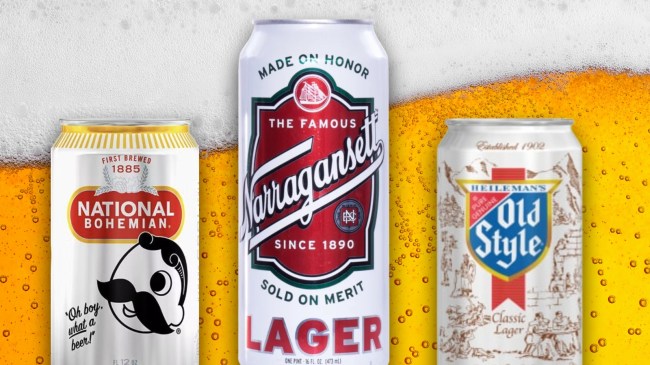
iStockphoto / Pabst Brewing/Narragansett Brewing
National Bohemian, Narragansett, and Old Style beer cans
The United States is home to nearly 10,000 breweries, and most of those operations are locally focused businesses with a relatively tiny footprint. There are also more than a few that have made a name for themselves in particular areas, including the ones that produce some of America’s most recognizable regional beers.
These are the most noteworthy regional beers in the United States
It can be a bit hard to define a “regional” beer, but that term is usually used to refer to a brand that has managed to gain a foothold in a certain area to the point where it’s viewed as the default option for many drinkers who know it will be on the menu at virtually every establishment they walk into.
For the purpose of this list, I’m primarily focusing on beers that have amassed a large and loyal following in a defined geographical area without managing to break containment; Coors Banquet may be popular in Colorado, but is big enough across the entire U.S. to the point where it’s hard to call it a “regional” beer.
These also tend to be cheap options that fall under what I like to call the “Beer That Tastes Like Beer” umbrella, meaning most of them are adjunct lagers that don’t come close to straying into craft territory.
Without further ado…
Chicago: Old Style
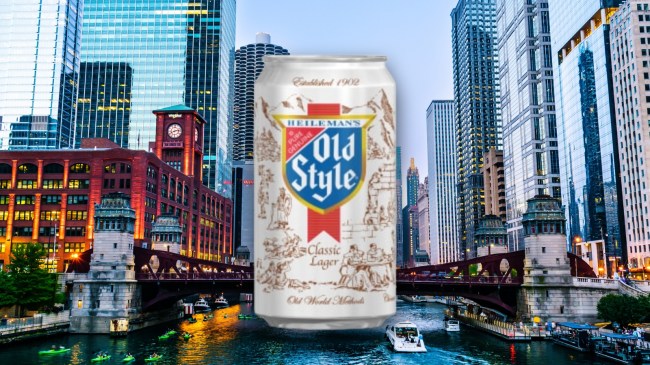
iStockphoto / Pabst Brewing
Old Style was originally produced by the G. Heileman Brewing Company, which started making it at its facility in La Crosse, Wisconsin (a state we’ll also be exploring later on) at the start of the 20th century. However, its legacy is defined by its popularity in a city nearly 300 miles to the southeast.
The brewery made a push to expand into the Chicago market in the decades following its inception, and it was sold to a group of investors in the Windy City in the 1930s. Old Style signs became a ubiquitous sight at its watering holes, and the company was an official sponsor of the Cubs for over 60 years.
The Old Style brand is currently owned by Pabst, which has been brewing it back in Wisconsin since 2016, but it remains quintessentially Chicago.
New England: Narragansett
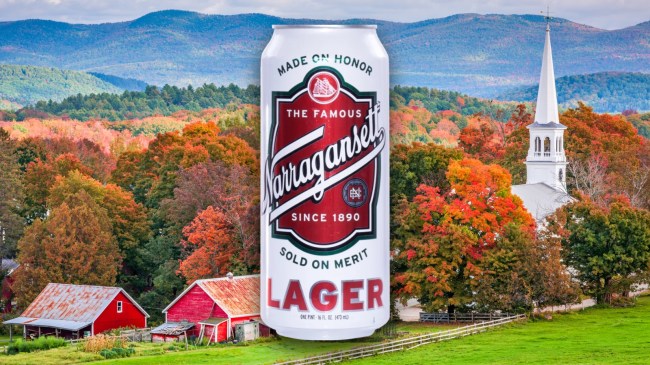
iStockphoto / Narragansett Brewing Company
Narragansett was born in Rhode Island, as the brewery that opened in Cranston in 1890 borrowed its moniker from the seaside town that takes its name from the Native American tribe that had a sizable presence in southern New England prior to the arrival of European settlers.
The brewery had its initial heyday in the mid-1900s; it became an official sponsor of the Red Sox in 1944, and it was responsible for around 20% of all beer sales in New England when Falstaff Brewing attempted to purchase it in 1965.
However, that sparked an antitrust lawsuit that unfolded as Narragansett’s parent company struggled with financial issues and new competition in the region, and it was effectively dead at the start of the new millennium.
It was part of the Pabst portfolio at that point, but in 2005, a group of investors acquired the brand in the hopes of reviving it. That effort ended up being a massive success, as Gansett has reemerged as one of the bigger players in New England while expanding into other big markets outside of the Northeast.
Its flagship beer, a 5% lager, is made at Genesee’s brewery in Rochester (which we’ll also be discussing later on), but Narragansett also pumps out smaller batches of other offerings at its facility in Providence.
Pennsylvania: Yuengling
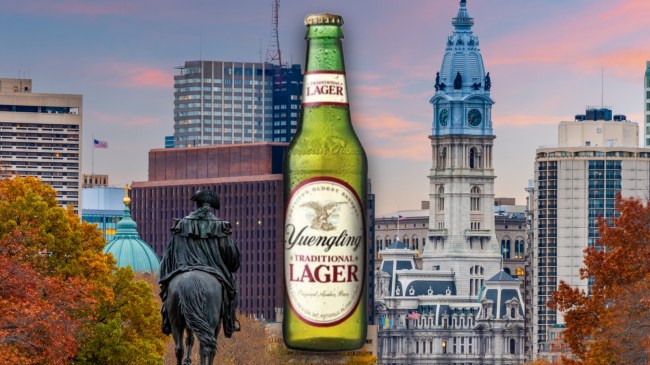
iStockphoto / Yuengling
Pennsylvania is home to the oldest continually operating brewery in the United States, as Yuengling has been doing its thing in Pottsville since 1829.
The company survived as long as it did by developing a loyal following in the Keystone State, and it really cemented its dominance after reintroducing the 4.5% amber beer known as “Traditional Lager” that became its flagship toward the end of the 1980s.
Part of me debated putting Yuengling on here given how big it’s grown over the past few decades, as what was once a regional delicacy is now available in more than half of America’s states. However, you can’t talk about Pennsylvania beer without mentioning it.
Pittsburgh: Iron City
iStockphoto / Iron City Beer
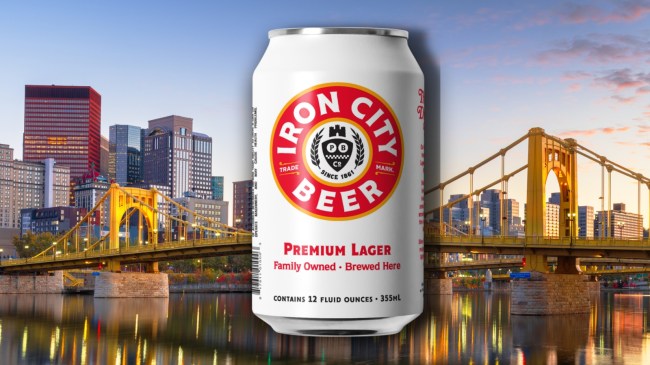
There’s no shortage of Yuengling to be found in Pittsburgh, but I feel obligated to give a quick shoutout to another beer that’s favored among locals: Iron City.
The brewery has a history that stretches back to 1861, although it changed hands and rebranded on multiple occasions. It experienced a renaissance in the late 1970s after launching Iron City Light (a.k.a. IC Light), but the momentum it generated had begun to wane by the time the 2000s rolled around.
In 2007, it was given a second chance at life in the wake of a bankruptcy filing, and it’s taken full advantage while reestablishing its dominance.
Maryland: National Bohemian
iStockphoto / Pabst Brewing
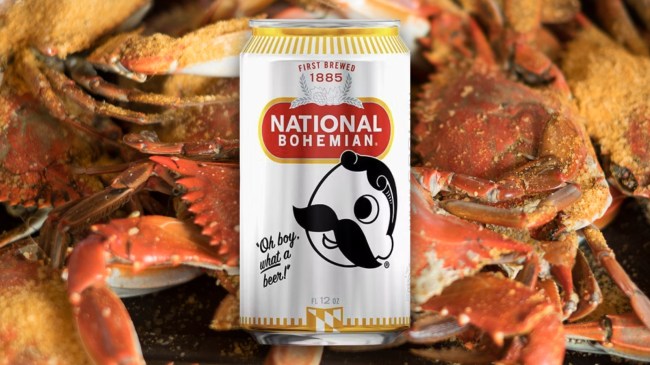
National Bohemian, a.k.a. “Natty Boh,” was first produced the same year the National Brewing Company opened up in Baltimore in 1885. However, it didn’t really become a sensation until after Prohibition, as it was the subject of a marketing push that led to the introduction of its mustachioed mascot, Mr. Boh, in the 1930s.
Jerold Hoffberger was named the president of the brewery in 1947, and he played a key role in firming up its Baltimore bona fides as a co-owner of the Orioles, which sold the beer at Memorial Stadium and counted the company among its official sponsors.
It’s currently produced by Pabst, and it’s hard to go wrong with Natty Boh if you’re looking for something to wash down a platter of crabs with.
Minnesota: Grain Belt
iStockphoto / August Schell Brewing Company
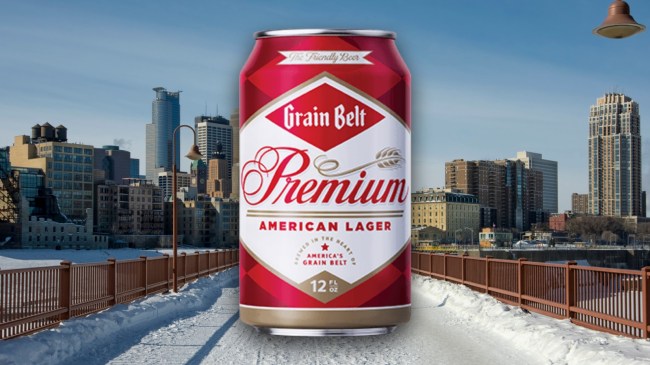
The people of Minnesota also have a noted affinity for Hamm’s and Michelob Golden Light, but they both take a backseat to Grain Belt.
The “Grain Belt” name was first used to refer to a beer that was made by the Minneapolis Brewing Company in 1893, but these days, it primarily refers to Grain Belt Premium, the lager that was initially produced in 1947.
It’s been produced by August Schell Brewing Company (another one of America’s oldest breweries) since the start of the 2000s and is one of its biggest offerings.
Upstate New York: Genesee Cream Ale
iStockphoto / Genesee Brewing Company
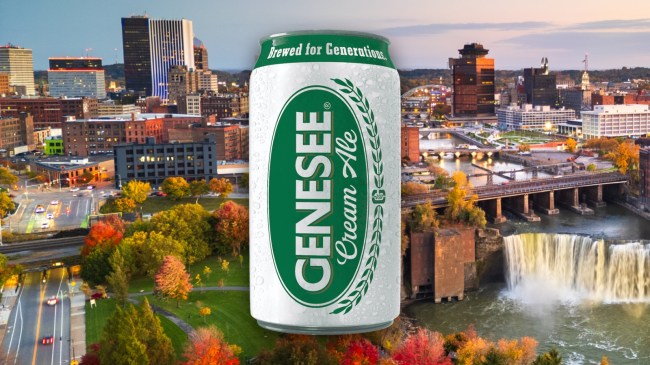
Genesee is one of the oldest continuously operating breweries in the United States, as the brand that’s named after the river near its location in Rochester, New York has been making beer since 1878.
The company makes a number of different beers under its own label, and you’ll have no problem tracking down a 5.1% Cream Ale (a.k.a. a “Genny Cream”) across upstate New York. It was first released in 1960 and marketed to drinkers looking for a beer that’s “smooth like a lager and crisp like an ale,” and it was one of the best-selling domestic beers in the country a couple of decades later.
That’s not the case anymore, but it’s still more than holds its own in the region where it was born.
Buffalo: Labatt Blue
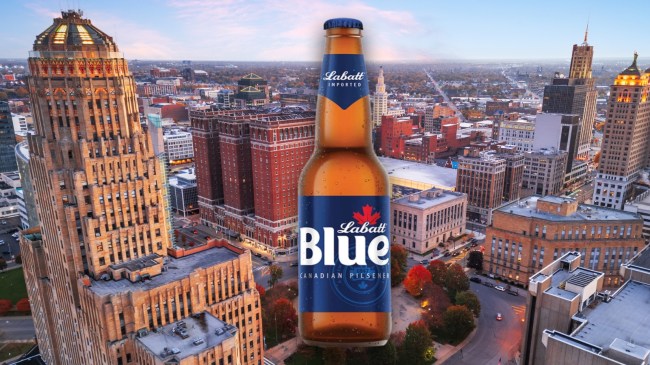
iStockphoto / Labatt USA
I’ve decided to temporarily abandon the alphabetical order format here to address another regional phenomenon in upstate New York, as there’s one beer that reigns supreme in Buffalo and the surrounding areas: Labatt Blue.
The “Blues” (and “Light Blues”) that flow in Buffalo like the waters of the nearby Niagara Falls are associated with the Canadian brewery that originally produced them, but as is the case with Narragansett’s flagship, the beer itself is made at the Genesee facility.
The people of Detroit (another city located right across the Canadian border) also have a similar affinity for Labatt Blue, but no place can brag about having a bigger love affair than the home of the Bills.
Texas: Shiner Bock
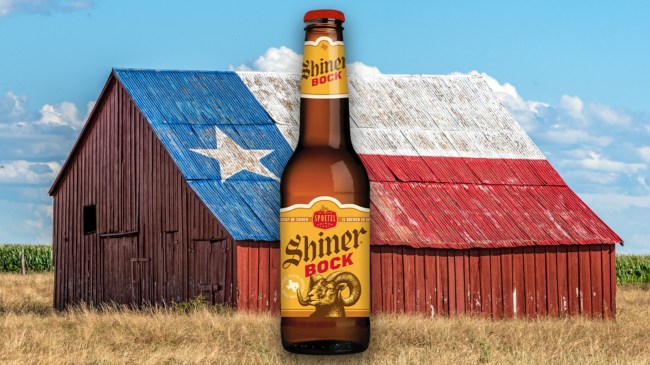
iStockphoto / Shiner
I debated giving Lone Star the nod here, but I had to go with Shiner Bock, which was first produced by the German and Czech immigrants who settled in a town a little less than 100 miles east of San Antonio in 1913.
The signature dark lager, which is produced by the Spoetzl Brewery in the town of Shiner, has an ABV of 4.4%. It was originally only brewed during Lent, but it’s now an around-the-clock affair for the brewery, as customers in Texas and beyond have developed a thirst for the bock that’s responsible for more than 70% of its sales.
Washington: Rainier
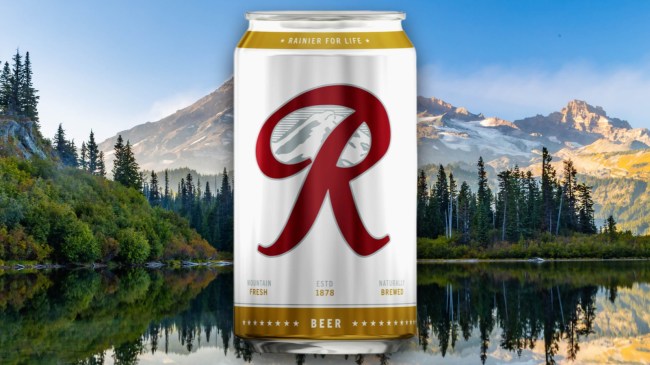
iStockphoto / Pabst Brewing
This was traditionally a two-way race, and Rainier and Olympia were the two beers that vied for the crown in the state of Washington until the latter was discontinued in 2021 after going strong for 125 years.
However, you can still get your hands on Rainier, which can trace its roots back to a brewery in Seattle that started producing the beer it named after the tallest mountain in Washington in 1878.
It weathered both a state and federal prohibition, and it underwent a number of ownership changes before Pabst shut down the brewery after acquiring the brand in 1999.
The beer itself, a lager that boasts a 4.6% ABV, is currently made in California, but it remains a go-to for locals in Seattle and beyond.
Wisconsin: Spotted Cow
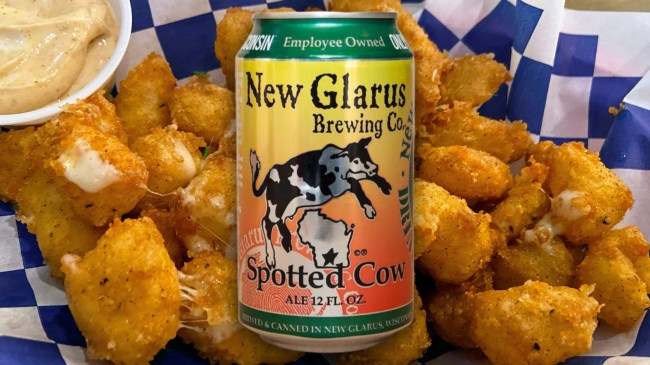
iStockphoto / New Glarus Brewing Company
There were a few options to choose from when it came to Wisconsin, a state that is known for its love of beer (and basically every single type of alcohol).
Schlitz was a longtime staple of the Badger State before it was discontinued earlier this year, and while Old Milwaukee was also in contention, I ultimately had to give the nod to the beloved elixir that is Spotted Cow.
Unlike most of the beers on this list, Spotted Cow firmly falls into the “craft” category and is brewed by the folks at New Glarus, the employee-owned brewery that’s been making it since 1997.
It’s an unfiltered farmhouse ale that clocks in at 4.8%, and virtually every bar in Wisconsin offers it on tap alongside offerings from bigger macro brewers.
Spotted Cow has developed an almost cult-like following due to the fact that New Glarus doesn’t distribute outside of Wisconsin, and it’s sought-after to the point where you can buy cases after making your way through security at its biggest airports so you can bring some home without having to check a bag.