



Two people, both unvaccinated, have died due to measles in Pennsylvania. They are the state’s first deaths from the disease in 35 years.
In January, measles cases in the United States reached their highest level in 30 years. What began in Gaines County, Texas, where nearly 1 in 5 incoming kindergartners in the 2023-24 school year did not get the measles-mumps-rubella (MMR) vaccine, spread to states across the nation.
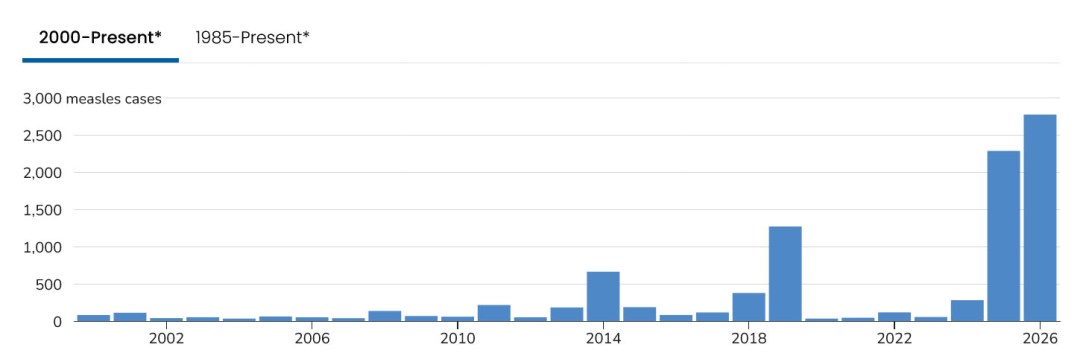
As of August 20, 2026, health officials have confirmed 2,777 measles cases in the United States this year. Only Nevada, Arkansas and Mississippi have not had any confirmed cases, according to the U.S. Centers for Disease Control and Prevention (CDC).
In the year 2000, health officials officially declared measles eliminated in the United States. That year, only 85 people in the country reported infections because of widespread vaccination.
Pennsylvania health officials reported two measles-related deaths this week, marking the first time the extremely contagious disease has claimed American lives in 2026 and the first time it has happened in the state since 1991.
Neither of the two people in Lancaster County, Pennsylvania, who passed away was vaccinated against the disease, according to the Pennsylvania Department of Health. Pennsylvania has had 371 confirmed cases of measles in 2026 — one of the highest numbers in the country.
The only states with a higher number of measles cases this year have been in South Carolina with 670 cases and Utah with 526 cases. Arizona, Texas, Florida, and Virginia have also been relatively hard hit by the disease.
In April, Ave Maria University in Florida experienced one of the largest measles outbreaks in the United States in decades, but officials told the public very little about it. That lack of communication hurt the public health response and likely led to more people spreading measles, according to one expert.
Unvaccinated people are the main reason for the sudden spike in measles
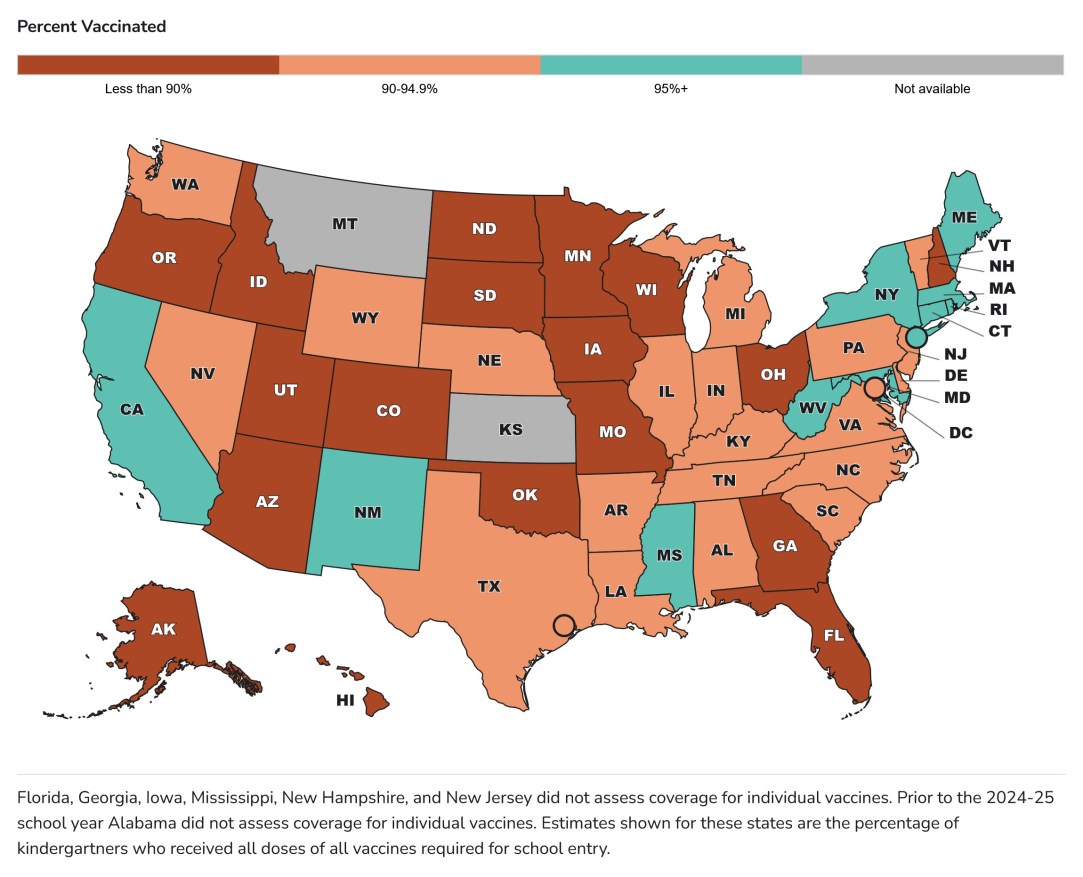
“When more than 95% of people in a community are vaccinated (coverage >95%), most people are protected through community immunity (herd immunity),” the CDC explains. “However, vaccination coverage among U.S. kindergartners has decreased from 95.2% during the 2019–2020 school year to 92.4% in the 2025–2026 school year, leaving approximately 280,000 kindergartners at risk during the 2025–2026 school year.”
According to the Pennsylvania Department of Health, “Measles is a highly contagious virus that can cause serious short- and long-term health problems, including pneumonia and brain swelling, with nearly 20% of people who contract measles being hospitalized. Death related to measles, though rare, occurs in one to three patients per 1,000 cases.”
When an infected individual breathes, coughs, or sneezes, the disease spreads. For up to two hours after the infected individual leaves the location, the virus can still spread through the air and on surfaces. Symptoms may appear seven to twenty-one days after exposure, and measles can be fatal if there is no supportive care or adequate protection.