



iStockphoto / pashapixel / Gregg Parsons
For years, scientists and field biologists that monitor natural waterways have been finding elevated levels of prescription and illicit drugs such as painkillers and cocaine. This is not specific to the United States and has been documented all around the world, most recently in The Bahamas where sharks off Eleuthera Island tested positive for trace amounts of 30 substances including cocaine.
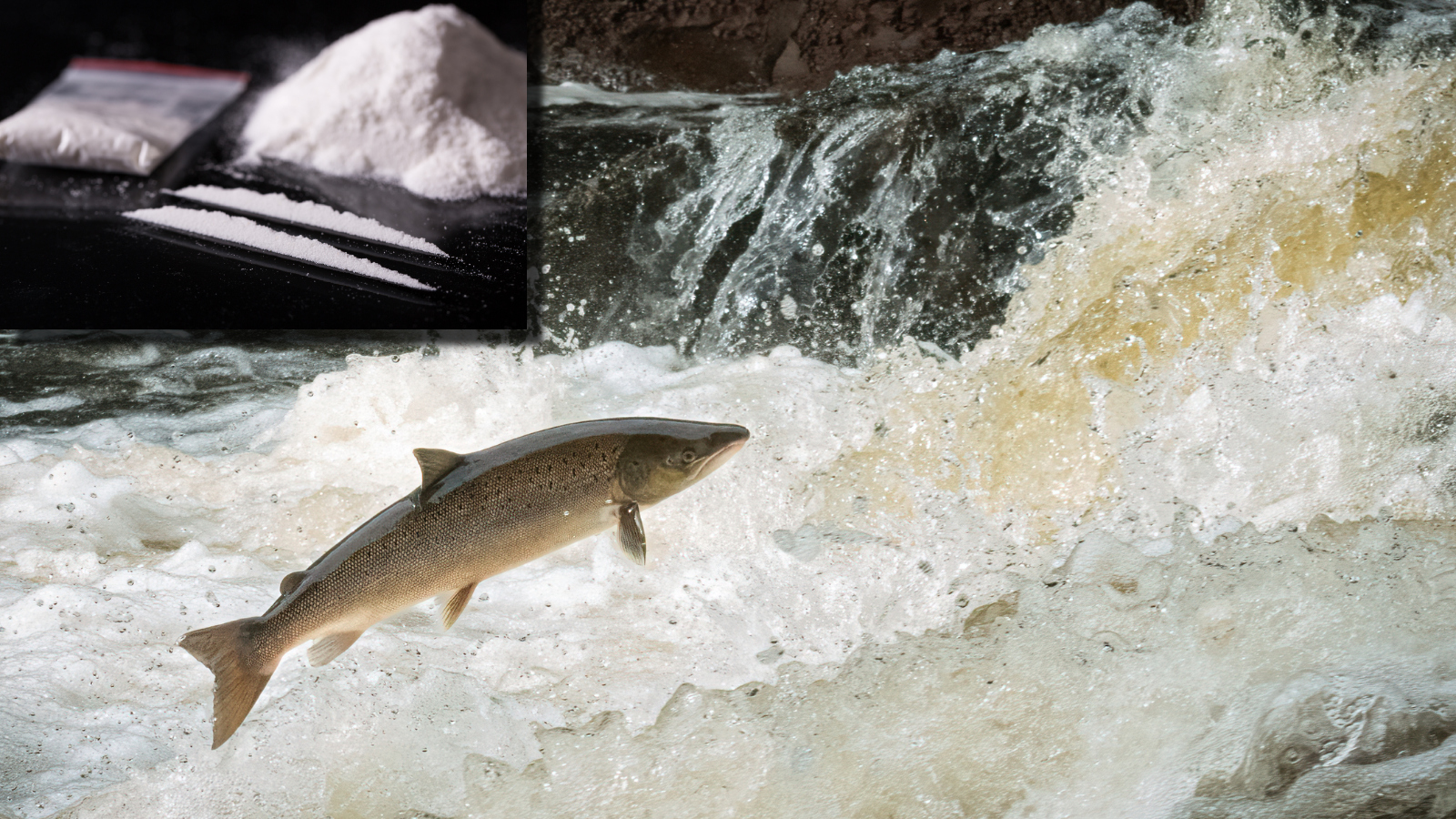
But what about the salmon? The cocaine salmon, specifically. Scientists were curious how the presence of illicit drugs such as cocaine would impact salmon and what they found was the fish were likely to swim nearly 2x further than salmon that weren’t exposed.
STUDY: Salmon Exposed To Cocaine Swim Nearly 2x Further
The new study was published this week in the journal Current Biology as part of a joint research project between Griffith University in Australia and the Swedish University of Agricultural Sciences. Operating under the premise of “how cocaine pollution affects animal behavior in the wild is, thus, unknown” they sought to determine how exposure to cocaine and its main metabolite, benzoylecgonine, impacted juvenile Atlantic salmon.
Ethics aside, I think the question of ‘how would salmon handle cocaine?’ is something millions of people around the world and in the scientific community are curious about, and now we have some answers.
After using slow-release chemical implants in the fish and acoustic telemetry to track them, what they found was “exposure increased weekly movement rates of fish in the wild, with exposed fish swimming up to ∼1.9 times farther per week relative to controls. In addition, benzoylecgonine-exposed fish dispersed up to ∼12.3 km farther than control conspecifics”
In layman’s terms, the cocaine salmon swam 1.9x further every week than the salmon who were not exposed to cocaine.
For the study, 105 Atlantic salmon were monitored in Sweden’s Lake Vattern after being exposed to cocaine and benzoylecgonine, cocaine’s metabolite/by-product. Incredibly, the fish exposed to the byproduct swam 7.6x further than the control group.
Marcus Michelangeli from Griffith University’s Australian Rivers Institute spoke with ABC News Australia, saying “the idea of cocaine affecting fish might seem surprising, but the reality is that wildlife is already being exposed to a wide range of human-derived drugs every day.” He added “the unusual part is not the experiment, it’s what’s already happening in our waterways.”
The whole reason for the study is worldwide these illicit substances are being found more frequently and in higher levels across waterways. Any change in ecology due to human impact is worth studying and scientifically significant but particularly so when it involves… our food.
To read the study in full you can visit the journal Current Biology.