



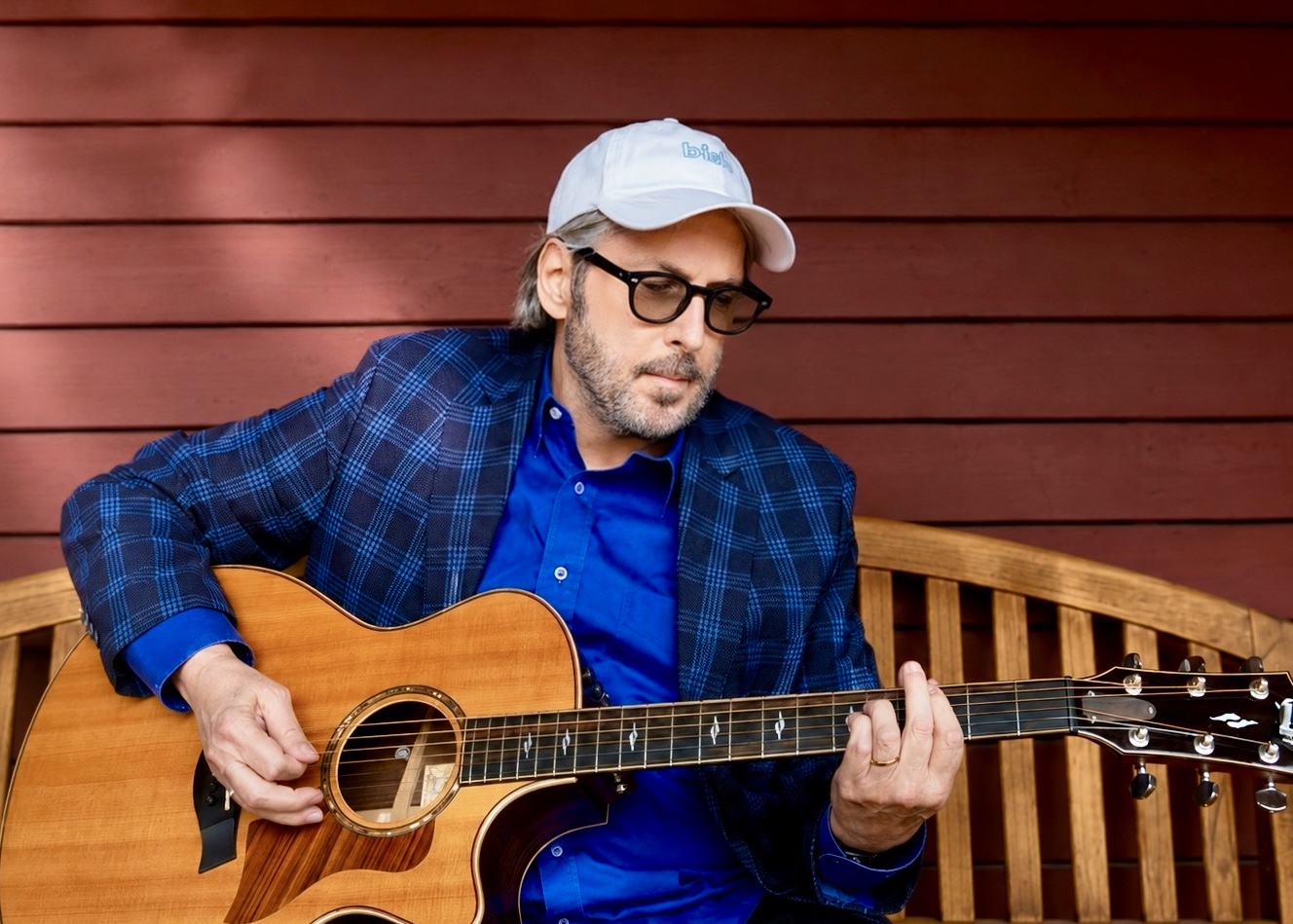
via Liz Kamlet
Fifty years after a label that barely believed in him pressed 3,000 black-and-white copies and called it a day, the man behind “On and On” is finally getting the deluxe treatment. Stephen Bishop is also setting the record straight along the way.
The story has calcified into myth pushed by lame YouTube slop aggregators by now: Stephen Bishop wrote “On and On” in twenty minutes flat, some kind of songwriting lightning strike that turned a broke session guitarist that into a star practically overnight. It’s a terrific detail…. almost as terrific of a detail as the legend that he gave Art Garfunkel is demo tape to bless it upon record executive ears.
This myth about his first breakout hit also, according to Stephen Bishop, completely wrong.
“That is not true,” he tells me, sounding almost personally wronged by his own legend. “I wrote it in one day.”
One day, not twenty minutes. My bad.
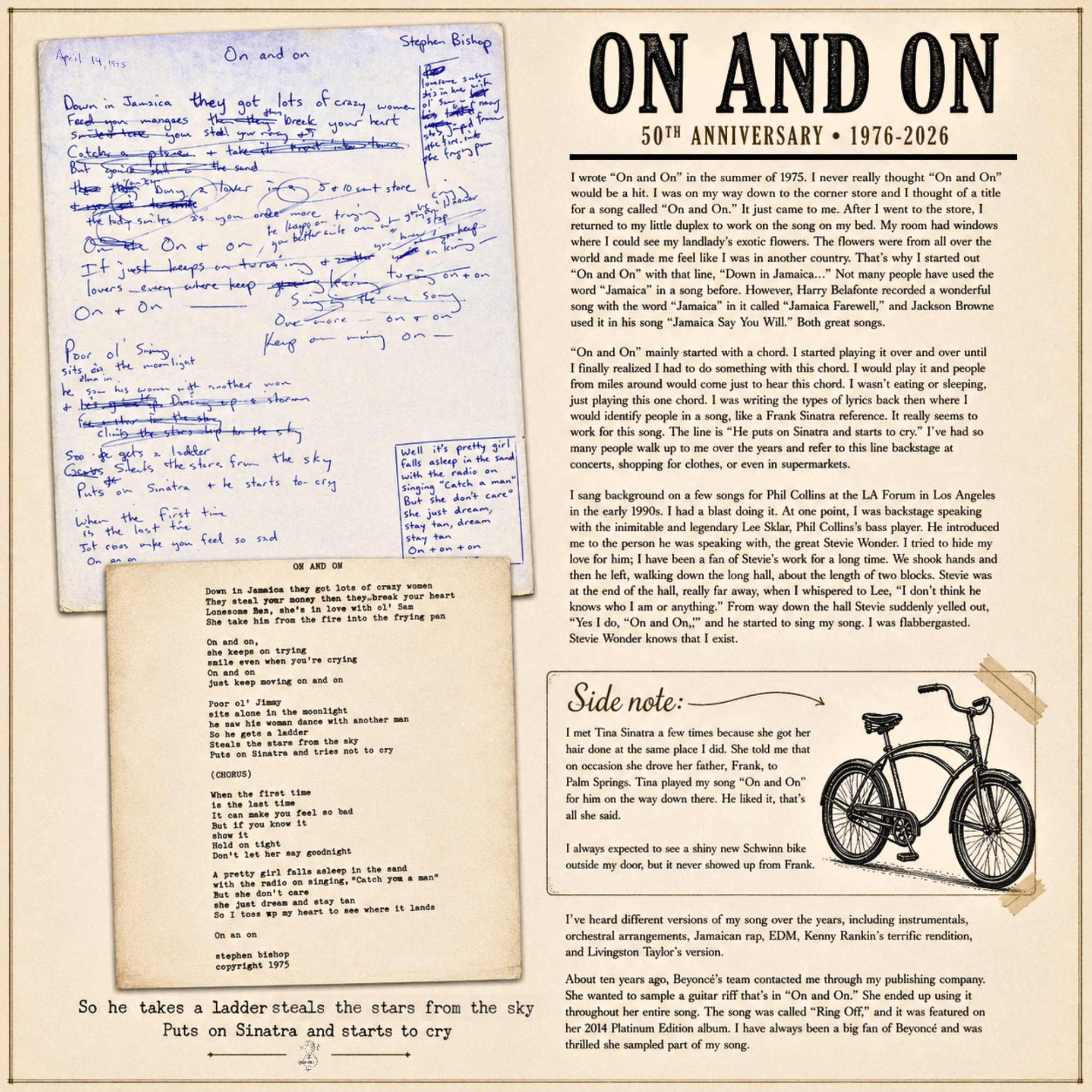
It’s a small correction, but it tells you something real about how the guy actually works. Bishop’s first hit was conceived on a walk to the store in Los Angeles, his dog trotting alongside him, and a chord that wouldn’t let go of him for hours afterward. He got the idea for “On and On” on that walk, scribbled it in a little notebook, did his shopping, came home to an apartment strung with postcards and flowers his world-traveling landlady had collected, and sat there playing the song’s opening chord on repeat until the sun basically gave up.
“People came from miles around just to hear this chord,” his wife and manager, Liz Kamlet, jokes, and she’s only sort of joking, because fifty years later that chord is still doing that exact job.
For the record: the postcard from Jamaica that shows up in the lyric wasn’t actually pinned to his landlady’s wall. Bishop made it up. “I came up with that myself,” he says, visibly pleased that anyone still cares enough to ask.
Bishop, now 74 and closing out a five-decade career, has two Academy Award nominations to his name (for “It Might Be You” and “Separate Lives”), a Grammy nomination or two on top of that, and, as it turns out, is one of the most quietly influential background players in the last half century of American pop, film, and comedy. He wrote the theme to Animal House. He was in The Blues Brothers. Eric Clapton calls him one of his all-time favorite songwriters.
His songs have also been recorded by generational greats: Pavarotti, Beyoncé, Phil Collins, and a solo cut from ABBA’s Frida among them. The whole catalog has racked up something like 6.1 billion streams to date. Billions, with a B.
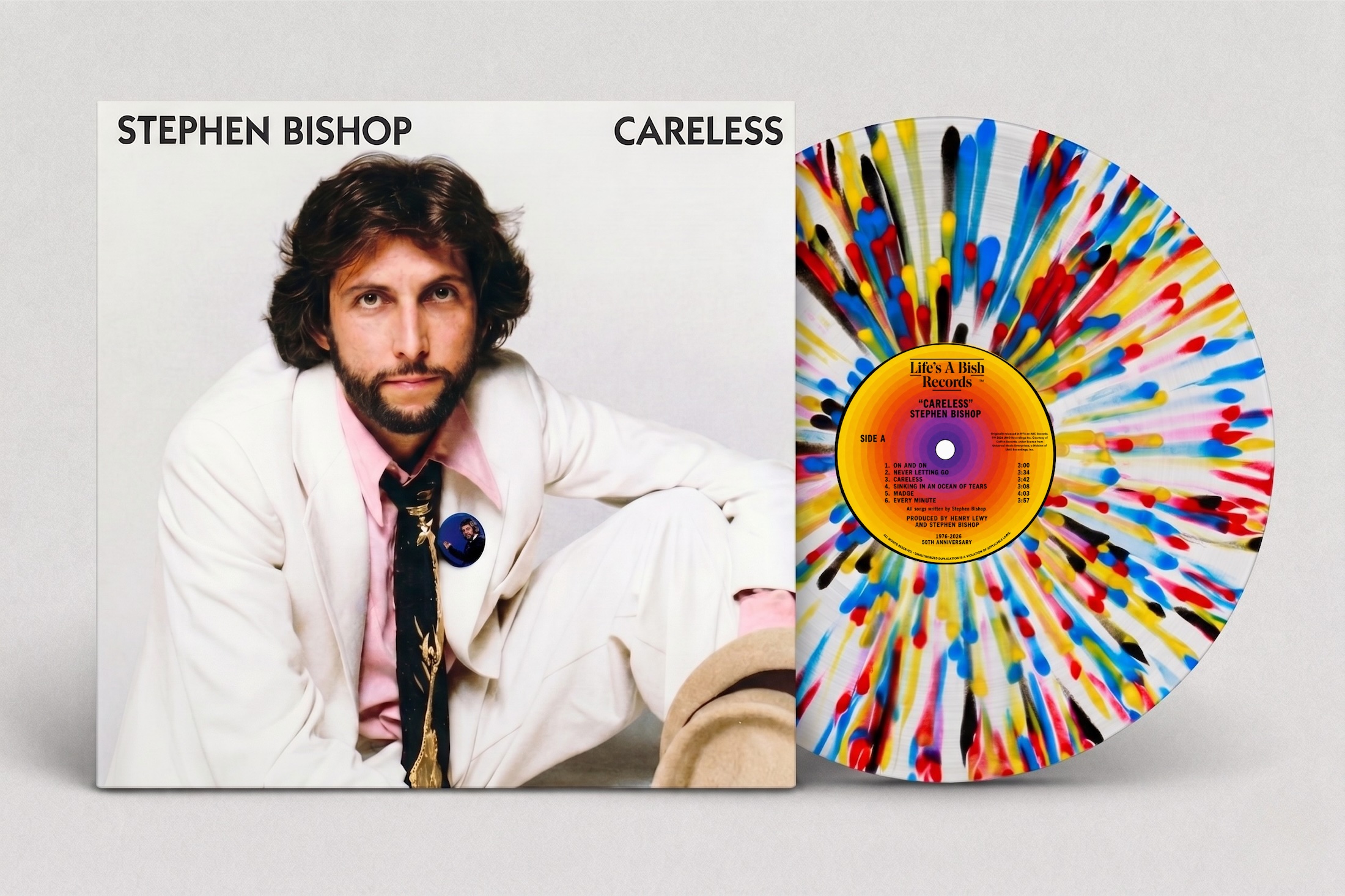
And, most relevant to our conversation, on August 14, his 1976 debut, Careless, gets the reissue it never got the first time around: a 20-page booklet, Bishop’s first-ever liner notes, a colorized cover (the original was black and white, because nobody at the label, ABC Records, thought it was worth the extra ink), and two long-lost tracks pulled off a reel-to-reel tape that Bishop found at the bottom of his garage.
It’s now available to pre-order on Bishop’s website for $49.99.
via Stephen Bishop / Universal Music Group
The Label That Almost Passed
Here’s the part that gets lost in the “On and On” mythology: the label barely believed in Careless at all. They pressed 3,000 copies. The packaging was spartan, with no booklet or liner notes. Just a vinyl pressing in a black-and-white sleeve. The label was signaling low expectations.
“They believed in it enough for me to do it,” Bishop says, generously, when I ask why the label seemed so lukewarm going in. The album cost $55,000 to make, great money in 1976, and it bought him the Wrecking Crew’s finest session players, orchestral strings, and a rotating cast of guests who’d go on to become the album’s real selling point: Eric Clapton on slide guitar, Chaka Khan, Art Garfunkel.
But the label’s confidence didn’t extend much past the recording budget.
So how did the album strike lightning in a bottle for Stephen and launch his career?
Word of mouth, specifically from a record promoter named Charlie Minor who started pushing “On and On” to college radio stations, the tastemaker network of its day. It caught. “By the time the album went through its thing,” Bishop remembers, “my face was huge, blown up in the lobby” at ABC’s offices. “On and On” would eventually climb to No. 11 on the Billboard Hot 100 (and #2 on the Billboard Easy Listening aka Adult Contemporary chart), and Bishop spent the back half of the decade opening for Fleetwood Mac, Randy Newman, Linda Ronstadt, and Bread, turning strangers into fans one opening set at a time.
The songs that came next, “Bish” and “Red Cab to Manhattan,” got written the way most road records get written: not on the road, but in the crash-landing afterward, once he was home and had a minute to actually sit still.
Kamlet is the one who dug up the reissue’s real treasure. Bishop, by his own wife’s account, is “an organized hoarder of sorts,” someone who kept every songbook, every notebook, and, crucially, a journal from the Careless sessions itemizing who got paid what. Kamlet scanned all of it, found the two abandoned songs on a decaying reel-to-reel, and shipped the tape to Village Recorders in LA to be baked and digitized before it disintegrated for good.
That’s the anniversary edition in a sentence. It’s more of an actual rescue mission and celebration, fifty years after the fact, than a reissue itself.
Charming Guy With Guitar
If you’ve never heard of Stephen Bishop, there’s a real chance you’ve still seen him. For a solid stretch of the late ’70s and early ’80s, he was the guy John Landis called whenever a movie needed someone to play, credited, literally, as “Charming.” The Kentucky Fried Movie had him as the Charming Guy. Animal House had him as the Charming Guy With Guitar, the doomed folk singer whose acoustic set gets violently interrupted when John Belushi smashes a guitar against a staircase wall, mid-song, over his head. The Blues Brothers had him as a Charming Trooper who gets his watch broken during the mall chase. Twilight Zone: The Movie had him as a Charming G.I. in a Vietnam sequence… blink, and you’ll miss it.
“We just improvised that scene,” Bishop says of the Animal House moment that made him a permanent piece of comedy history, almost like it was no big deal that he also happened to write and sing the film’s self-titled theme song that rolls at the end of the movie. Landis was a friend before any of this; the two of them figured out the bit on the spot.
The Kentucky Fried Movie cameo, by comparison, has aged into the kind of thing nobody brings up at Thanksgiving, a gleefully raunchy sketch bit from 1977 that was funny in exactly the way 1977 thought things were funny.
Bishop doesn’t dwell on it, so neither will I.
What he will dwell on, gladly, is Aretha Franklin.
On the Blues Brothers set, during her big musical number, the Queen of Soul turned to Bishop, of all people, and asked for his autograph. “Aretha Franklin asking me for my autograph. What?” he tells me, still sounding thrown by it decades later. Did he think to ask for hers back, I ask?
“No, I should have. I guess I never even thought about that.”
It’s the most Stephen Bishop answer imaginable: handed a dinner party story most people would brag about forever, and his instinct is to point out the thing he forgot to do.
Yacht Rock, and Other Things He’s Fine With
Bishop’s Wikipedia page still files him under “soft rock,” a label he would rather not be caught anywhere near. More recently, the internet has taken to calling him yacht rock instead. On that specific genre reclassification, he has no notes.
“I’m fine with it,” he says. “I’d rather have that than soft rock.” It helps that the yacht-rock revival has been genuinely good to him: Keith Urban reached out last fall for permission to cover “On and On” on his own upcoming record and sent over a demo. Bishop gave an enthusiastic yes.
“He was real cool and real genuine,” Kamlet says. “We didn’t really expect that, but he just, out of the blue, contacted us.” No lawyers, no leverage plays. Just a guy who liked the song.
The Troubadour Days
I ask Bishop about the legendary mid-’70s Laurel Canyon moment, the same one every music writer under 50 romanticizes without having lived through it. According to Bishop, Monday nights were when the scene flickered alive with a thousand volts.
“There was the Hoot Night on Monday night at the Troubadour,” he says. “That’s where the Eagles first played. I used to go there all the time and hang out with people and meet different musicians.” You show up, play, meet somebody, and repeat the following Monday.
That’s more or less how Clapton ended up on Careless in the first place. Bishop’s manager at the time, Bob Ellis, ran into Clapton at Shangri-La Studio and pitched him with exactly one sentence: there’s a new guy I’m managing, he’s funny.
Clapton wandered over to A&M’s Studio C, heard a few songs, and stayed for two of them. They’ve been friends since, four albums’ worth of collaboration, including a song they wrote together called “Holy Mother.”
via Stephen Bishop / Universal Music
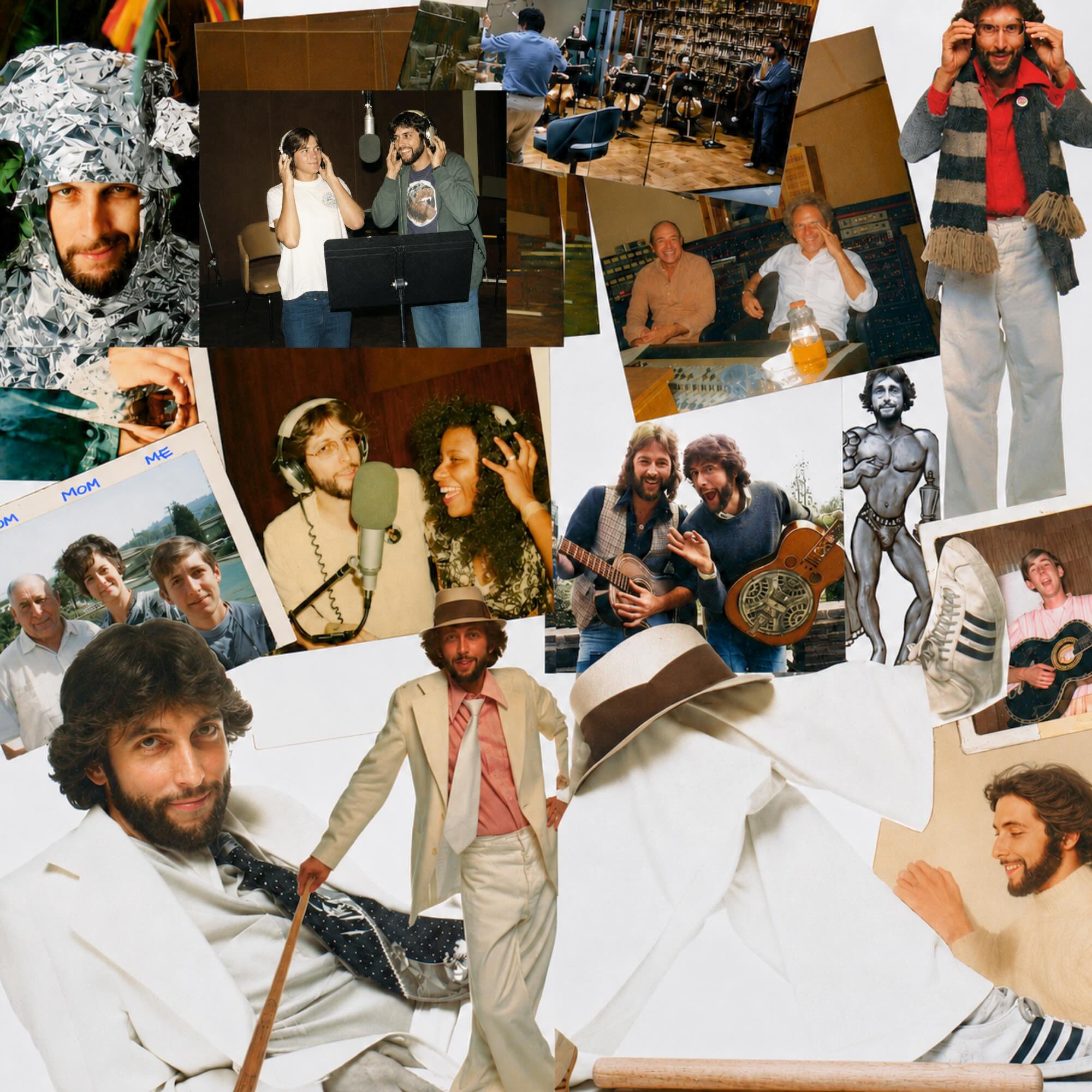
The whole golden age Los Angeles scene of the ’70s shows up again after Careless, on Bishop’s second album, Bish. The closing credits include a group billed as “The Whistling Bishettes,” basically whoever happened to be in the room that day. Among them: Carrie Fisher, whom Bishop briefly dated around the time she filmed Star Wars, and a young rock critic named Cameron Crowe, years before he’d go write and direct a whole movie about exactly this kind of scene.
The “man, myth, legend” stories pile up fast once you start asking. He poached eggs with Jack Nicholson. He gave Barbra Streisand notes on A Star Is Born. He once sat in on a Buddy Holly luncheon with Paul McCartney, the world’s foremost Buddy Holly enthusiast. His dog, incidentally, is named Randy Newman, an honor the real Randy Newman signed off on personally.
Like many great recording artists of the era, Bishop hung out in Montserrat. In 1988, working on the album Bowling in Paris, Bishop found himself at the legendary AIR Studios with Clapton, Phil Collins, and Sting. The lineup was so absurd Clapton joked they should call themselves the Spunky Merchants. They recorded a song called “Hall Light” and took a photo that Kamlet still describes with something close to reverence: all four of them, together, at a studio under the looming shadows of a volcano that would later be leveled by a hurricane.
When the team behind Under the Volcano, the documentary on AIR’s rise and fall, came asking for the photo for free, Bishop and Kamlet said they’d take $100 a shot instead. They passed.
Bishop is business-savvy like that. He knows what he’s got.
Calling In Every Favor He Was Owed
Bishop’s twentieth and, by his own description, final album, a wink of a title spelled THIMK (yes, like the old workplace sign, minus an N), came together in under five months, mostly out of the guest room in his and Kamlet’s own house.
“I had a bunch of songs,” Bishop says, undercutting the scale of what actually happened. What actually happened is that Kamlet went digging through roughly 4,000 files on his computer, decades of demos and half-finished ideas, and started calling in fifty years of favors. “I told Steven it’s been a long time,” she says. “He wanted the last album to be the final album, and I said no.”
So they built one, fast, and mostly by asking. The “yes, I’m in” list reads like a Rock ‘N Roll Hall Of Fame dinner guest list: Eric Clapton, Sting, Art Garfunkel, Graham Nash, Michael McDonald, Kenny Loggins, Christopher Cross, and Gerry Beckley and Dewey Bunnell of America. America recorded their parts out of a hotel room while on tour. They didn’t want to say no either.
When Phil Collins wasn’t well enough to play drums, his son Nic stepped in instead. Most of it happened over Zoom. Engineers set up in living rooms in New York while Bishop and Kamlet watched from LA. Somewhere in the process, someone stole the catering cookies, and Kamlet is still mildly annoyed about it.
The “no” list is also a proverbial who’s who. John Mayer was going to do it, then his own tour got in the way. Steve Perry passed, citing his voice. James Taylor didn’t have the time. Judy Collins was on tour too. Stevie Nicks wanted to do it and then also went on tour, so they called Marilyn Martin instead, the same singer who’d once shared a mic with Phil Collins on Bishop’s Oscar-nominated “Separate Lives.” And Paul McCartney said no in what might be the most gracious rejection in recorded history: “I love you, Bish, but I don’t sing on other people’s albums anymore.”
Classic Paul, and the kind of hubris reserved for one of the all-time greats.
Nonetheless, THIMK sold over 30,000 physical copies.
Not a bad way to take a bow.
What’s For Dinner?
Ask Kamlet what it’s like managing Bishop and she’ll tell you, only half-joking, that it’s a full-time job convincing him he’s a big deal.
If you’re familiar with Kamlet’s inside-baseball Instagram and TikTok videos about the music industry, you might already know that Bishop still owns 100 percent of his own catalog. That’s rare in a world where Bruce Springsteen’s catalog sold for $500 million to Sony and Bob Dylan’s sold for $300 million to Universal.
Kamlet says she’s turned down offer after offer to sell it, including one broker who responded to her counteroffer with a middle-finger emoji. (“I was like, wow, I’m gonna block you.”) She’s playing a longer game than most sellers bother to. Catalogs like his appreciate 10 to 15 percent a year, she says, which makes patience the best asset in the room.
None of that seems to register with Bishop the way you’d expect. Ask him about his own legacy, about fifty years, twenty albums, songs recorded by everyone from Barbra Streisand to Chaka Khan, and Kamlet will tell you the real problem is getting him to acknowledge any of it. “He’s so humble it bothers me,” she says. “I’m like, look at all this stuff you’ve done. He’s like, what’s for dinner.”
On And On
His influences, when pressed, are the obvious giants: the Beatles, the Stones, Steely Dan for the lyrics, Randy Newman, the Beach Boys, James Taylor, and “Paul Simon in a big way.”
When pressed on Steely Dan, he dives into the deep end of the lore swimming pool: Walter Becker actually took one of his calls, years later, and by Bishop’s account they had a real conversation before Becker passed. Donald Fagen is a different story, and it’s the one spot in the whole conversation where Bishop goes quiet. He walked up to Fagen at a dinner once, fan to hero, despite knowing Fagen’s wife at the time. “He wasn’t very nice to me,” is the entire report. There are laughs about how strange the encounter was, but no further context is given, because, welp, that tracks with Fagen’s world-renowned curmudgeonliness.
His verdict on the next generation is a young songwriter named Alec Benjamin, whom he and Kamlet both light up describing, the kind of singer-songwriter who makes you turn around while walking, in Kamlet’s words, and think: who is this?
On October 9, Bishop plays the Clive Davis Theater at the GRAMMY Museum for what’s billed as his first live performance in seven years. It’s billed as an intimate evening of stories, a live conversation moderated by Kamlet herself, and acoustic versions of songs that have spent half a century being other people’s hits too.
Tickets sold out in 48 hours, two of which were scooped up within a minute of the announcement email (they’re VIP, too, which I say as a fan, not a flex… and yes, bought, not guest listed or comped… take note, fellow music writers).
By the time we spoke, there were already 607 people on the waiting list, a number Kamlet reports with the slightly stunned tone of someone who’s checked it twice. The overflow is real enough that they’re already floating a second run next year, probably a couple of shows back at the Troubadour, the same room where a broke, unsigned Bishop used to show up on Monday Hoot Nights hoping to meet somebody.
Fifty years ago, a label pressed 3,000 copies of Careless in black and white. Everyone held their breath and hoped for the best.
This October, Bishop walks into a museum built to enshrine exactly the kind of career he’s had, in front of a room that sold out before most of LA even heard about it.
And afterward, by every account, he’ll probably still ask Liz what’s for dinner.
via Stephen Bishop / Universal Music
Proof of that showed up in my inbox about an hour after we hung up.
Kamlet had offered, practically before the interview even started, to have Bishop record something for my wife, Maggie, a longtime fan whose top-streamed song this past May happened to be “On and On.”
That’s a nice gesture, I thought. But I’ve interviewed plenty of people who have offered nice gestures in interviews, and the follow-through never happens. I didn’t think much of it. My expectations for these things are low.
He did it: straight to camera, congratulating us on the wedding, signing off with, “I hope it goes on and on.”
It’s a dumb little pun. It’s also this whole damn long-winded profile in one sentence: fifty years in, and the guy is still finding the exact right hook, on the first try, for free, for a total stranger.
On and on and on, indeed.