


iStockphoto
Meat products need to be kept at a specific temperature to prevent spoilage. However, one Walmart worker decided to test several products at the store, discovering that the meat may not be safe.
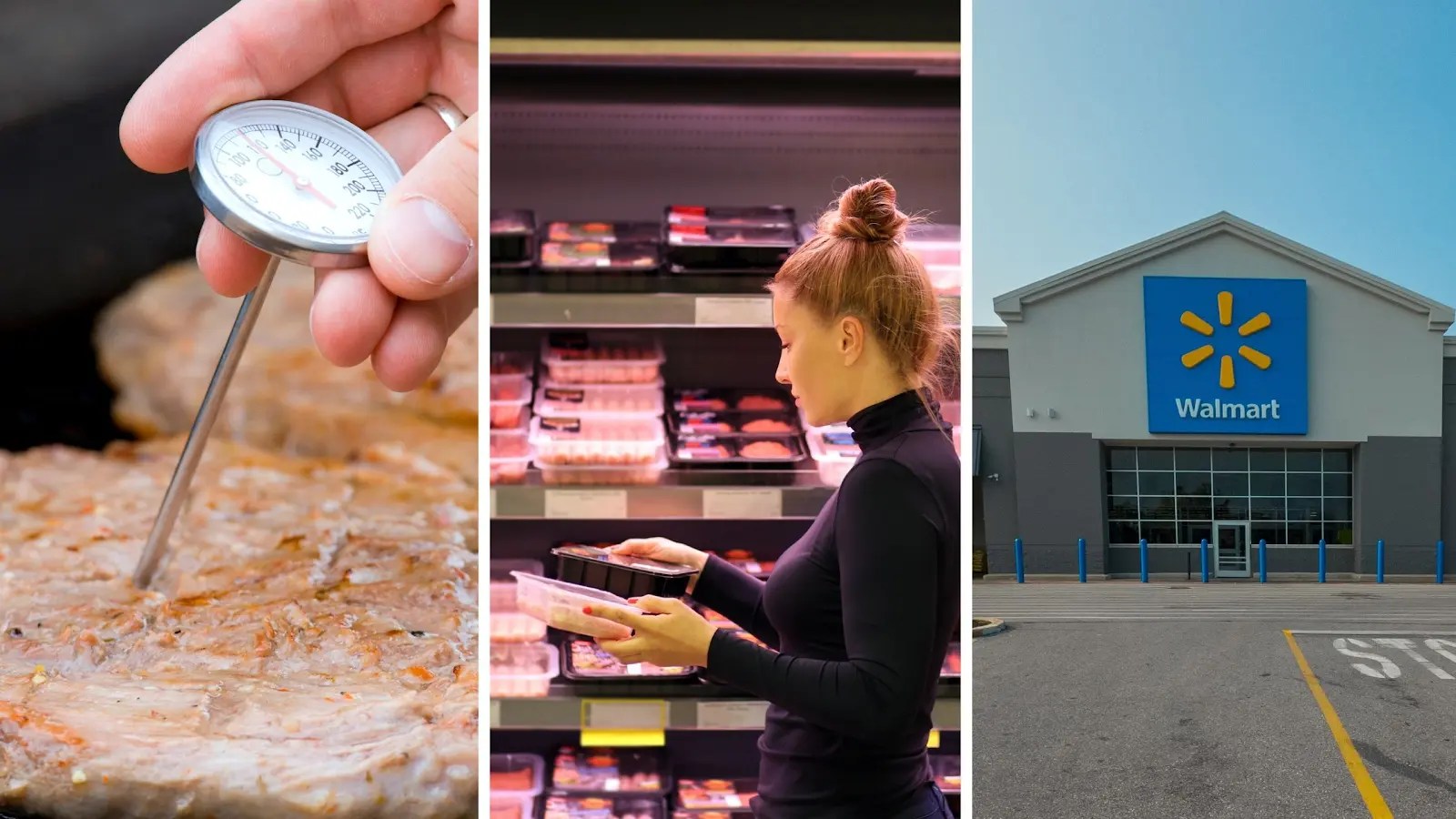
In a post on the r/Walmart subreddit, Walmart worker u/Noboru16 posted 10 pictures of a refrigerated meat thermometer in several products, including prepackaged sausages, turkey wings, pork, and ham.
The worker explained that they took multiple readings of each product, with two hours between each. The next day, they took the temperature again.
The first picture shows the internal temperature of Italian sausages at 43.9 degrees F. Two hours later, the same sausage’s temperature rises to 44.5 degrees F. After another two hours pass, the sausages are 46.7 degrees F.
“I have brought up concerns of the bunker temping high but no one seems to want to do anything about it,” the post reads. “The thermostat says it’s 30°, but I have pointed out to management several times that even when the bunkers go down completely, the gauge doesn’t change at all.”
The Walmart worker asked others to weigh in on whether they’re being “overly cautious” and if the meat is still safe for customers to eat.
What Is A Safe Temperature For Refrigerated Meat?
According to the U.S. Food and Drug Administration (FDA), refrigerated meats need to be kept below 40 degrees F in order to prevent the growth of dangerous bacteria.
Temperatures between 40 and 140 degrees F are considered the “danger zone,” where meat spoils even faster.
So, the meat tested by the Walmart worker is at a higher risk of harboring bacteria like Salmonella and E. coli. Salmonella is responsible for around 420 deaths in the United States every year. E. coli causes approximately 100, according to the U.S. Department of Agriculture (USDA).
Plus, refrigerating meat only slows bacterial growth and doesn’t prevent it entirely unless it’s frozen. Customers should cook refrigerated meat products within one to two days of purchase.
What Should The Walmart Worker Do?
Commenters on the Walmart worker’s post urged them to reach out to the health department since they claim that their managers aren’t taking the situation seriously.
“Health Dept, corporate won’t correct the problem like the health dept will,” one suggested.
“Not safe, it needs to be thrown away. Call the health department if you have to. The cost to repair will be nothing compared to the lawsuit if people get sick with food poisoning,” another wrote.
Other Walmart workers claimed they’ve also experienced management ignoring their concerns about food safety.
“Dude, they had the entire cheese/lunch meat wall ending at 69 in my store and they wouldn’t pull it. No one should ever buy meat or honestly anything else at Walmart,” a commenter recounted. “They’d leave the frozen skids out on the floor for 6+ hours and still think it was ok. No one understands the cold chain and when you tell them about it, they don’t care and you’re the a–. I called the health department.”
A second shared, “One found an IFCO of steakuse-byshould have been scaled 2 days previously. I was going to discard it. But a team lead went ahead and slapped some use by stickers on it and put it on the sales floor. Yikes!”
BroBible reached out to the Redditor via direct message but was unable to make contact due to the user’s privacy settings. We also contacted Walmart via media form for further comment.