


When somebody on stage said the number 400, the whole crowd gasped.
It was a real, audible gasp. It came from people who tow their own horsepower out to the desert on toy-hauler trailers every weekend, which makes them a hard crowd to impress with an engine. They gasped anyway.
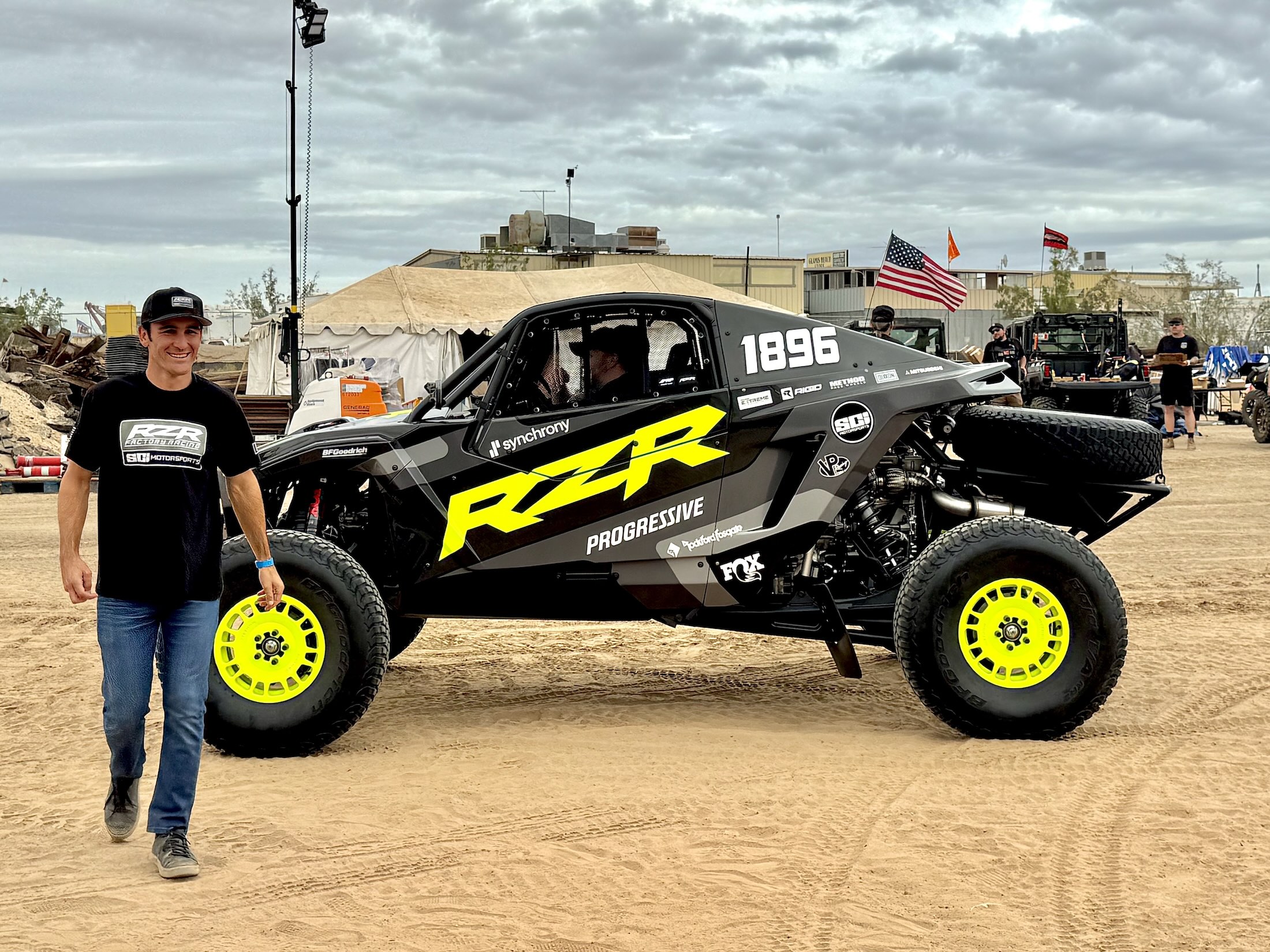
Polaris had just pulled the cover off its newest race car at Camp RZR, the company’s annual Halloween weekend party in the Imperial Sand Dunes. RZR Factory Racing driver Brock Heger stood next to it on the main stage. It was 11 a.m. on Friday, and the dunes had humbled me a couple of hours earlier.
I’d spent the morning in a RZR, riding out through Glamis to Oldsmobile Hill and then Fireman’s Flag Pole, our turnaround point at the top of some truly massive sand hills in the Algodones Dunes in the Colorado Desert. I’ve done my share of off-roading over the years, and I don’t think I’m terrible at it. But there’s always something new to learn on rookie terrain, and Glamis is a whole other beast. I totally understand that now.
If you’ve never been, imagine basically all of West Coast powersports culture converging on one enormous sandbox a few miles from the Mexican border. Everybody brings something with a motor. I could not believe how many people showed up. I heard one person say at least 100,000 over the weekend. By all the campers, I believe it.
Camp RZR is Polaris’ party in the middle of all that, and Polaris does not do things halfway. There’s a Ferris wheel. There’s a giant technician tent where Polaris mechanics fix owners’ Polaris machines on the house, within some parameters. There was even a little low-stakes race on a track right at camp, the Glamis 200, so the factory team could show off for the fans.
The Top Of The Food Chain
The new machine is the RZR Pro R Factory Boost, and I’ve already met its little brother.
Earlier this month, I was in Sand Hollow, Utah, driving the production RZR Pro R Boost. That one makes 275 horsepower and runs 0-60 in 4.2 seconds. It starts at $49,999. I call it the ultimate side-quest machine; I stand by that description.
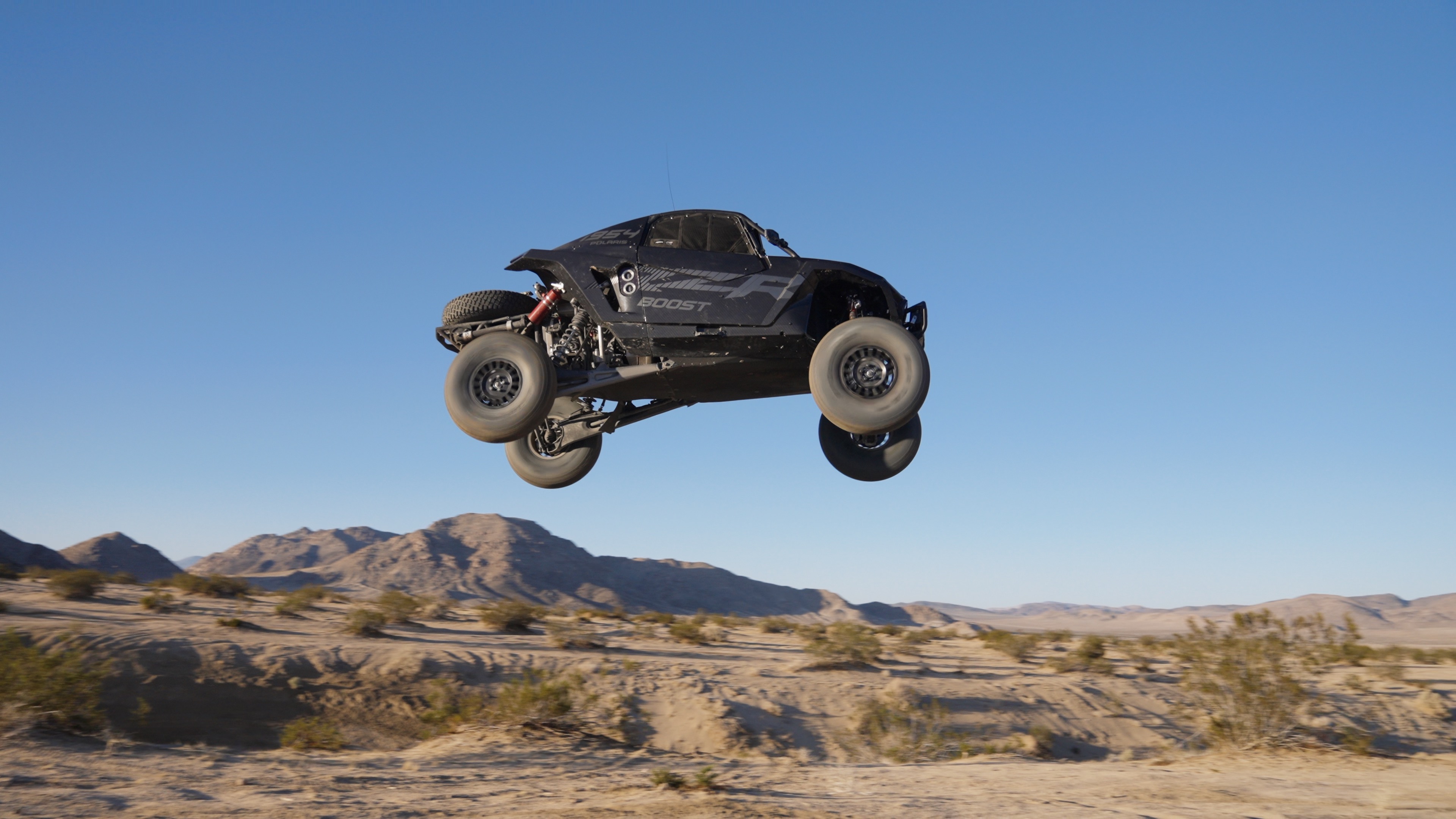
The Factory Boost sits at the very top of that same platform. It’s the race car version, built for open desert racing. Compared to the RZR Pro R Boost, the Factory Boost comes with 125 more horsepower and a price tag four times higher. It starts at $200,000.
I’ll say that number again so it sinks in. This is a $200,000 side-by-side. For what it’s worth, this is supercar money territory. A 2026 Corvette ZR1X, the 1,250-horsepower hybrid that car magazines keep calling a bargain, starts at $207,395. A 2026 Porsche 911 GT3 starts at $235,800. Honestly, this thing is a supercar too.
via Polaris
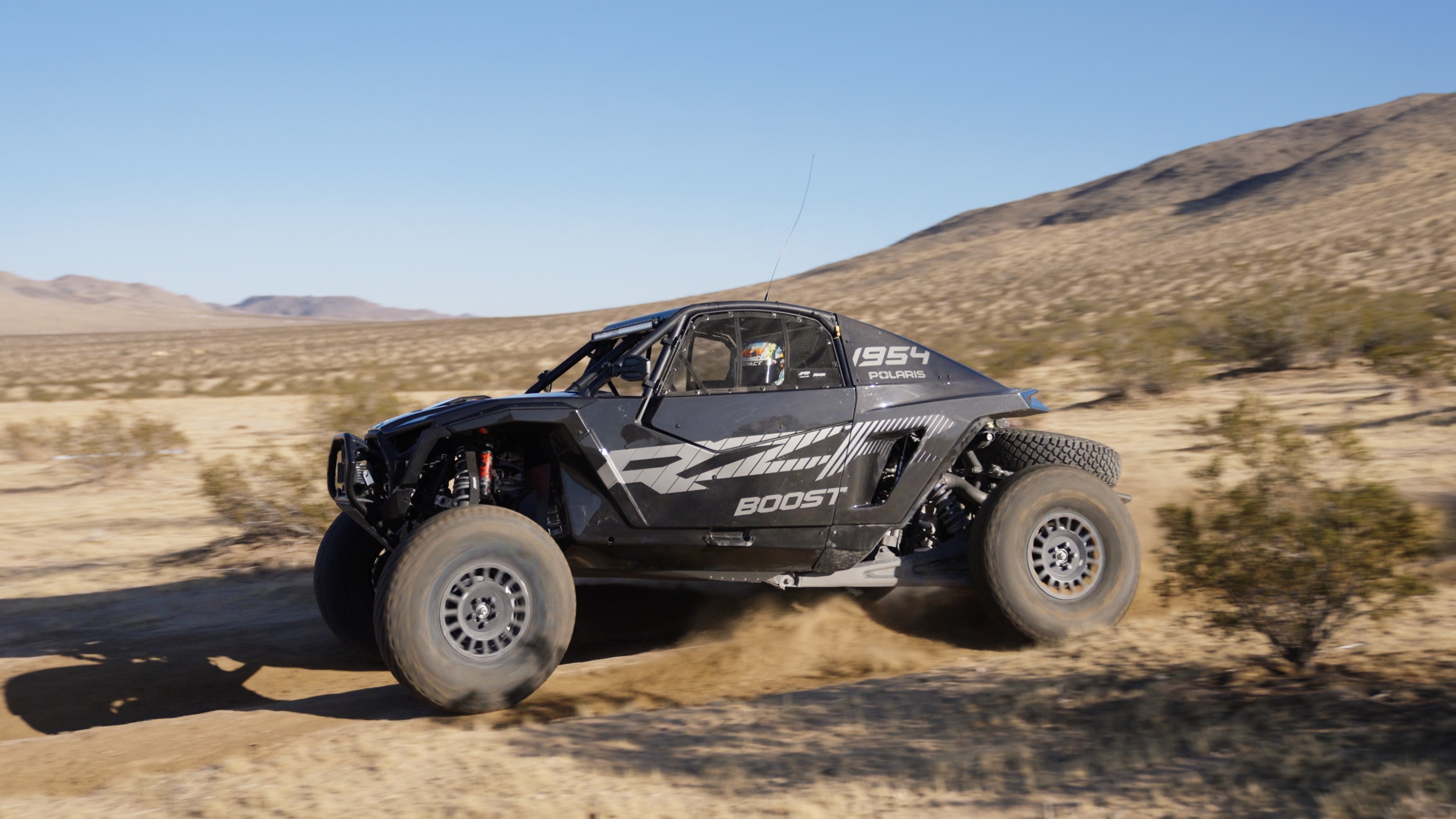
Polaris RZR Pro R Factory Boost
Polaris engineers designed it, and it’s built in Roseau, Minnesota. It takes the production Boost and adds everything the factory team has learned from racing its current car, the Gen 2 RZR Pro R Factory. The Gen 2 isn’t going anywhere. The Factory Boost joins it in the lineup as the bigger, badder option.
Polaris took the turbocharged 2.0-liter four-cylinder from the production Boost and race-tuned it to make up to 400 horsepower. Then it rebuilt the rest of the machine to survive that much power in the desert.
The wheelbase got stretched 6.5 inches to 111, which keeps it stable at triple-digit speeds. The cage is all new, and the cab is two inches wider, so a driver over six feet can actually fit. The body is full carbon fiber, and Polaris shaped it with airflow modeling at speeds over 100 mph.
It also carries a lot more gas. The fuel cell holds 45 gallons, up from 34, which is good for more than 200 miles between pit stops. This is a big deal in an off-road race as long as the Baja 1000.
The shocks are three-inch DYNAMIX Live Valve bypass units that adjust themselves on the fly, and a FOX steering damper keeps the wheel from fighting you over rough ground. A MoTeC M150 race computer runs the whole show, backed by two power distribution modules instead of one.
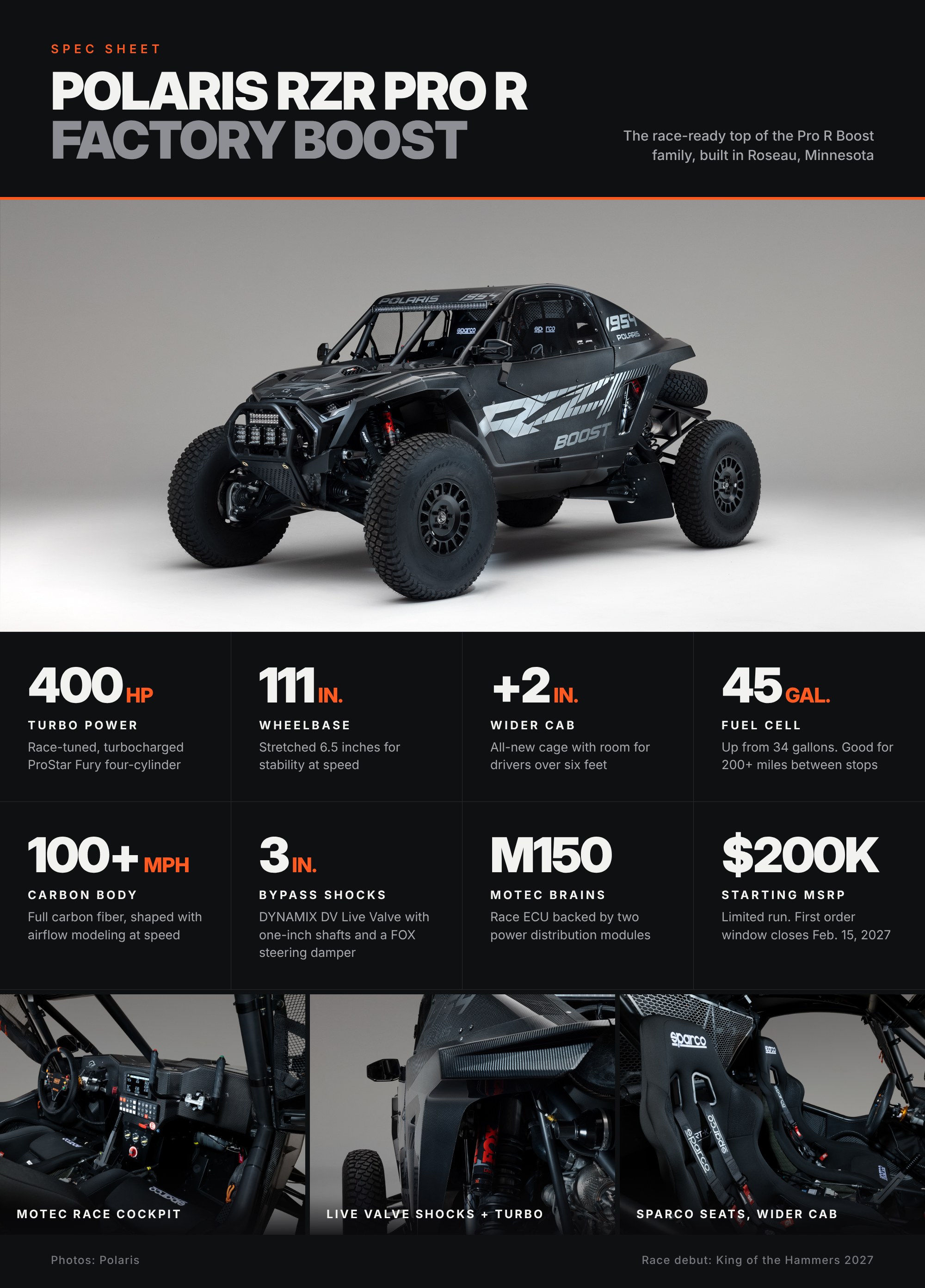
Image via Polaris, graphic by BroBible
Polaris RZR Pro R Factory Boost
Polaris is building it in limited quantities, sold through an exclusive distributor called SCI Distribution. The first order window closes February 15, 2027, right after King of the Hammers. Polaris told me that timing is on purpose, because it expects more orders once the Factory Boost races there.
In case you’re wondering, it’s already off to a fast start.
Before Polaris released a single spec, it had nearly 10 deposits from buyers who hadn’t even seen the thing. Within a few hours of the unveiling at Glamis, it was up to 19 orders. At $200,000 apiece, that’s at least $3.8 million worth of race cars sold in one afternoon.
All this reminds me of Ford and how automakers use motorsports to sell their performance cars. Polaris is running the same playbook for UTVs.
Last year I drove Ford’s Mustang GTD, the most extreme street-legal Mustang Ford has ever built. I gleefully called it “preposterous” here on BroBible after driving it around the California desert. It makes 815 horsepower from a supercharged 5.2-liter V8, and pricing starts around $325,000 and climbs from there. Like the Factory Boost, you can’t just walk into a dealer and buy one. Ford sells the GTD through application windows. The latest one opened in April 2026 for the 2027 through 2029 model years, and Ford hand-picks who gets a car.
The GTD has a stablemate, too, and it’s an engineering beast in its own right. The Mustang Dark Horse SC is the car Ford takes to the track for hot laps at Formula One race weekends. It runs a supercharged 5.2-liter V8 too and makes 795 horsepower, only 20 shy of the GTD. It starts at $108,485.
When Polaris unveiled the original RZR Pro R Factory in 2023, it pitched the car as a throwback to the days when automakers built their own factory trophy trucks for desert racing. “Every legitimate factory racing program has been built around the development of a purpose-built race vehicle,” Polaris Off Road vice president Reid Wilson said at the time.
To me, it’s the oldest play in motorsports. You build the race car, win some races with it, and then sell it to the people who were cheering.
He’s Been Here Since The First RZR
Alex Scheuerell, Polaris’ Director of Off-Road Motorsports, has been along for this whole ride, and I mean that literally.
He told me that 20 years ago, he was an engineering student at UW-Madison when Polaris offered him an internship on its utility team. He was a racing guy, so he was a little bummed about spending a summer on work vehicles. Then he showed up and found out what the utility vehicle actually was.
“They didn’t have a name for it back then, because nothing like it existed, so they just called it a utility vehicle,” Scheuerell told me. The internal code name was Project Vista, and it became the RZR.
It was a scrappy crew, and the intern got to do things most interns never touch. That included the marketing photo shoot for the original RZR. Polaris couldn’t hire talent, so it sent the college kid out to Big Bear, California.
via Polaris
Polaris RZR Pro R Factory Boost
“I was the driver for every single picture,” he said.
That has to be one of the greatest summer internship stories ever told.
The RZR launched in 2007, and Scheuerell says it blew people’s minds at the time. “If you saw one sitting here today, you would think it’s a youth vehicle,” he said. “It’s a joke, right?”
He’s watched every leap since. The XP 900 was a massive step. Then came the XP 1000. Scheuerell remembers that launch like it was yesterday.
“We were like, we can’t get better than this,” he said. “This is as good as it’s gonna get.”
They got better. The Turbo came next, then the Turbo S, the Pro XP, the Pro R, and now the Pro R Boost. Someday, he says, he’s going to map the whole evolution out.
The Factory Boost grew out of the race program. Polaris first raced the Pro R Factory three years ago, then moved quickly to the Gen 2 car the team runs now. “This thing is awesome. It’s so fast. It wins everything,” Scheuerell said. “But there’s things we can improve on.”
One of those things was legroom. The Gen 2 didn’t fit drivers over six feet very well. “That’s a problem,” he said. “Let’s fix that.” This is where the wider cab comes from.
The race team knew the production Pro R Boost was coming, so it ran its own development on a parallel timeline. “When that thing is launched, we better have a race car or two,” he said. “So we took all the learnings from our Gen 2, applied that, added the Boost powertrain and all the driveline goodness, and put together a really complete, refined package.”
He heard the gasp, too. “Everyone hears 400 horsepower, and it’s like you heard from the audience,” he said. He just isn’t ready to call the Factory Boost his point of pride yet. “I can talk about it all day, but until you’re winning races…”
For now, that honor goes to the Gen 2, which Polaris designs, builds, and sells to racers. “That thing kicks everyone’s asses,” he said. “We combined old-school, crusty desert racing mentality with new-school engineering, and it waxes everybody.”
He told me to come back and ask him again once the new car starts winning.
via Polaris
Polaris RZR Pro R Factory Boost
So which race does he want most? In his mind, the off-road Triple Crown is Dakar, King of the Hammers, and the Baja 1000. Dakar is the gnarliest of the three, but the rules won’t let the Factory Boost race there.
“So for this car,” he said, “it’ll be King of the Hammers.”
A Young Team With A Stacked Trophy Case
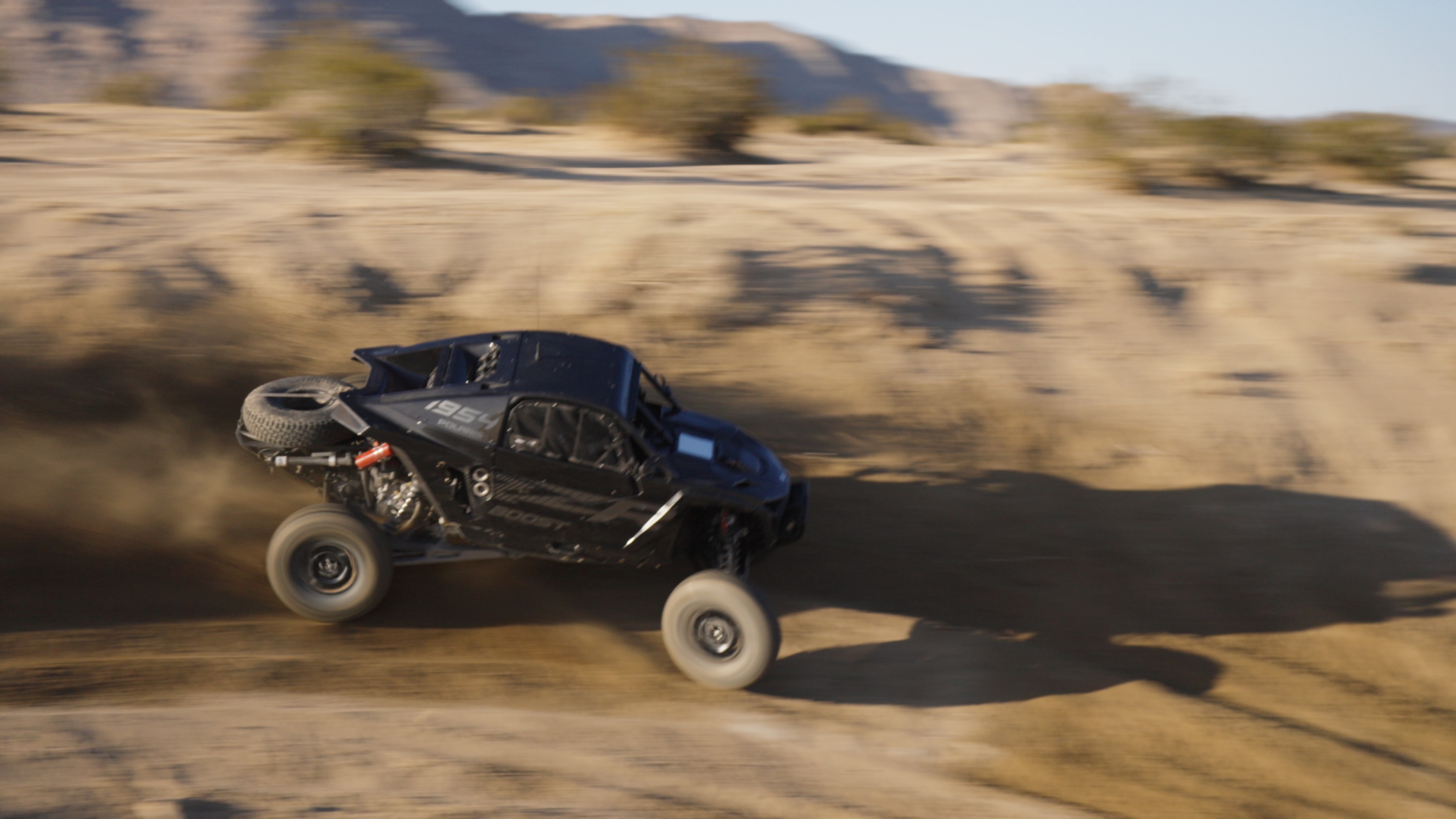
The wild part is how new it all is. Polaris launched RZR Factory Racing in March 2023 with three young drivers, Heger among them, and the team ran its first race at the San Felipe 250 a few weeks later. It finished fourth, sixth, and tenth.
It has barely stopped winning since. The team has taken three straight UTV Open championships in the SCORE World Desert Championship in Baja. It has won the Baja 1000, the Baja 500, the Mint 400, Vegas to Reno, and King of the Hammers.
via Polaris
Polaris RZR Pro R Factory Boost
Heger in particular has been on a heater. He won the Baja 1000 in 2024, then won the side-by-side class at the Dakar Rally in Saudi Arabia in both 2025 and 2026. He’s won the King of the Hammers Desert Challenge three years running. Winning Baja, Dakar, and Hammers inside the same 12 months earned him an off-road Triple Crown that nobody else has pulled off.
He’s also an Imperial Valley kid, so Glamis is basically his backyard.
Polaris isn’t easing off, either. The team just signed Kyle Chaney, a four-time UTV King of the Hammers winner, to a multi-year deal.
Brock Heger Wants More
The last time I saw Heger was a few weeks ago in Sand Hollow, Utah, where the media schmucks like me got their first crack at the production Pro R Boost. Polaris was keeping the race version under wraps back then. While everyone else gushed about the Boost, Heger had something else on his mind.
“The whole time in my head, I’m like, what about our race car?” he said.
He’s spent most of the last two months in the desert, almost every day, testing with Polaris engineers. A lot of the car comes from racer feedback, from all the little things drivers wish for after a long race. Then the engineers take it from there.
“It never fails,” Heger said. “They always overproduce what we think we can get.”
He sees it as a loop. Polaris puts its race cars through incredible abuse, then brings what it learns back to the machines regular people buy. “It’s a true testament to how much Polaris believes in racing,” he said. “It’s really cool to see the full circle.”
I asked him what the Factory Boost feels like from the driver’s seat.
via Polaris
Polaris RZR Pro R Factory Boost
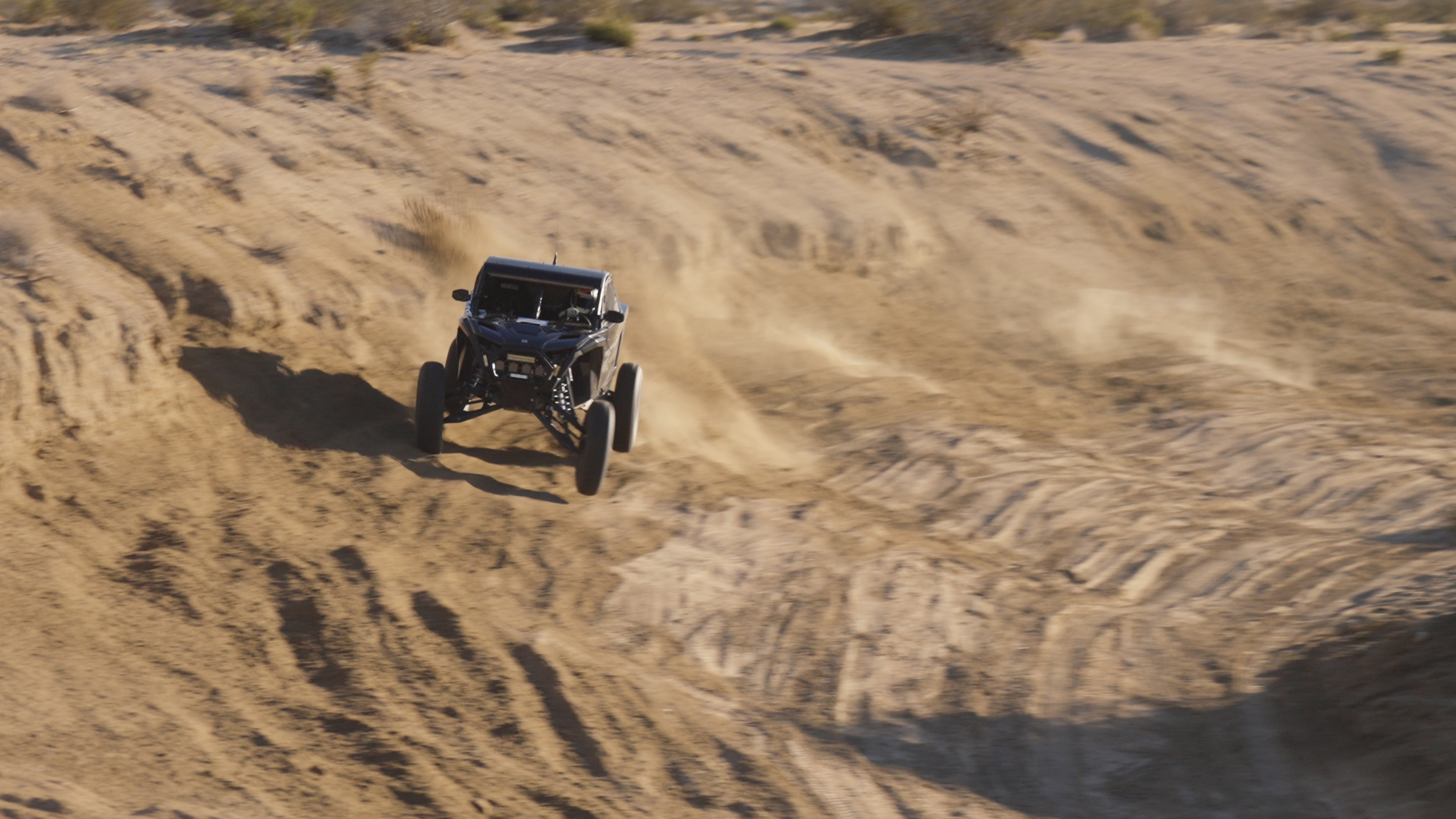
“You sit in it and you take off, and you’re like, this is an actual race car,” he said. “They said on stage it’s got 400 horsepower, and it’s a lot. Then you drive it and you’re like, I want more. I want more. There’s never enough.”
He wasn’t kidding. He says the team will keep pushing to add power as the car develops.
The first real test is King of the Hammers in 2027, where Heger expects only one or two Factory Boosts on the starting line. After that, the team heads south for the SCORE season opener, the Baja 250, which moves from San Felipe to Mexicali in March 2027.
What he’s most curious about is how the Factory Boost stacks up in the overall standings, where it’ll mix it up with faster classes of race trucks.
“It’s a lot of car,” he said. “As a driver, it allows you to go much faster and push it much harder than we ever have.”
Riding Shotgun
Before I left on Friday, Scheuerell told me he can count on two hands the number of people who have ridden in this machine.
“It won’t take more than two hands,” he said. “And you’re gonna be blown away.”
At 7:30 the next morning, I strapped into the passenger seat next to Heger and became one of the first people to ride this turbocharged desert toy.
Heger had cut a little circuit through some authorized BLM land just up the road from the Glamis Beach Store, where Camp RZR sets up shop. He’d run it exactly once. I was the second guinea pig.
This wasn’t on the dunes. It was rocky, shrubby desert full of little washes, with no real trail to speak of. Drive a normal car over it, and you’d find yourself in a lot of oh-shit situations very quickly.
Here’s a video of our ride on my Instagram:
We had comms in our helmets, but Heger isn’t a chatty driver. He’s stoic and locked in—exactly what you want from a guy doing these speeds on a trail he’s seen once. He steers so gently with little taps, threading between trees like an Olympic skier in the glades with a jet pack on. Doing such a feat requires a cool, even hand.
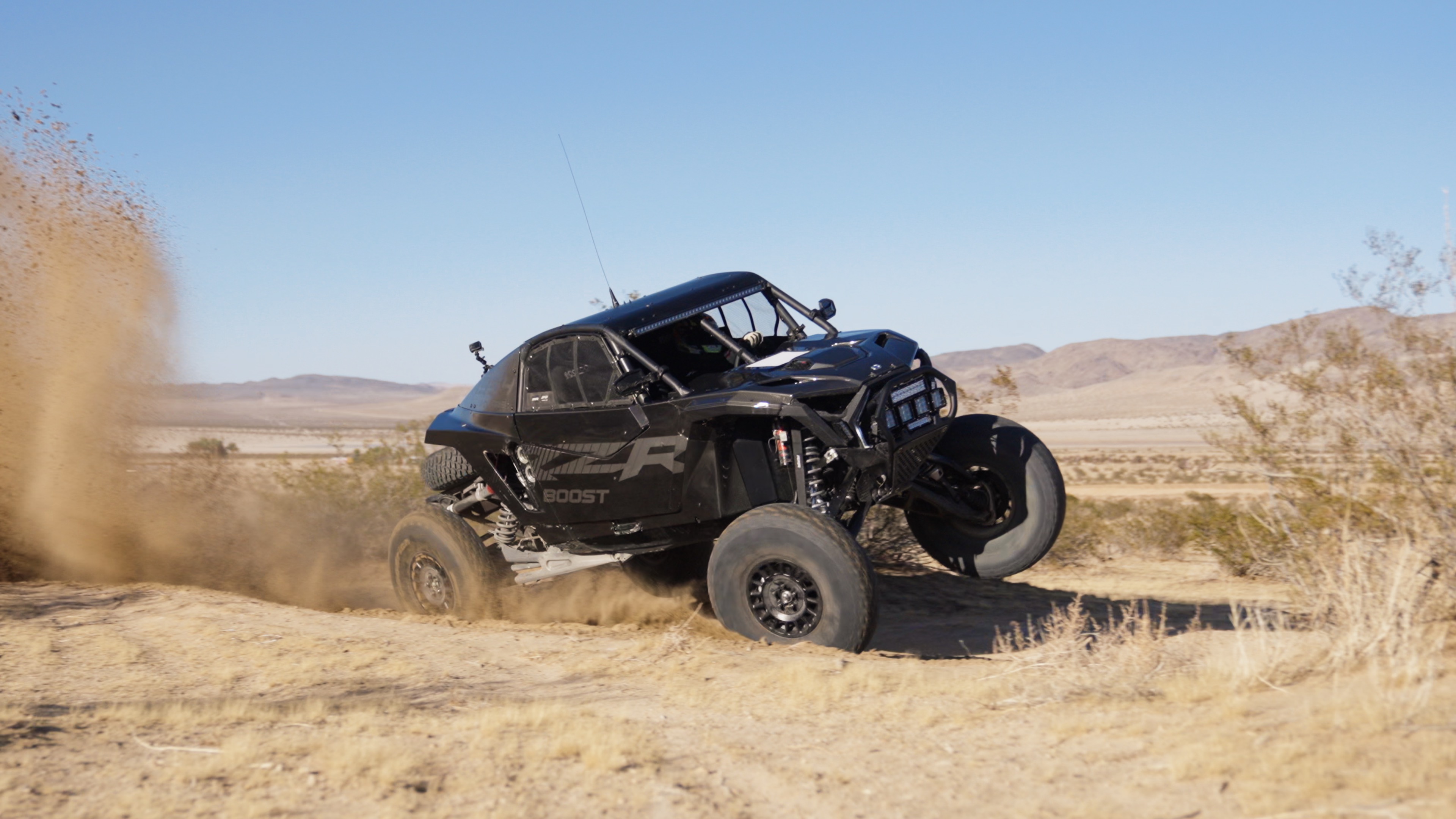
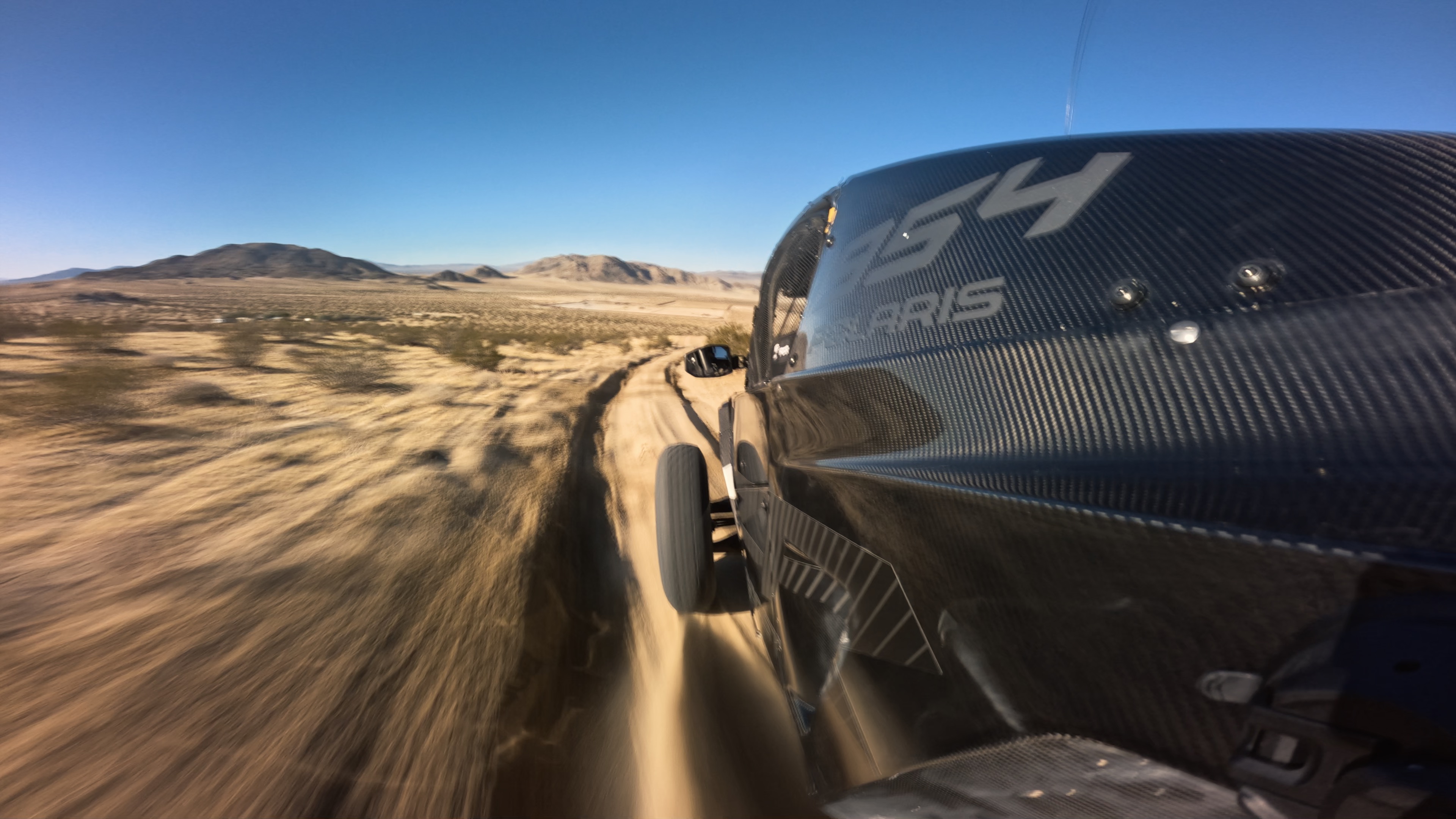
Then he floored it. The thing sounds incredible. We glided over those washes way faster than I thought was possible, and the rough desert floor felt like butter underneath us. On one dirt straightaway, I glanced at the readout and immediately decided I didn’t want to know. The whole time, I kept picturing the podrace in Star Wars: Episode I, with Anakin skimming across the Tatooine desert a few inches off the ground. This is the closest I’ll ever get to living it.
I screamed and whooped the whole time during the ride along. I’m not entirely sure how Heger felt about that, and I learned afterward that he tells his shotgun-riding navigator not to talk while he’s driving in races like the Baja. At one point, I genuinely wondered whether my wife knew where my will was. My stomach went every which direction possible, and calling it a roller coaster doesn’t even begin to describe it. I’m an adrenaline junkie, so this is a good thing. It’s a testament to the incredible engineering feat Polaris has accomplished with this vehicle.
I’d only had one cup of coffee, so I told him that’ll wake you up. Heger looked over and finally said something on the comms.
“Better than a cup of coffee, right?” he said. Then he hit me with a “goooooood morning!”
For context, last week in Austin I was in a Mustang Dark Horse SC going 150 mph around the Circuit of the Americas. Road racing on tarmac is super cool. But off-roading at the speeds they hit at the Mint 400, King of the Hammers, and the Baja 1000 rattles your brain in a way no racetrack can, and it’s wild how these machines soak up that terrain.
Two decades ago, this kind of racing belonged to dune buggies and trophy trucks. Now the UTV class is engineering desert-racing rocket ships out of sci-fi movies.
via Polaris
Polaris RZR Pro R Factory Boost
The craziest part is that Polaris builds this thing in a factory and sells it to customers. I’m sure there are crazier custom-built hogs out there somewhere. This one rolls off a production line in Roseau, Minnesota.
I get the $200,000 price tag now, 100 percent. I felt the same way after driving the $350,000 Ford Mustang GTD in 2025. Polaris charged this beast to the max and all giddyup. With an expert like Heger tearing into it, it’s a rocket ship for cutting across landscapes where there aren’t any trails.
I’m a big dude, so climbing out of that tiny cockpit with the beast of an engine at my back took some doing. Somebody held a camera up to my face while I did it, and the first word out of my mouth was “ridiculous.”
Then I kept going. “This is the ultimate send-it machine,” I told the camera. “Grab an envelope, put a stamp on that thing, take it to the mailbox, and send it.”
It’s easily the most aspirational, insane off-road vehicle I’ve ever been in. It might be the most exhilarating ride I’ve ever taken from the passenger seat of anything. I’ve been trying to think of something that compares on the drive home, and I can’t.
I’m glad I finally got to experience Glamis, too. I get why people call it the motorsports capital. It’s basically a rowdy motorsports Burning Man and Electric Daisy Carnival wrapped in one, spread across all that BLM land and sand in the California desert. The Factory Boost is the ultimate desert toy at the top of it all.
via Polaris
Polaris RZR Pro R Factory Boost
DISCLOSURE: Polaris hosted me at Camp RZR. All opinions, however, are my own.