



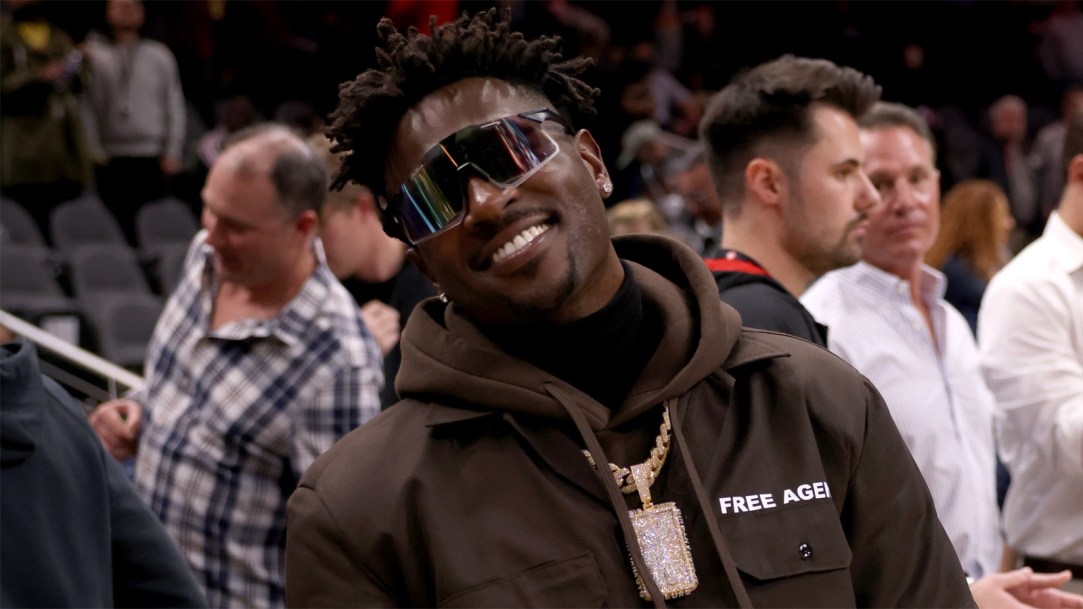
On Wednesday, Miami-Dade County prosecutors made Antonio Brown “an offer he couldn’t refuse.” As a result, the former NFL wide receiver accepted a plea deal that will keep him out of prison.
Antonio Brown’s attorney, Mark Eiglarsh, said in a statement that the plea deal offered by prosecutors will “dramatically reduce the criminal charge against him and result in probation rather than a prison sentence.”
“He is not accepting this agreement because he suddenly agrees with the State’s allegations. He is accepting it because the State made him an offer he couldn’t refuse,” Eiglarsh told the NBC Miami. “There is a profound difference between believing you can win a case and deciding that you and your family cannot afford to spend another year, or potentially several years, wearing an ankle monitor and fighting it.”
Brown had been charged with one felony count of attempted murder. Eiglarsh said Brown will officially accept the plea deal on September 30.
Antonio Brown could have spent up to 30 years in prison
In May 2025, Antonio Brown allegedly shot two rounds at Zul-Qarnain Kwame Nantambu after fighting him outside of an amateur celebrity boxing event in Miami’s Little Haiti area. Detectives were informed by Nantambu that one of the gunshots grazed his neck. Authorities issued an arrest warrant for Brown shortly thereafter.
Brown then fled to Dubai where he remained for more than six months. Brown posted on social media multiple times while there. In a few of them, he claimed to be innocent and to be the victim of racial profiling, among other things. Brown’s social media posts were used by U.S. Marshals and the Miami-Dade State Attorney’s Office to track his whereabouts while he was abroad.
He was arraigned in November after entering a not guilty plea, citing self-defense. Brown could have spent up to 30 years in prison if proven guilty, with a minimum of 20 years mandated by Florida law.
The alleged victim refused to cooperate in Antonio Brown’s prosecution
Earlier this month, Antonio Brown’s alleged victim declared that he did “not wish to participate” in the prosecution of the former NFL wide receiver. Citing his Muslim faith, Nantambu’s attorney claimed he had also forgiven Brown.
“For Mr. Nantambu, forgiveness does not diminish the seriousness of what occurred. It means refusing to allow anger or resentment to dictate how he moves forward,” said his lawyer, Richard L. Cooper.
Antonio Brown has long claimed that he acted in self-defense. His lawyer claimed Brown had a legitimate right to protect himself because he “reasonably feared death or great bodily harm.”
“This was not an easy decision,” Eiglarsh said. “Antonio believes in his innocence. He believes strongly in his Stand Your Ground defense, and he believes he would ultimately prevail at trial. But when prosecutors put an offer on the table that transforms a potential decades-long prison sentence into a significantly reduced charge and probation, there was simply no way he could reasonably turn it down.”