


Annegret Hilse/Reuters via Imagn Images
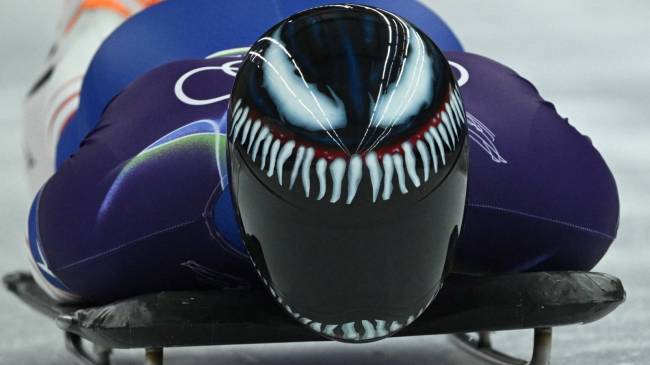
Skeleton is one of the many sports at the Winter Olympics where a helmet can come in very handy while competing. A number of the athletes who got the chance to barrel down the track at Milano Cortina got very creative when it came to the design on those buckets, and there are some that have really managed to stand out from the pack.
These are the coolest skeleton helmets athletes have worn at the 2026 Winter Olympics
A helmet is a bit of a necessity when you compete in a sport where you barrel headfirst down a slide made of ice at speeds that can top 80 MPH, which is what you’re signing up to do when you compete in skeleton.
None of the helmets that skeleton racers brought to the 2026 Winter Olympics garnered more attention than the one that got Ukraine’s Vladyslav Heraskevych disqualified from the men’s competition after he refused to abandon the lid that was covered with pictures of athletes who’ve been killed during his country’s war with Russia.
With that said, there are some other athletes who have managed to generate some buzz due to the creative designs they’ve shown off at the Winter Olympics.
Austin Florian, United States
Annegret Hilse-Reuters via Imagn Images
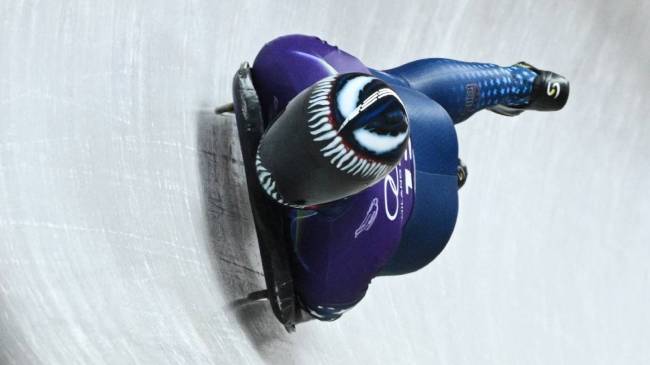
I’m not ranking these in any particular order, but I don’t think any other athlete on this list has gotten more attention for their helmet than Austin Florian, who went viral thanks to the Venom-inspired design.
Kim Meylemans, Belgium
Eric Bolte-Imagn Images
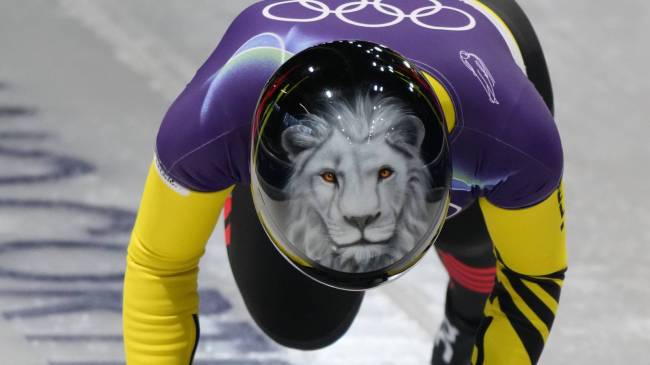
There are a few skeleton helmets that give off some serious “Airbrush On The Tailgate Of A Pickup Truck” energy, and that’s definitely the case with the white lion that Kim Meylemans of Belgium opted for.
Mystique Ro, United States
Eric Bolte-Imagn Images
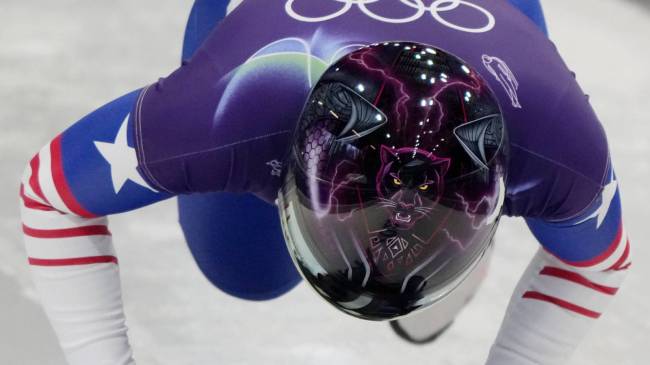
That’s also the case with the one that America’s Mystique Ro wore during the women’s competition, although that panther wouldn’t look out of place hanging on the wall in a room that’s exclusively illuminated with black lights.
Lin Qinwei, China
Jennifer Lorenzini/Reuters via Imagn Images
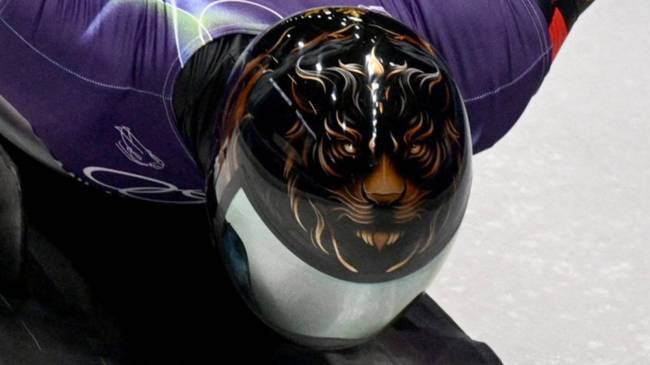
Meylemans isn’t the only one who went the lion route, as Lin Qinwei of China also took a slightly more subdued approach.
Kellie Delka, Puerto Rico
Eric Bolte-Imagn Images
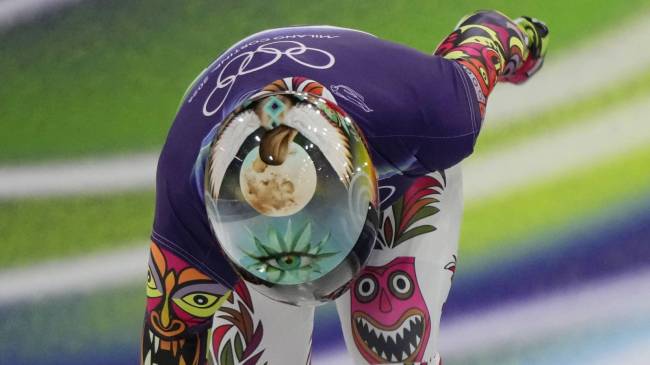
I’d argue the helmet Puerto Rico’s Kellie Delka went with is overshadowed by her sick custom suit, but it’s still a pretty eye-catching (get it?) design.
Jane Channell, Canada
Eric Bolte-Imagn Images
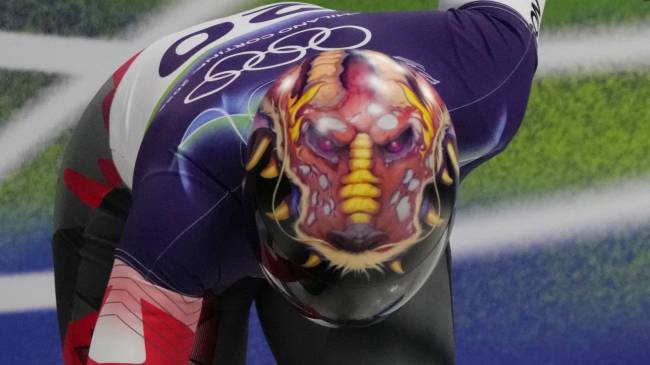
There are multiple athletes who went the dragon route for the 2026 Winter Olympics. That includes Jane Channell of Canada, who provided a closer look at the design that features a few hidden Easter eggs before heading to Italy.
Yin Zheng, China
Annegret Hilse/Reuters via Imagn Images
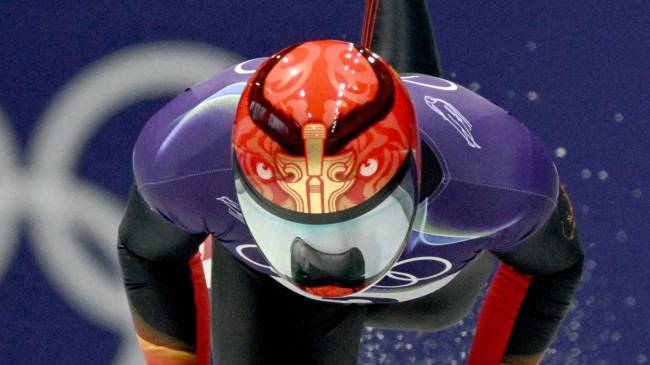
Yin Zheng also incorporated the dragon most people would associate with his native country, China, as opposed to Canada, which was part of a design inspired by the helmet general Lu Bu wore during the Han Dynasty.
Hong Sujung, South Korea
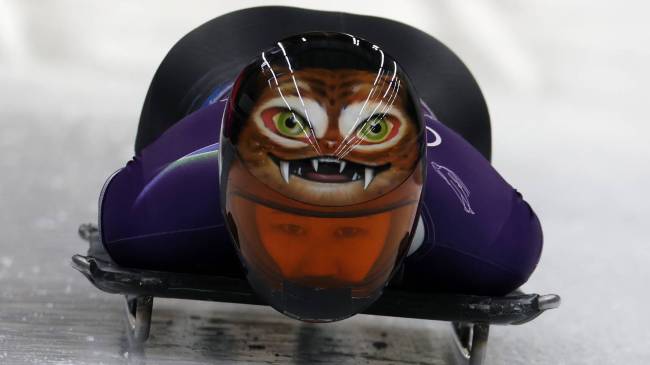
Al Bello/Getty Images
We’ve got a couple of appearances from South Korea, the first of which is Hong Sujung and the cat I definitely would not want to cross paths with in a dark alley.
Kim Jis-Soo, South Korea
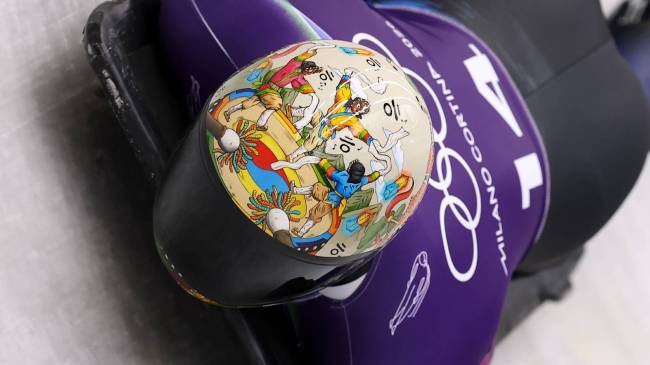
Richard Heathcote/Getty Images
Kim Ji-Soo went with a slightly more traditional design, and it goes pretty hard.
Josip Brusic, Canada
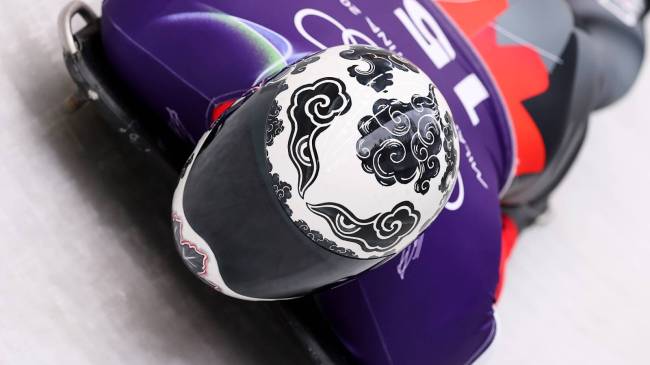
Richard Heathcote/Getty Images
Josip Brusic’s helmet might not scream “Canada” at first glance, but it features a few maple leaves and was designed by an artist who specializes in designing masks for hockey goalies and turned his attention to skeleton for the first time ahead of the Winter Olympics.
Nicole Rocha Silveira, Brazil
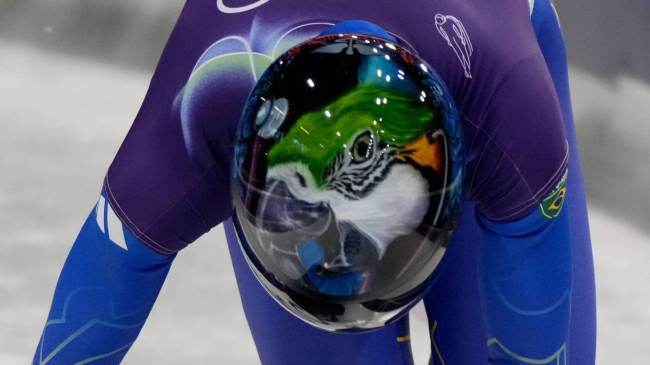
Eric Bolte-Imagn Images
It’s no coincidence that the parrot on Nicole Rocha Silveira’s helmet is blue, yellow, and green, as those are also the colors on Brazil’s flag.
Nick Timmings, Australia
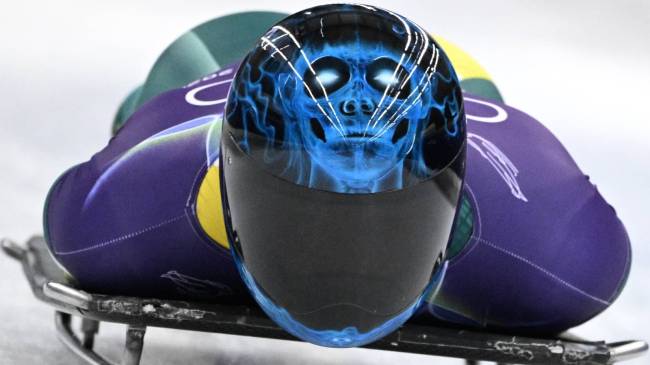
Tiziana FABI / AFP via Getty Images
Nick Timmings earned the nickname “Bones” while training for the Winter Olympics, so he decided to go for a pretty on-the-nose design when designing his skeleton helmet.
Alessandra Fumagalli, Italy
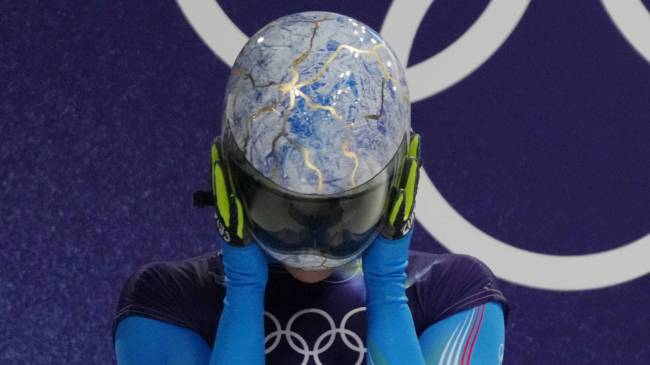
Eric Bolte-Imagn Images
I’m not entirely sure what inspired the helmet Italy’s Alessandra Fumagalli debuted toward the end of 2025 and brought to the Olympics in her native country, but I like to think she bought a jawbreaker at a candy store and told the artists to paint a fancier version.