



iStockphoto / Maria Lysaker-Imagn Images/Jeff Hanisch-USA TODAY Sports
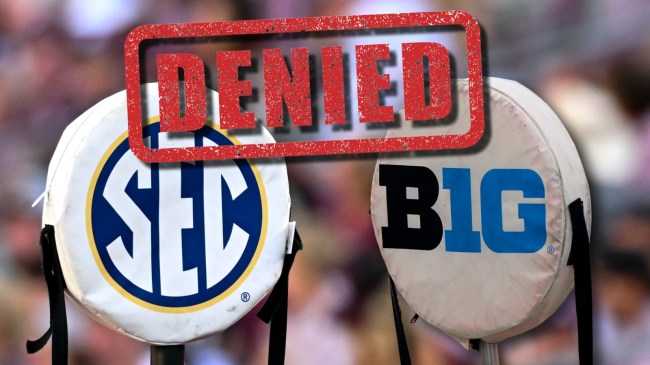
Denied symbol over SEC and Big Ten logos
The realm of college sports has been facing an identity crisis since the advent of the NIL Era, and it’s worsened as a number of schools have targeted players who tried to backpedal after trying to turn pro. Thankfully, reason has prevailed after two major conferences announced the punishments programs will face if they try to go that route.
The line between college and pro sports was incredibly clear-cut for over a century: people who played the former were not allowed to be compensated aside from a scholarship, and doing so meant you fell in the second category and lost the right to compete against student-athletes.
However, college athletics have spent the past five years careening down the slippery slope that formed when the Supreme Court ruled players could profit off of their name, image, and likeness, a monumental decision that has had a dramatic impact on the landscape.
Last season, a number of college basketball teams turned their attention to players who’d previously been selected in the NBA Draft and even played in the G-League while daring an increasingly powerless NCAA to stop them.
We were treated to some more drama right before the start of the college football season, as LSU managed to spark a bit of an uproar after it targeted Dae’Quan Wright and Zxavian Harris, two undrafted players who signed with NFL teams in an unsuccessful attempt to make the roster before attempting to return to college following a ruling in a lawsuit that granted them one more year of eligibility.
The NCAA has declined to intervene in those cases, but it may not need to after the two conferences that college football essentially runs through opted to nip things in the bud.
The SEC and Big Ten are banning schools from signing players who had second thoughts after turning pro
It’s hard to imagine LSU is the only school that would have attempted to court guys who didn’t see their NFL dreams pan out, but the Tigers were largely responsible for triggering a wave of backlash that led to the SEC scrambling to address the situation.
On Tuesday, the conference announced that none of its members will be allowed to go that route, as it shared a list of new rules that prohibit teams from adding players who declared for the NFL, NBA, and WNBA Draft without withdrawing in addition to those who signed with a team or were listed on a roster at any point.
Following meetings with the Presidents, Chancellors, and Athletics Directors of the Southeastern Conference, the SEC will enforce the following policy: pic.twitter.com/LohWnb7G1J
— Southeastern Conference (@SEC) August 25, 2026
The Big Ten also decided to go the same route, although it would appear the new rule that was instituted only applies to guys who did business with an NFL team (at least for now).
A statement from the Big Ten on student-athlete eligibility. pic.twitter.com/Hote5wYsMU
— Big Ten Conference (@bigten) August 25, 2026
According to CBS Sports, the Big Ten will be enforcing the rule by suspending the coach of any guilty football team for 50% of its games while fining the program 20% of its overall budget (a model based on the NCAA’s “ghost transfer” policy).
The SEC has not specified the sanctions it will opt for, but commissioner Greg Sankey stressed his authority to dole out punishment he sees fit after the decision was publicized (the conference hinted it won’t be long before it unveils the specifics).
It seems like it’s only a matter of time until the rest of the P4 follows suit, as the Big 12 and ACC are reportedly working on rules of their own. It seems safe to assume these bans will trickle down into smaller conferences, although it would admittedly be very funny if at least one of them decided to buck the trend in the hopes of increasing its level of talent.