



iStockphoto / John E. Sokolowski-Imagn Images
Toronto Blue Jays pitcher Louie Varland next to AI graphic
Many brands, companies, and organizations have been unable to resist the urge to cut corners by turning to artificial intelligence. However, they run the risk of attracting some backlash if they’re caught going that route, which is the situation the Blue Jays ended up facing after denying A.I. was used in an animated video despite plenty of evidence to the contrary.
It’s been a few years since artificial intelligence burst into the mainstream, and it was positioned as The Next Big Thing thanks in no small part to the tech companies that needed that to be the case to justify the amount of money poured into the platforms that revolve around it.
It has become a very hot topic of conversation, and most people fall near one of two ends of the A.I. spectrum: True Believers who’ve embraced it with open arms and view it as an invaluable and essential tool, and critics who can’t believe anyone would willingly welcome the robot overlords they think are making people dumber and poised to do more harm than good.
You can’t talk about A.I. without discussing its potential impact on the job market, as you don’t need to be a genius to figure out the consequences of profit-driven companies turning to computers to take care of the work that was previously done by human beings.
That’s become an especially hot-button issue in the entertainment industry, where animators are among the many people who are understandably worried about the impact A.I. will have on their job prospects.
It appears the Blue Jays attempted to patronize one of those artists, but they may have been scammed based on a video the franchise foolishly defended after ignoring a number of red flags.
The Blue Jays claimed A.I. wasn’t used for an animated video that was clearly created with the help of A.I.
On Wednesday, the Blue Jays released some light-hearted sponsored content with a “Spill the Tea” video featuring clips of players discussing how they spend their free time on road trips accompanied by animated recreations of their exploits.
A number of viewers quickly noted something was amiss, as the video featured more than a few telltale signs of A.I. usage.
However, the Blue Jays fervently denied it was involved in the production in response to a fan who expressed their displeasure, saying it was “NOT AI” and that “a human animated this video.”
NOT AI
A human animated this video. Thank you
— Toronto Blue Jays (@BlueJays) September 2, 2026
It’s hard to believe that’s the case, as there’s plenty of evidence to back up the accusations. The writing on a pizza box inexplicably melts around the 24-second mark of the video, and there’s also some textbook A.I. swirls on a pile that appears around ten seconds before that.

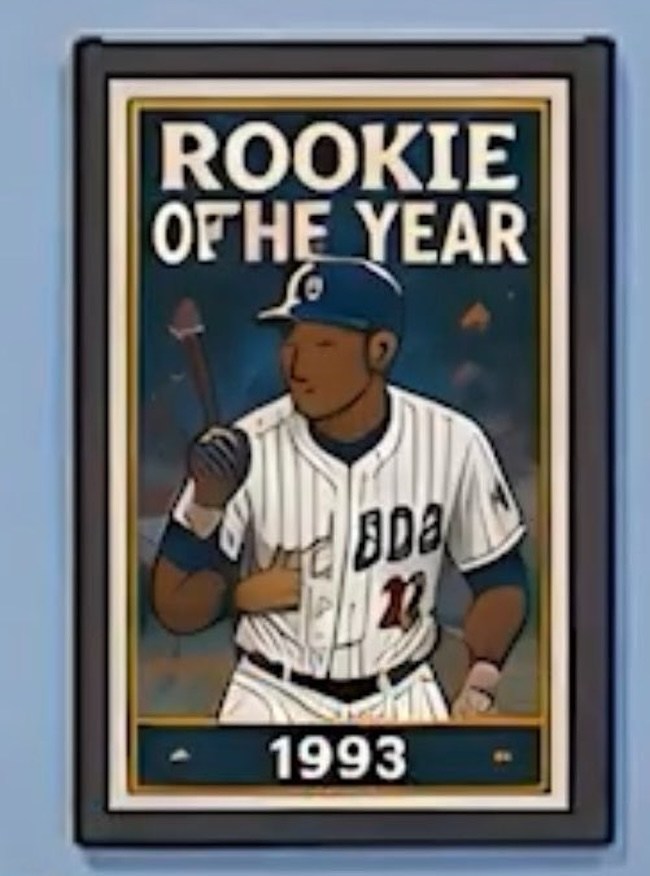
There are also a number of pretty glaring issues in the scene that unfolds in the card shop in Toronto, but none of them stick out more than the extra appendages on some horribly deformed baseball player who somehow managed to overcome those impairments to win Rookie of the Year in 1993 (it’s also worth noting Tim Salmon and Mike Piazza won the award that year, and both players had a decidedly different complexion).
If I had to guess, I’d say the Blue Jays did go out of their way to hire an animator for the video but ended up tapping someone who, at the very least, used A.I. to supplement the work.
However, the team still deserves the criticism it’s getting for failing to vet the final product.